[caption id="attachment_62745" align="alignleft" width="130"]

Luke Cavanah[/caption]
Luke Cavanah, BS
Department of Medical Education
Geisinger Commonwealth School of Medicine
Scranton, PA 18509
MedicalResearch.com: What is the background for this study?
Response: “Selective” serotonin reuptake inhibitors (SSRI) are a class of medications that are first-line treatments for many anxiety, depressive, and other psychiatric disorders.
1–3 Despite their name, SSRIs often have activity on other receptors and chemicals.
4
One such SSRI that is known for being particularly nonselective is paroxetine.
5 Paroxetine’s mechanisms of action are summarized in the figure below which shows binding not only to the serotonin transporter (SERT) but also to the norepinephrine transporter (NET), nitric oxide synthetase (NOS), the muscarinic (M1) receptor, and the liver cytochrome 2D6 enzyme. Paroxetine’s receptor promiscuity, especially its anticholinergic activity, can contribute to unfavorable adverse effects.
5 Older adults (65+) are particularly vulnerable to some of these adverse effects.
The American Geriatrics Society (AGS) regularly publishes an explicit list, called the Beer’s List, of what they call “potentially inappropriate medications (PIMs)”, which are medications they recommend avoiding in this demographic when having certain disorders/conditions or most clinical contexts. The AGS Beers Criteria, in 2012, 2019, and most recently in 2023, has identified paroxetine as a PIM due to its strong anticholinergic activity and high risk of sedation and orthostatic hypotension, and thus they recommend it should be avoided in this population in most circumstances.
6–8 Given the recommendation against the use of paroxetine in older adults, we were interested in examining the utilization of paroxetine by U.S. Medicare beneficiaries. Medicare patients primarily consist of people 65+ and cover 94% of non-institutionalized people in this age group.
9

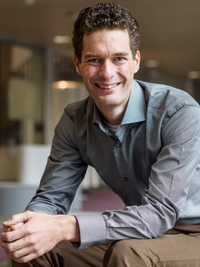






 Dr. Hazen[/caption]
Stanley Hazen, MD, PhD
Chair, Cardiovascular & Metabolic Sciences
Lerner Research Institute
CoSection head, Preventive Cardiology & Cardiovascular Rehabilitation
Heart, Vascular and Thoracic Institute
Cleveland Clinic
MedicalResearch.com: What is the background for this study?
Response: One of the unique features of COVID is that in some subjects, there unfortunately appear to be long term adverse effects that can occur following resolution of the acute infection. These studies add to the growing body of data showing that COVID-19 infection can enhance risk for experiencing adverse cardiac events (heart attack, stroke, and death) over time.
Dr. Hazen[/caption]
Stanley Hazen, MD, PhD
Chair, Cardiovascular & Metabolic Sciences
Lerner Research Institute
CoSection head, Preventive Cardiology & Cardiovascular Rehabilitation
Heart, Vascular and Thoracic Institute
Cleveland Clinic
MedicalResearch.com: What is the background for this study?
Response: One of the unique features of COVID is that in some subjects, there unfortunately appear to be long term adverse effects that can occur following resolution of the acute infection. These studies add to the growing body of data showing that COVID-19 infection can enhance risk for experiencing adverse cardiac events (heart attack, stroke, and death) over time.


 Dr. Nas[/caption]
Dr Zeynep Nas Ph.D.
Postdoctoral Research Fellow
Department of Behavioural Science and Health
Institute of Epidemiology & Health Care
University College London
MedicalResearch.com: What is the background for this study?
Response: We were interested in why some children are more selective in their food intake and more reluctant to try new foods compared to those who are not. We investigated this question in a twin study, which compares identical twins (who share all of their genes) to non-identical twins (who share half) to understand the relative influence of genetics versus the environment in shaping individual differences in fussy eating.
Dr. Nas[/caption]
Dr Zeynep Nas Ph.D.
Postdoctoral Research Fellow
Department of Behavioural Science and Health
Institute of Epidemiology & Health Care
University College London
MedicalResearch.com: What is the background for this study?
Response: We were interested in why some children are more selective in their food intake and more reluctant to try new foods compared to those who are not. We investigated this question in a twin study, which compares identical twins (who share all of their genes) to non-identical twins (who share half) to understand the relative influence of genetics versus the environment in shaping individual differences in fussy eating.

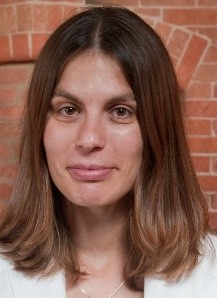
 Prof. Mihaylova[/caption]
Borislava Mihaylova, DPhil
Associate Professor & Senior Health Economist
Nuffield Department of Population Health, University of Oxford,
UK & Professor of Health Economics
Wolfson Institute of Population Health
Queen Mary University of London, UK
MedicalResearch.com: What is the background for this study?
Response: Despite high risks of heart disease and stroke in people over 70 years old and high need for preventive treatment such as statins, fewer older people use statins [compared to middle-aged people]. This, at least in part, is likely due to fewer older people, particularly those without previous heart attacks and strokes, included in the randomized studies of statin treatment. This has led to more limited evidence among them with larger uncertainty. Thus, we set to re-examine the value of statin treatment using the latest evidence and contemporary population data.
Prof. Mihaylova[/caption]
Borislava Mihaylova, DPhil
Associate Professor & Senior Health Economist
Nuffield Department of Population Health, University of Oxford,
UK & Professor of Health Economics
Wolfson Institute of Population Health
Queen Mary University of London, UK
MedicalResearch.com: What is the background for this study?
Response: Despite high risks of heart disease and stroke in people over 70 years old and high need for preventive treatment such as statins, fewer older people use statins [compared to middle-aged people]. This, at least in part, is likely due to fewer older people, particularly those without previous heart attacks and strokes, included in the randomized studies of statin treatment. This has led to more limited evidence among them with larger uncertainty. Thus, we set to re-examine the value of statin treatment using the latest evidence and contemporary population data.



 Dr. Walsh[/caption]
Christopher Walsh, M.D., Ph.D.
Chief, Division of Genetics and Genomics
Bullard Professor of Pediatrics and Neurology at Harvard Medical School
and researcher who has used material donated to the brain bank
MedicalResearch.com: What is the background for this study?
Response: Many different types of genetic variants contribute to neurodevelopmental disorders such as autism. Copy number variants are large pieces of genetic material that are duplicated or deleted. We have known for many years that many copy number variants at certain genetic locations are linked to autism. Because these copy number variants may include lots of different genes, it has been difficult to understand how these copy number variants alter human brain function. Furthermore, although animal models are important, autism is in many ways defined by differences in uniquely human cognitive and social functioning. Better understanding of how these copy number variants change human brain function will shed light on universal mechanisms that regulate neurodevelopment. We studied a copy number variant called dup15q, that is associated with almost 40-fold higher rates of autism vs. the general population. We studied post-mortem human brain tissue from individuals with dup15q, individuals with autism not related to dup15q, and neurotypical controls, to better understand how the human brain is impacted by dup15q. We focused on frontal cortex, an important brain region in executive function and social perspective taking. We applied cutting edge techniques that allow us to assess individual cells in the brain.
Dr. Walsh[/caption]
Christopher Walsh, M.D., Ph.D.
Chief, Division of Genetics and Genomics
Bullard Professor of Pediatrics and Neurology at Harvard Medical School
and researcher who has used material donated to the brain bank
MedicalResearch.com: What is the background for this study?
Response: Many different types of genetic variants contribute to neurodevelopmental disorders such as autism. Copy number variants are large pieces of genetic material that are duplicated or deleted. We have known for many years that many copy number variants at certain genetic locations are linked to autism. Because these copy number variants may include lots of different genes, it has been difficult to understand how these copy number variants alter human brain function. Furthermore, although animal models are important, autism is in many ways defined by differences in uniquely human cognitive and social functioning. Better understanding of how these copy number variants change human brain function will shed light on universal mechanisms that regulate neurodevelopment. We studied a copy number variant called dup15q, that is associated with almost 40-fold higher rates of autism vs. the general population. We studied post-mortem human brain tissue from individuals with dup15q, individuals with autism not related to dup15q, and neurotypical controls, to better understand how the human brain is impacted by dup15q. We focused on frontal cortex, an important brain region in executive function and social perspective taking. We applied cutting edge techniques that allow us to assess individual cells in the brain. 
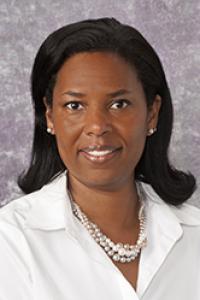
 Dr. Davis[/caption]
Esa M. Davis, M.D., M.P.H , F.A.A.F.P
Professor of Medicine and Family and Community Medicine
Associate Vice President of Community Health and
Senior Associate Dean of pPopulation Health and Community Medicine
University of Maryland School of Medicine
Dr. Davis joined the U.S. Preventive Services Task Force in January 2021
MedicalResearch.com: What is the background for this study? What are the main findings?
Response: Iron is important to overall health, and people need more iron when they are pregnant. This can make pregnant people at increased risk for iron deficiency, which can progress to anemia and cause complications for both moms and their babies. After reviewing the latest available research, the Task Force found that there is not enough evidence on whether pregnant people who do not have signs or symptoms of iron deficiency or anemia should be screened—or take iron supplements—to improve their health or the health of their baby.
Dr. Davis[/caption]
Esa M. Davis, M.D., M.P.H , F.A.A.F.P
Professor of Medicine and Family and Community Medicine
Associate Vice President of Community Health and
Senior Associate Dean of pPopulation Health and Community Medicine
University of Maryland School of Medicine
Dr. Davis joined the U.S. Preventive Services Task Force in January 2021
MedicalResearch.com: What is the background for this study? What are the main findings?
Response: Iron is important to overall health, and people need more iron when they are pregnant. This can make pregnant people at increased risk for iron deficiency, which can progress to anemia and cause complications for both moms and their babies. After reviewing the latest available research, the Task Force found that there is not enough evidence on whether pregnant people who do not have signs or symptoms of iron deficiency or anemia should be screened—or take iron supplements—to improve their health or the health of their baby. 
 Dr. Oliva[/caption]
Azahara Oliva PhD
Assistant Professor
Department of Neurobiology and Behavior
Cornell University
MedicalResearch.com: What is the background for this study? What are the main findings?
Response: The background is that we knew for a while now that neurons work hard to consolidate into memories each experience that we have during the day. But at the same time, it is known that sleep restore activity of our body and physiology. How was that possible? How can the neurons in our brain "work hard" during the time that we are supposed to be restoring our vitals? We found that in between their hard work, during sleep, our neurons take "breaks of activity" so our brain can build memories with precision.
Dr. Oliva[/caption]
Azahara Oliva PhD
Assistant Professor
Department of Neurobiology and Behavior
Cornell University
MedicalResearch.com: What is the background for this study? What are the main findings?
Response: The background is that we knew for a while now that neurons work hard to consolidate into memories each experience that we have during the day. But at the same time, it is known that sleep restore activity of our body and physiology. How was that possible? How can the neurons in our brain "work hard" during the time that we are supposed to be restoring our vitals? We found that in between their hard work, during sleep, our neurons take "breaks of activity" so our brain can build memories with precision.