MedicalResearch.com Interview with:
[caption id="attachment_53875" align="alignleft" width="143"]

Dr. Garcia[/caption]
Santiago Garcia, MD FACC
Interventional Cardiologist, Minneapolis Heart Institute
®
Researcher, Minneapolis Heart Institute Foundation
®
MedicalResearch.com: What is the background for this study?
Response: We analyzed and quantified ST-segment elevation myocardial infarction (STEMI) activations for 9 high-volume (>100 primary percutaneous angioplasties per year) cardiac catheterization laboratories in the US. These centers represent different geographic areas and levels of COVID-19 exposure in the US. The data analyzed was from January 1, 2019 to March 31, 2020.
Participating centers included 1-Minneapolis Heart Institute, Minneapolis, MN, 2- Beaumont Hospital Royal Oak, Royal Oak, MI, 3- The Christ Hospital, Cincinnati, OH, 4- Massachusetts General Hospital, Boston, MA, 5- UMass Memorial Medical Center, Worcester, MA, 6- Iowa Heart, Des Moines, IA, 7- Northwell Health Hospital, Manhasset, NY, 8- Prairie Cardiovascular, Springfield, IL, and 9- Swedish Medical Center, Seattle, WA.







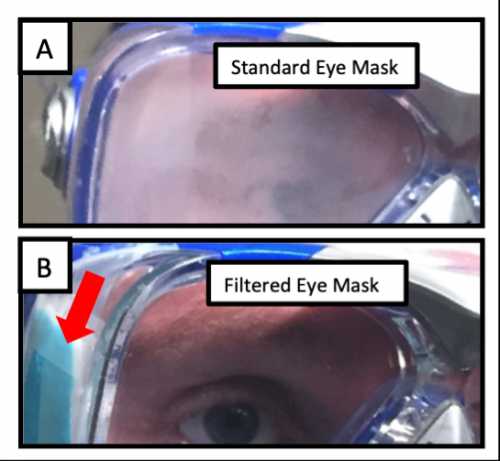

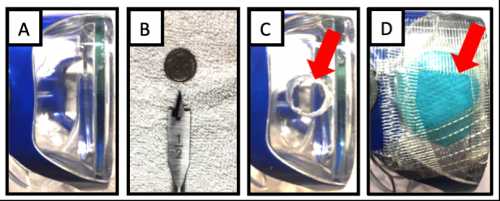 The building of the filtered eye mask prototype.[/caption]




 Dr. Hollingsworth[/caption]
Alex Hollingsworth PhD
Assistant Professor
O'Neill School of Public and Environmental Affairs
Indiana University
MedicalResearch.com: What is the background for this study? What are the main findings?
Response: I've been working with Coady Wing and Ashley Bradford on a few different studies of the effects of recreational marijuana laws on drug and alcohol use.
Soon after EVALI became a major issue, the prevailing theory from the CDC and others was that EVALI was caused by the use of vitamin E acetate in illegal THC vaping products.
Our group read about this and we thought about some of the things that often happen in black markets for illegal drugs. For instance, during the alcohol prohibition era, bootleg alcohol producers often made and sold alcohol products that were not that safe to drink. In more recent years, there are cases where black market sellers of illegal drugs like heroin try to increase profit margins by adding other substances, which can be harmful.
We thought that maybe something like that could be happening in EVALI. Perhaps people in states where recreational marijuana is legal tended to purchase marijuana products from the legal market and the legal market was not selling any marijuana vaping products that included vitamin E acetate.
Dr. Hollingsworth[/caption]
Alex Hollingsworth PhD
Assistant Professor
O'Neill School of Public and Environmental Affairs
Indiana University
MedicalResearch.com: What is the background for this study? What are the main findings?
Response: I've been working with Coady Wing and Ashley Bradford on a few different studies of the effects of recreational marijuana laws on drug and alcohol use.
Soon after EVALI became a major issue, the prevailing theory from the CDC and others was that EVALI was caused by the use of vitamin E acetate in illegal THC vaping products.
Our group read about this and we thought about some of the things that often happen in black markets for illegal drugs. For instance, during the alcohol prohibition era, bootleg alcohol producers often made and sold alcohol products that were not that safe to drink. In more recent years, there are cases where black market sellers of illegal drugs like heroin try to increase profit margins by adding other substances, which can be harmful.
We thought that maybe something like that could be happening in EVALI. Perhaps people in states where recreational marijuana is legal tended to purchase marijuana products from the legal market and the legal market was not selling any marijuana vaping products that included vitamin E acetate. 


 Barbara Chaiyachati, MD PhD
SafePlace: The Center for Child Protection and Health
Division of General Pediatrics
The Children’s Hospital of Philadelphia,
Center for Pediatric Clinical Effectiveness
University of Pennsylvania
Philadelphia, Pennsylvania
MedicalResearch.com: What is the background for this study? What are the main findings?
Response: Children in foster care have high rates of medical problems including chronic diseases. There is less known about the differences in mortality for children in foster care.
Looking at national data from 2003 to 2016, this study finds that children (ages 1 to 18) in foster care have higher mortality compared to children in the general population and that the difference in mortality has increased over time.
Barbara Chaiyachati, MD PhD
SafePlace: The Center for Child Protection and Health
Division of General Pediatrics
The Children’s Hospital of Philadelphia,
Center for Pediatric Clinical Effectiveness
University of Pennsylvania
Philadelphia, Pennsylvania
MedicalResearch.com: What is the background for this study? What are the main findings?
Response: Children in foster care have high rates of medical problems including chronic diseases. There is less known about the differences in mortality for children in foster care.
Looking at national data from 2003 to 2016, this study finds that children (ages 1 to 18) in foster care have higher mortality compared to children in the general population and that the difference in mortality has increased over time. 

 Vasily Giannakeas[/caption]
Vasily Giannakeas, MPH
Epidemiologist/ Dedicated ICES Analyst
Women's College Hospital
Toronto, Ontario, Canada
MedicalResearch.com: What is the background for this study?
Response: As some health care systems approach collapse, a pressing need exists for tools modeling the capacity of acute and critical care systems during the COVID-19 pandemic.
We developed an online tool to estimate the maximum number of COVID-19 cases that could be managed per day within the catchment area served by a health care system, given acute and critical care resource availability.
The COVID-19 Acute and Intensive Care Resource Tool (CAIC-RT) is open access and available at
Vasily Giannakeas[/caption]
Vasily Giannakeas, MPH
Epidemiologist/ Dedicated ICES Analyst
Women's College Hospital
Toronto, Ontario, Canada
MedicalResearch.com: What is the background for this study?
Response: As some health care systems approach collapse, a pressing need exists for tools modeling the capacity of acute and critical care systems during the COVID-19 pandemic.
We developed an online tool to estimate the maximum number of COVID-19 cases that could be managed per day within the catchment area served by a health care system, given acute and critical care resource availability.
The COVID-19 Acute and Intensive Care Resource Tool (CAIC-RT) is open access and available at