MedicalResearch.com Interview with:
[caption id="attachment_53699" align="alignleft" width="160"]

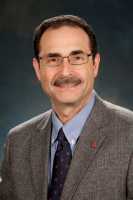
Prof. Coleman[/caption]
Professor Carl Coleman, JD
Professor of Law
Seton Hall Law School
MedicalResearch.com: Do health care workers have an ethical and/or legal obligation to provide treatment during an infectious disease outbreak? Are there exceptions such as pregnancy, if the health care worker is her/himself immunocompromised or have young children at home?
Response: As a legal matter, health care workers can generally be required to fulfill pre-existing employment or contractual obligations during an infectious disease outbreak. For example, an emergency room nurse who refuses to come to work during a pandemic can be disciplined or fired; a physician who breaches a contractual obligation to provide on-call services during an outbreak can be held liable for damages. In addition to loss of employment and contractual damages, other potential consequences for failing to honor pre-existing commitments during a pandemic could include professional discipline for patient abandonment and, for physicians with on-call responsibilities in hospital emergency departments, civil fines under the federal Emergency Medical Treatment and Active Labor Act.
This does not mean that health care workers are obligated to show up for work during a pandemic regardless of the circumstances. For example, under the Americans with Disabilities Act, health care workers who are immunocompromised can ask for a "reasonable accommodation," such as the right to work remotely (if possible) or to take leave. Under the Family and Medical Leave Act, employers with more than 50 employees must give workers up to 12 weeks of unpaid time off to care for a seriously ill immediate family member. In addition, federal labor laws allow employees to refuse to work under "abnormally dangerous conditions," which might apply in situations where an employer fails to provide necessary protective equipment. However, assuming protective equipment is available, it is not clear that an outbreak itself would be considered "abnormally dangerous," particularly in fields like emergency medicine, where exposure to contagious disease is always a foreseeable risk.
In most states, health care workers without pre-existing employment or contractual obligations cannot be compelled to treat patients during a pandemic. However, a few states have laws that authorize public health authorities to require health care professionals to work during public health emergencies. I am not aware of any state that has invoked this authority so far.
As for ethical obligations, in 2004, the American Medical Association (AMA) declared that "individual physicians have an obligation to provide urgent medical care during disasters," and that "this ethical obligation holds even in the face of greater than usual risks to their own safety, health or life." Some academic ethicists have expressed similar views. Common justifications for this position are that physicians "assumed the risk" of exposure to infectious diseases when they voluntarily committed themselves to the healing professions; that a "social contract" requires physicians to assume risks in exchange for their social status and privileges; and that individuals who are uniquely capable of providing life-saving care have an obligation to do so.
However, I am not persuaded that all physicians -- let alone health care workers more generally -- have an ethical obligation to provide treatment when doing so involves significant risk. A willingness to accept risk is not a condition of obtaining a medical license, nor is it part of the oaths that students commonly take at medical school graduation. While I agree that physicians have ethical obligations to contribute to society, there are many ways they can fulfill these obligations without assuming personal health risks. And even assuming that individuals who are in a unique position to provide life-saving care should normally do so, we generally do not expect people to rescue others from danger at significant risk to themselves.










![MedicalResearch.com Interview with: Melissa Bondy, PhD Chair, Department of Epidemiology and Population Health Stanford University MedicalResearch.com: What is the background for this study? Response: Faculty researchers in Stanford’s Department of Epidemiology & Population Health and collaborators from Baylor College of Medicine and Stanford’s Department of Dermatology developed an online survey aimed at rapidly assessing public concerns about the COVID-19 crisis. This survey, which was posted on 3 social media platforms (Twitter, Facebook, and Nextdoor) on March 14, 2020, collected invaluable data about COVID-19, including symptoms, concerns, and individual actions taken by respondents. Twitter and Facebook posts were sharable to facilitate snowball sampling. The survey was comprised of 21 (multiple-choice, single-choice, numeric, and open-ended) questions, which were designed to collect data concerning respondent demographics and recent cold and flu-like illnesses (if any), as well as information about participants’ concerns and any lifestyle changes that occurred as a result of the COVID-19 crisis. All questions were optional, so response rates were variable. MedicalResearch.com: What are the main findings? Response: 9009 surveys were completed within a 48 hour period, between March 14 and 16. A majority were very or extremely concerns about COVID-19, though concern varied by age. Most respondents reported making lifestyle changes in response to COVID-19. The most common changes were more hand washing, avoiding social gatherings, and stockpiling food and supplies. About half of respondents were self-isolating most of the time before shelter-in-place orders, and leaving the house only to buy food and essentials. Respondents who were not self-isolating all of the time, before the shelter-in-place order, most commonly listed not being able to afford missing work as the reason. The top concerns reported by survey participants were getting sick because of COVID-19 and not being able to get medical care. The most common difficulties reported were obtaining hand sanitizer, food, and childcare. MedicalResearch.com: What should readers take away from your report? Response: This convenience sample survey distributed in mid-March 2020 across 3 social media platforms reflect respondents’ serious concerns about COVID-19. They were preparing for the crisis by washing hands, isolating at home, and practicing social distancing to the best of their abilities. Levels of concern about COVID-19 varied by age groups. Participants expressed the most common difficulties included getting sanitizer or food, arranging childcare, and lost wages or reduced working hours. MedicalResearch.com: What recommendations do you have for future research as a result of this work? Response: Groups who are generally known to be underrepresented in social media, particularly men and older individuals, were underrepresented among survey participants. Few respondents reported concerns about their employment, but the study did not collect information about participants’ socioeconomic status (and was likely high). Our future work will expand geographic representation among survey respondents, with greater focus on longitudinal trends on the health, financial, and social concerns in the United States regarding the COVID-19 pandemic. No disclosures or conflicts of interest. Citation: Nelson LM, Simard JF, Oluyomi A, et al. US Public Concerns About the COVID-19 Pandemic From Results of a Survey Given via Social Media. JAMA Intern Med. Published online April 07, 2020. doi:10.1001/jamainternmed.2020.1369 https://jamanetwork.com/journals/jamainternalmedicine/fullarticle/2764368?guestAccessKey=cd7f419d-b177-44d2-86b2-c3e0254b3152&utm_source=For_The_Media&utm_medium=referral&utm_campaign=ftm_links&utm_content=tfl&utm_term=040720 [subscribe] Last Modified: [last-modified] The information on MedicalResearch.com is provided for educational purposes only, and is in no way intended to diagnose, cure, or treat any medical or other condition. Always seek the advice of your physician or other qualified health and ask your doctor any questions you may have regarding a medical condition. In addition to all other limitations and disclaimers in this agreement, service provider and its third party providers disclaim any liability or loss in connection with the content provided on this website.](https://medicalresearch.com/wp-content/uploads/2020/04/Melissa-Bondy.jpg)


 Aurika Savickaite[/caption]
Aurika Savickaite RN
Adult Gerontology Acute Care Nurse Practitioner
Bulletproof Coach
University of Chicago Medicine
MedicalResearch.com: Would you briefly explain what is meant by helmet-based ventilation? How does it work?
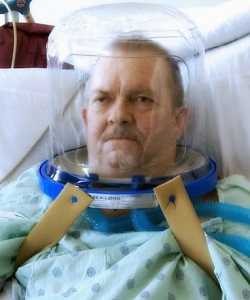
Response: For patients in respiratory failure, noninvasive positive pressure ventilation (NIPPV) is usually delivered through a nasal mask or facemask. Many patients develop pain, discomfort – even claustrophobia -- from using NIPPV systems. The transparent helmet was developed to improve the tolerance of noninvasive ventilation. It allows the patient to see, read, speak and drink without interrupting noninvasive positive-pressure ventilation (NPPV).
The helmet has a sealed connection and a soft collar that adheres to the neck which helps prevent the air leaks that are very common with nasal- or face masks. High positive end-expiratory pressure (PEEP) is vital in treating patients in respiratory failure and thanks to helmets “none to minimum air leak” system, PEEP can be set high (up to 25). NIPPV via a nasal- or full-face mask typically begins to show air leaks when the required pressure exceeds 15-20cm H2O.
Aurika Savickaite[/caption]
Aurika Savickaite RN
Adult Gerontology Acute Care Nurse Practitioner
Bulletproof Coach
University of Chicago Medicine
MedicalResearch.com: Would you briefly explain what is meant by helmet-based ventilation? How does it work?
Response: For patients in respiratory failure, noninvasive positive pressure ventilation (NIPPV) is usually delivered through a nasal mask or facemask. Many patients develop pain, discomfort – even claustrophobia -- from using NIPPV systems. The transparent helmet was developed to improve the tolerance of noninvasive ventilation. It allows the patient to see, read, speak and drink without interrupting noninvasive positive-pressure ventilation (NPPV).
The helmet has a sealed connection and a soft collar that adheres to the neck which helps prevent the air leaks that are very common with nasal- or face masks. High positive end-expiratory pressure (PEEP) is vital in treating patients in respiratory failure and thanks to helmets “none to minimum air leak” system, PEEP can be set high (up to 25). NIPPV via a nasal- or full-face mask typically begins to show air leaks when the required pressure exceeds 15-20cm H2O.