MedicalResearch.com Interview with:
[caption id="attachment_48849" align="alignleft" width="200"]

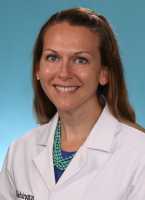
Dr. Domenech de Cellès[/caption]
Dr. Matthieu Domenech de Cellès PhD
Biostatistics, Biomathematics, Pharmacoepidemiology, and
Infectious Diseases Unit, Institut Pasteur, Inserm U1181,
University of Versailles St-Quentin-en-Yvelines,
Versailles, France
MedicalResearch.com: What is the background for this study? What are the main findings?
Response: Most high-income countries now use acellular pertussis vaccines (called DTaP, which are sub-unit vaccines based on purified antigens of the bacterium
Bordetella pertussis) to protect children against pertussis. Although clinical trials demonstrated the short-term effectiveness of DTaP vaccines, there was a growing concern that the duration of protection they conferred was not very long. Those concerns were mostly based on the results of a number of epidemiological studies, which showed that the relative risk of contracting pertussis increased substantially over time, typically by 20–40% every year since last vaccination.
Although such increases seem high, it was not immediately obvious how to interpret them—the more so because pertussis epidemiology is complex.
In our study, we developed mathematical models of pertussis epidemiology to try to understand what the results of recent epidemiological studies really meant about the effectiveness and the duration of protection of DTaP vaccines. The most interesting—and perhaps counterintuitive—finding of our study was that those results are fully consistent with highly effective DTaP vaccines, which confer long-term protection. This is a consequence of the fact that pertussis is highly contagious and that the immunity conferred by DTaP, though very high, is not perfect.


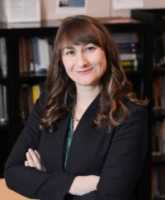
 Dr. Strauss[/caption]
David Strauss, MD, PhD
Director, Division of Applied Regulatory Science
U.S. Food and Drug Administration
Center for Drug Evaluation and Research
MedicalResearch.com: What is the background for this study? What are the main findings?
Response: It is unknown whether most active ingredients in sunscreens are absorbed. FDA has provided guidance that sunscreen active ingredients with systemic absorption greater than 0.5 ng/mL or with safety concerns should undergo nonclinical toxicology assessment including systemic carcinogenicity and additional developmental and reproductive studies.
This randomized clinical trial demonstrated systemic exposure of 4 commonly used sunscreen active ingredients on application of sunscreen products under maximal use conditions consistent with current sunscreen labeling.
All 4 sunscreen active ingredients tested resulted in exposures exceeding 0.5 ng/mL.
Dr. Strauss[/caption]
David Strauss, MD, PhD
Director, Division of Applied Regulatory Science
U.S. Food and Drug Administration
Center for Drug Evaluation and Research
MedicalResearch.com: What is the background for this study? What are the main findings?
Response: It is unknown whether most active ingredients in sunscreens are absorbed. FDA has provided guidance that sunscreen active ingredients with systemic absorption greater than 0.5 ng/mL or with safety concerns should undergo nonclinical toxicology assessment including systemic carcinogenicity and additional developmental and reproductive studies.
This randomized clinical trial demonstrated systemic exposure of 4 commonly used sunscreen active ingredients on application of sunscreen products under maximal use conditions consistent with current sunscreen labeling.
All 4 sunscreen active ingredients tested resulted in exposures exceeding 0.5 ng/mL.

 Dr. Shaker[/caption]
Marcus S. Shaker, MD
Associate Professor of Pediatrics
Associate Professor of Community and Family Medicine
Dartmouth-Hitchcock Medical Center
MedicalResearch.com: What is the background for this study?
Response: There are two peanut allergy treatments that are being evaluated for potential FDA approval—an orally administered treatment and an epicutaneous (skin based) treatment. Both have tremendous potential benefit. The focus of our study was to explore the range of health and economic benefits in terms of establishing pathways for how each therapy could be cost effective.
We want to be clear that our purpose was not to suggest one therapy is or is not cost effective at present. That would be a ridiculous statement to make regarding two treatments that not only lack FDA approval, but do not have established pricing. Rather, we used preliminary inputs that are presently available to create as robust a model as we could to better determine the individual paths that would make them more or less cost-effective.
Dr. Shaker[/caption]
Marcus S. Shaker, MD
Associate Professor of Pediatrics
Associate Professor of Community and Family Medicine
Dartmouth-Hitchcock Medical Center
MedicalResearch.com: What is the background for this study?
Response: There are two peanut allergy treatments that are being evaluated for potential FDA approval—an orally administered treatment and an epicutaneous (skin based) treatment. Both have tremendous potential benefit. The focus of our study was to explore the range of health and economic benefits in terms of establishing pathways for how each therapy could be cost effective.
We want to be clear that our purpose was not to suggest one therapy is or is not cost effective at present. That would be a ridiculous statement to make regarding two treatments that not only lack FDA approval, but do not have established pricing. Rather, we used preliminary inputs that are presently available to create as robust a model as we could to better determine the individual paths that would make them more or less cost-effective.


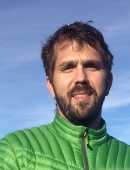


 Jasleen Grewal, BSc.
Genome Sciences Centre
British Columbia Cancer Research Centre
Vancouver, British Columbia, Canada
MedicalResearch.com: What is the background for this study?
Response: Cancer diagnosis requires manual analysis of tissue appearance, histology, and protein expression. However, there are certain types of cancers, known as cancers of unknown primary, that are difficult to diagnose based purely on their appearance and a small set of proteins. In our precision medicine oncogenomics program, we needed an accurate approach to confirm diagnosis of biopsied samples and determine candidate tumour types for where the primary site of the cancer was uncertain. We developed a machine learning approach, trained on the gene expression data of over 10,688 individual tumours and healthy tissues, that has been able to achieve this task with high accuracy.
Genome sequencing offers a high-resolution view of the biological landscape of cancers. RNA-Seq in particular quantifies how much each gene is expressed in a given sample. In this study, we used the entire transcriptome, spanning 17,688 genes in the human genome, to train a machine learning method for cancer diagnosis. The resultant method, SCOPE, takes in the entire transcriptome and outputs an interpretable confidence score from across a set of 40 different cancer types and 26 healthy tissues.
Jasleen Grewal, BSc.
Genome Sciences Centre
British Columbia Cancer Research Centre
Vancouver, British Columbia, Canada
MedicalResearch.com: What is the background for this study?
Response: Cancer diagnosis requires manual analysis of tissue appearance, histology, and protein expression. However, there are certain types of cancers, known as cancers of unknown primary, that are difficult to diagnose based purely on their appearance and a small set of proteins. In our precision medicine oncogenomics program, we needed an accurate approach to confirm diagnosis of biopsied samples and determine candidate tumour types for where the primary site of the cancer was uncertain. We developed a machine learning approach, trained on the gene expression data of over 10,688 individual tumours and healthy tissues, that has been able to achieve this task with high accuracy.
Genome sequencing offers a high-resolution view of the biological landscape of cancers. RNA-Seq in particular quantifies how much each gene is expressed in a given sample. In this study, we used the entire transcriptome, spanning 17,688 genes in the human genome, to train a machine learning method for cancer diagnosis. The resultant method, SCOPE, takes in the entire transcriptome and outputs an interpretable confidence score from across a set of 40 different cancer types and 26 healthy tissues. 
















 Dr. Kendall[/caption]
Dr Kimberley Kendall MBBCh
Wellcome Trust Clinical Research Fellow
[caption id="attachment_48630" align="alignleft" width="150"]
Dr. Kendall[/caption]
Dr Kimberley Kendall MBBCh
Wellcome Trust Clinical Research Fellow
[caption id="attachment_48630" align="alignleft" width="150"]