
28 Jul Are High Deductible Health Care Plans Associated With Worse Cardiac Outcomes?
Posted at 10:23h
in Author Interviews, Brigham & Women's - Harvard, Cost of Health Care, Heart Disease, JAMA
MedicalResearch.com Interview with:
[caption id="attachment_54971" align="alignleft" width="160"] Dr. Wharam[/caption]
Frank Wharam, MD, MPH
Department of Population Medicine
Harvard Medical School and Harvard Pilgrim Healthcare Institute
Boston, MA 02215
MedicalResearch.com: What is the background for this study?
Response: There is substantial concern that high-deductible health plans increase people’s risk of major adverse health events such as heart attack and stroke. No studies have examined this question. This study examines the effects of a transition to a high-deductible health plan on the risk of major adverse cardiovascular outcomes (myocardial infarction and stroke).
The study group included individuals with risk factors for cardiovascular disease who were continuously enrolled in low-deductible (<$500) health plans during a baseline year followed by up to 4 years in high-deductible (≥$1000) plans after an employer-mandated switch. The matched control group included individuals with the same risk factors who were contemporaneously enrolled in low-deductible plans. We examined time to first major adverse cardiovascular event, defined as myocardial infarction or stroke.


 Dr. Jensen[/caption]
Majken K. Jensen, Ph.D.
Adjunct Professor of Nutrition
Harvard T.H. Chan School of Public Health &
Professor in the Department of Public Health
University of Copenhagen, Copenhagen, Denmark
MedicalResearch.com: What is the background for this study?
Response: Alzheimer’s disease and other dementias are highly prevalent conditions. According to the Alzheimer’s Association, 50 million people are currently living with Alzheimer’s disease or other dementias worldwide. Lower apolipoprotein E in plasma is a risk factor for dementia, but the underlying biological mechanisms are not fully understood. Thus, we investigated the role of apolipoprotein E overall and in lipoproteins with distinct metabolic functions in relation to cognitive function and dementia risk..
Dr. Jensen[/caption]
Majken K. Jensen, Ph.D.
Adjunct Professor of Nutrition
Harvard T.H. Chan School of Public Health &
Professor in the Department of Public Health
University of Copenhagen, Copenhagen, Denmark
MedicalResearch.com: What is the background for this study?
Response: Alzheimer’s disease and other dementias are highly prevalent conditions. According to the Alzheimer’s Association, 50 million people are currently living with Alzheimer’s disease or other dementias worldwide. Lower apolipoprotein E in plasma is a risk factor for dementia, but the underlying biological mechanisms are not fully understood. Thus, we investigated the role of apolipoprotein E overall and in lipoproteins with distinct metabolic functions in relation to cognitive function and dementia risk..





 Dr. Brantley[/caption]
Erin Brantley, PhD, MPH
Senior Research Associate
Department of Health Policy and Management
Milken Institute School of Public Health
Preferred pronouns: she/her/hers
MedicalResearch.com: What is the background for this study? What are the main findings?
Response: We looked at what happened when work requirements for the Supplemental Nutrition Assistance Program Participation, or SNAP, were turned on in many places after the Great Recession.
We found large drops in participation in SNAP benefits due to work requirements, and that black recipients were more likely to lose benefits than white recipients. We think this is driven by the fact that black workers face higher unemployment rates than white workers, and work requirement policies do not take this into account.
We also found that some people who report having disabilities lost benefits, even though the intent of work requirements is that they apply to people without disabilities.
Dr. Brantley[/caption]
Erin Brantley, PhD, MPH
Senior Research Associate
Department of Health Policy and Management
Milken Institute School of Public Health
Preferred pronouns: she/her/hers
MedicalResearch.com: What is the background for this study? What are the main findings?
Response: We looked at what happened when work requirements for the Supplemental Nutrition Assistance Program Participation, or SNAP, were turned on in many places after the Great Recession.
We found large drops in participation in SNAP benefits due to work requirements, and that black recipients were more likely to lose benefits than white recipients. We think this is driven by the fact that black workers face higher unemployment rates than white workers, and work requirement policies do not take this into account.
We also found that some people who report having disabilities lost benefits, even though the intent of work requirements is that they apply to people without disabilities. ![MedicalResearch.com Interview with: Dr Herman Anne Service de Dermatologie Cliniques Universitaires Saint-Luc Avenue Hippocrate, 10 1200 Bruxelle MedicalResearch.com: What is the background for this study? Response: In the context of the COVID-19 pandemic, several cases of acro-located lesions (on foot or hands) suggestive of chilblains have been reported and were possibly related to COVID-19. We wanted to determine if chilblains, observed in many patients recently referred to our department, are indicative of COVID-19. MedicalResearch.com: Would you briefly explain what is meant by chilblains? Response: Chilblains are frequent cold induced inflammatory lesions. Chilblains are typically seen in winter and occur after repeated exposure to cold temperatures. Clinical presentation includes erythema and swelling on toes and/or digits followed by red-purple macules or patches. However, given the large number of patients affected, and the exceptionally high outdoor temperatures for the spring season over the past month and at the time of case-observation, cold-exposure seemed unlikely. These lesions were, therefore, suspected to be associated with COVID-19. However, to date, no study has proven a pathological link between these lesions and COVID-19. MedicalResearch.com: What are the main findings? Response: In our series of 31 patients who recently developed chilblains, negative nasopharyngeal swabs and the absence of anti-SARS-CoV-2 blood immunoglobulin (Ig)M and IgG antibodies in all patients included in your study suggested that these patients had not been infected with COVID-19. These lesions appeared not to be directly related to COVID-19. MedicalResearch.com: What should readers take away from your report? Response: One hypothesis points to an indirect consequence of the COVID-19 pandemic due to imposed community containment and lockdown measures. Indeed, all patients in this study had either been working from home or were home-schooled since the beginning of containment measures in Belgium (March 11, 2020) or were temporarily unemployed. As a result of containment measures, the majority (64.5%) of patients reported a decrease in their physical activity and significantly more time spent in sedentary positions in front of screens. Most of the patients declared that they remained barefoot or in socks most of the day. All these lifestyle changes can be considered as risk factors for developing chilblains. Therefore, it seems plausible that containment, through its collateral effects, may induce chilblains. Interestingly also, the mean BMI of the patients included was relatively low, suggesting that thin people may be more at risk of developing chilblains. MedicalResearch.com: What recommendations do you have for future research as a result of this work? Response: During the current pandemic, several reports have suggested a possible link between cutaneous manifestations including aural lesions such as chilblains, and COVID-19, however, only few patients were tested for SARS-CoV-2 by RT-PCR and no serologic tests were performed. Therefore, reliable testings (RT-PCR and serologic testing) are essential to confirm a potential association with COVID-19. Citation: Herman A, Peeters C, Verroken A, et al. Evaluation of Chilblains as a Manifestation of the COVID-19 Pandemic. JAMA Dermatol. Published online June 25, 2020. doi:10.1001/jamadermatol.2020.2368 https://jamanetwork.com/journals/jamadermatology/fullarticle/2767774 [subscribe] Last Modified: [last-modified] The information on MedicalResearch.com is provided for educational purposes only, and is in no way intended to diagnose, cure, or treat any medical or other condition. Always seek the advice of your physician or other qualified health and ask your doctor any questions you may have regarding a medical condition. In addition to all other limitations and disclaimers in this agreement, service provider and its third party providers disclaim any liability or loss in connection with the content provided on this website.](https://medicalresearch.com/wp-content/uploads/2020/06/chilblain-example-dermnet-nz.jpg)



 Response: It is well known that marijuana usage impairs driving ability, yet the early studies of the effects of recreational marijuana legalization on traffic fatalities were inconclusive.
MedicalResearch.com: What are the main findings?
Response: By analyzing data over a longer time period, we found that the legalization of recreational marijuana increased traffic deaths in the first four states to legalize. Traffic fatalities increased about 20% in those states. If we apply these numbers to the nation as a whole, nationwide legalization would be associated with about 7,000 excess traffic fatalities each year.
Response: It is well known that marijuana usage impairs driving ability, yet the early studies of the effects of recreational marijuana legalization on traffic fatalities were inconclusive.
MedicalResearch.com: What are the main findings?
Response: By analyzing data over a longer time period, we found that the legalization of recreational marijuana increased traffic deaths in the first four states to legalize. Traffic fatalities increased about 20% in those states. If we apply these numbers to the nation as a whole, nationwide legalization would be associated with about 7,000 excess traffic fatalities each year.









 Dr. Cavanaugh[/caption]
Alyson Cavanaugh, PT, PhD
Joint Doctoral Program in Epidemiology
University of California, San Diego/ San Diego State University
MedicalResearch.com: What is the background for this study?
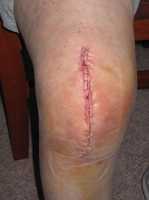
Response: More than 700,000 total knee replacements are performed annually in the United States, but there is a racial disparity in outcomes after the surgery. If the knee replacement procedure is considered a highly effective treatment, why don't black women present with the same outcomes as whites?
Physical function when going into surgery has a large impact on the potential functional outcomes after surgery. Our hypothesis was that black women were presenting to surgery with poorer physical function, which was contributing to poorer functional outcomes after surgery.
Dr. Cavanaugh[/caption]
Alyson Cavanaugh, PT, PhD
Joint Doctoral Program in Epidemiology
University of California, San Diego/ San Diego State University
MedicalResearch.com: What is the background for this study?
Response: More than 700,000 total knee replacements are performed annually in the United States, but there is a racial disparity in outcomes after the surgery. If the knee replacement procedure is considered a highly effective treatment, why don't black women present with the same outcomes as whites?
Physical function when going into surgery has a large impact on the potential functional outcomes after surgery. Our hypothesis was that black women were presenting to surgery with poorer physical function, which was contributing to poorer functional outcomes after surgery.