MedicalResearch.com Interview with:
[caption id="attachment_50383" align="alignleft" width="128"]

Dr. Yangbo Sun[/caption]
Yangbo Sun MD, PhD
Department of Epidemiology
University of Iowa
[caption id="attachment_44215" align="alignleft" width="130"]

Dr. Wei Bao[/caption]
Wei Bao, MD, PhD
Assistant Professor, Department of Epidemiology
College of Public Health,
University of Iowa
Iowa City, IA 52242
MedicalResearch.com: What is the background for this study? What are the main findings?
Response: Obesity has become a
serious health problem in
the United States. Body mass index (BMI) which is calculated as weight (kg)/height (m)
2, is the standard measure used to define obesity in clinical and public health guidelines. However, BMI does not distinguish body shape or body fat distribution. Meanwhile central obesity, characterized by relatively high abdominal fat distribution, has been associated with higher risk of mortality, independent of BMI. So for example, two persons with the same BMI of 24 which is considered as “normal weight”, might have different abdominal fat distribution, thus they might be facing different risk of developing disease and mortality.
In the most recent obesity management guidelines, measuring central obesity was recommended among people who are either overweight or have class I obesity (BMI 25.0-34.9 kg/m
2), but not among people of normal weight. This might send those people with normal weight but with high abdominal fat as well as those public and clinical professionals a wrong message that these people are free of any particular obesity-related risk, while in fact, they are at elevated risk of mortality and might need risk reduction interventions, such as lifestyle modifications and other interventions. So we did this study to evaluate the mortality risk among this neglected group of people.
We found that women with normal weight central obesity were at increased risk of mortality.




 Dr. Dunn[/caption]
Dr. Amy Dunn, PhD
Kaczorowski lab
The Jackson Laboratory
MedicalResearch.com: What is the background for this study? What are the main findings?
Response: Environmental factors, such as a poor diet, are known risk factors for Alzheimer’s disease. But the mechanisms are complex, and it is not known how such environmental perturbations interact with individual genetic variation to confer disease risk. Previous studies have not adequately addressed how the combination of genetic variant and environmental factors combine to alter cognitive response to a poor diet.
To investigate gene-by-environment interactions, we fed either a normal diet or a high-fat diet to a genetically diverse Alzheimer’s disease mouse model population starting at six months of age and monitored metabolic and cognitive function.
We observed accelerated working memory decline in the mice on the high-fat diet after eight weeks, with substantial gene-by diet effects on both cognitive and metabolic traits.
Metabolic dysfunction was more closely related to cognitive function in mice carrying Alzheimer’s mutations than in those without. Interestingly, the high-fat diet affected metabolic function differently in female versus male mice.
Dr. Dunn[/caption]
Dr. Amy Dunn, PhD
Kaczorowski lab
The Jackson Laboratory
MedicalResearch.com: What is the background for this study? What are the main findings?
Response: Environmental factors, such as a poor diet, are known risk factors for Alzheimer’s disease. But the mechanisms are complex, and it is not known how such environmental perturbations interact with individual genetic variation to confer disease risk. Previous studies have not adequately addressed how the combination of genetic variant and environmental factors combine to alter cognitive response to a poor diet.
To investigate gene-by-environment interactions, we fed either a normal diet or a high-fat diet to a genetically diverse Alzheimer’s disease mouse model population starting at six months of age and monitored metabolic and cognitive function.
We observed accelerated working memory decline in the mice on the high-fat diet after eight weeks, with substantial gene-by diet effects on both cognitive and metabolic traits.
Metabolic dysfunction was more closely related to cognitive function in mice carrying Alzheimer’s mutations than in those without. Interestingly, the high-fat diet affected metabolic function differently in female versus male mice. 

 Dr. Hui Wang[/caption]
Prof Hui Wang PhD
Wuhan University
China
MedicalResearch.com: What is the background for this study? What are the main findings?
Response: We started our work in the adverse outcome of maternal caffeine intake during pregnancy about 15 years ago. Then, we found that prenatal caffeine intake could result in nonalcoholic fatty liver disease in the offspring. However, the underlying mechanism was unclear.
So, we start the current work, and found that hat maternal caffeine intake disrupts liver development before and after birth, which might be the trigger of the adult non-alcoholic fatty liver disease in the offspring rats. Moreover, we further found that the fetal programming of liver glucocorticoid – insulin like growth factor 1 axis, a new endocrine axis first reported by our team, might participate in such process.
Dr. Hui Wang[/caption]
Prof Hui Wang PhD
Wuhan University
China
MedicalResearch.com: What is the background for this study? What are the main findings?
Response: We started our work in the adverse outcome of maternal caffeine intake during pregnancy about 15 years ago. Then, we found that prenatal caffeine intake could result in nonalcoholic fatty liver disease in the offspring. However, the underlying mechanism was unclear.
So, we start the current work, and found that hat maternal caffeine intake disrupts liver development before and after birth, which might be the trigger of the adult non-alcoholic fatty liver disease in the offspring rats. Moreover, we further found that the fetal programming of liver glucocorticoid – insulin like growth factor 1 axis, a new endocrine axis first reported by our team, might participate in such process.


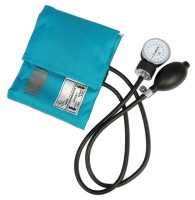 Kazuo Kitagawa, MD PhD
Department of Neurology
Tokyo Women's Medical University
Tokyo, Japan
MedicalResearch.com: What is the background for this study? What are the main findings
Response: Reduction in blood pressure (BP) reduces the rates of recurrent stroke, but the optimum BP target remained unclear.
The results of RESPECT Study together with up-dated meta-analysis showed the benefit of intensive blood pressure lowering (<130/80 mmHg) compared with standard BP lowering (<140/90 mmHg).
Kazuo Kitagawa, MD PhD
Department of Neurology
Tokyo Women's Medical University
Tokyo, Japan
MedicalResearch.com: What is the background for this study? What are the main findings
Response: Reduction in blood pressure (BP) reduces the rates of recurrent stroke, but the optimum BP target remained unclear.
The results of RESPECT Study together with up-dated meta-analysis showed the benefit of intensive blood pressure lowering (<130/80 mmHg) compared with standard BP lowering (<140/90 mmHg). 






 Dr. Phelan[/caption]
Dermot Phelan, MD, PhD
Director of the Sports Cardiology Center
Cleveland Clinic in Cleveland, Ohio
MedicalResearch.com: What is the background for this study?
Response: It is well recognized that long-term elite endurance athletes are at higher risk of atrial fibrillation. We wished to evaluate whether this held true for primarily strength-type athletes. We had the opportunity to screen almost 500 former NFL athletes. It became clear that we were seeing more atrial fibrillation than one would expect during the screenings.
Dr. Phelan[/caption]
Dermot Phelan, MD, PhD
Director of the Sports Cardiology Center
Cleveland Clinic in Cleveland, Ohio
MedicalResearch.com: What is the background for this study?
Response: It is well recognized that long-term elite endurance athletes are at higher risk of atrial fibrillation. We wished to evaluate whether this held true for primarily strength-type athletes. We had the opportunity to screen almost 500 former NFL athletes. It became clear that we were seeing more atrial fibrillation than one would expect during the screenings.



















 Dr. Wee[/caption]
Christina C. Wee, MD, MPH
Associate Professor of Medicine
Harvard Medical School
Director , Obesity Research Program Division of General Medicine
Beth Israel Deaconess Medical Center (BIDMC)
Associate Program Director, Internal Medicine Program, BIDMC
Deputy Editor of the Annals of Internal Medicine
MedicalResearch.com: What is the background for this study?
Response: New research is showing that for many people without diagnosed heart disease, the risk of bleeding may outweigh the benefits of taking a daily aspirin particularly in adults over 70 years of age. The American Heart Association and the American College of Cardiology recently updated their guidelines and now explicitly recommend against aspirin use among those over the age of 70 who do not have existing heart disease or stroke.
Our study found that in 2017, a quarter of adults aged 40 years or older without cardiovascular disease – approximately 29 million people – reported taking daily aspirin for prevention of heart disease. Of these, some 6.6. million people did so without a physician's recommendation.
Dr. Wee[/caption]
Christina C. Wee, MD, MPH
Associate Professor of Medicine
Harvard Medical School
Director , Obesity Research Program Division of General Medicine
Beth Israel Deaconess Medical Center (BIDMC)
Associate Program Director, Internal Medicine Program, BIDMC
Deputy Editor of the Annals of Internal Medicine
MedicalResearch.com: What is the background for this study?
Response: New research is showing that for many people without diagnosed heart disease, the risk of bleeding may outweigh the benefits of taking a daily aspirin particularly in adults over 70 years of age. The American Heart Association and the American College of Cardiology recently updated their guidelines and now explicitly recommend against aspirin use among those over the age of 70 who do not have existing heart disease or stroke.
Our study found that in 2017, a quarter of adults aged 40 years or older without cardiovascular disease – approximately 29 million people – reported taking daily aspirin for prevention of heart disease. Of these, some 6.6. million people did so without a physician's recommendation.