MedicalResearch.com Interview with:
[caption id="attachment_50532" align="alignleft" width="150"]

Dr. Thiel[/caption]
Cassandra L. Thiel, PhD
Assistant Professor
NYU Langone School of Medicine
Department of Population Health
NYU Wagner Graduate School of Public Service
NYU Tandon School of Engineering
MedicalResearch.com: What is the background for this study?
Response: Most healthcare professionals and researchers are aware that the healthcare sector makes up about 18% of the US Gross Domestic Product. What many do not realize is that all of that economic activity results in sizable resource consumption and environmental emissions. The healthcare industry is responsible for 10% of the US’s greenhouse gas (GHG) emissions and 9% of air pollutants.
1 Sustainability in healthcare is a developing field of research and practice, and my lab offers data and information by quantifying resource use and emissions of healthcare delivery. We started looking at cataract surgery a few years ago, in part because operating rooms (ORs) typically represent the largest portion of spending and garbage generation in a hospital.
2,3 Cataract surgeries are interesting because they are one of the most common surgeries performed in the world. In the US, we spend $6.8 billion on them each year. Any changes we can make to individual cases would have much larger, global impacts.
I studied cataract surgeries at a world-renowned, high-volume eye surgery center in India and helped validate that clinical care could be designed in a way that was effective, cost-efficient, and resource efficient. Compared to the same procedure in the UK, this surgery center generates only 5% of the carbon emissions (with the same outcomes).
2 This site’s standard policy is to multi-dose their eye drops, or use them on multiple patients until the bottle was empty. As such, the site generated very little waste.
Returning to the US, I observed cataract cases and heard the complaints of OR staff that they had to throw out many partially used or unused pharmaceuticals. In reviewing the literature, we could not find a study that quantified
how much we were throwing away and what it cost us to do so. We, therefore, set up a study to look at this particular issue.


 Dr. Hirad[/caption]
Adnan Hirad, PhD
MD Candidate, Medical Scientist Training Program
University of Rochester
School of Medicine and Dentistry
MedicalResearch.com: What is the background for this study?
Response: Concussion is defined based on the manifestation of observable signs and symptoms (e.g., dizziness, difficulty with concentration, loss of consciousness, inter alia). A non-concussive head injury is when someone hits their head but does not exhibit the signs and symptoms of concussion -- IE concussion is defined by observable signs, and sub-concussive is defined as sustaining head impacts similar (in magnitude and mechanism) to those sustained with concussion without observable signs and/or symptoms. These hits are a problem not only in football, but also with IED/bomb blasts experienced during war and potentially rugby.
Dr. Hirad[/caption]
Adnan Hirad, PhD
MD Candidate, Medical Scientist Training Program
University of Rochester
School of Medicine and Dentistry
MedicalResearch.com: What is the background for this study?
Response: Concussion is defined based on the manifestation of observable signs and symptoms (e.g., dizziness, difficulty with concentration, loss of consciousness, inter alia). A non-concussive head injury is when someone hits their head but does not exhibit the signs and symptoms of concussion -- IE concussion is defined by observable signs, and sub-concussive is defined as sustaining head impacts similar (in magnitude and mechanism) to those sustained with concussion without observable signs and/or symptoms. These hits are a problem not only in football, but also with IED/bomb blasts experienced during war and potentially rugby.





 Dr. Gery Guy[/caption]
Gery P. Guy Jr., PhD, MPH
Senior Health Economist
Division of Unintentional Injury Prevention
CDC
MedicalResearch.com: What is the background for this study?
Response: In 2017, among the 70,237 drug overdose deaths in the United States, 47,600 (67.8%) involved prescription or illicit opioids. Distribution of the opioid receptor antagonist naloxone to reverse overdose is a key part of the public health response to the opioid overdose epidemic. The 2016 CDC Guideline for Prescribing Opioids for Chronic Pain recommended clinicians consider offering naloxone when overdose risk factors, such as history of overdose or opioid use disorder, higher opioid dosages, or concurrent benzodiazepine use, are present.
However, recent analyses examining pharmacy-based naloxone dispensing are lacking. To address this gap and to inform future overdose prevention and response efforts, CDC examined trends and characteristics of naloxone dispensed from retail pharmacies at the national and county level in the United States.
Dr. Gery Guy[/caption]
Gery P. Guy Jr., PhD, MPH
Senior Health Economist
Division of Unintentional Injury Prevention
CDC
MedicalResearch.com: What is the background for this study?
Response: In 2017, among the 70,237 drug overdose deaths in the United States, 47,600 (67.8%) involved prescription or illicit opioids. Distribution of the opioid receptor antagonist naloxone to reverse overdose is a key part of the public health response to the opioid overdose epidemic. The 2016 CDC Guideline for Prescribing Opioids for Chronic Pain recommended clinicians consider offering naloxone when overdose risk factors, such as history of overdose or opioid use disorder, higher opioid dosages, or concurrent benzodiazepine use, are present.
However, recent analyses examining pharmacy-based naloxone dispensing are lacking. To address this gap and to inform future overdose prevention and response efforts, CDC examined trends and characteristics of naloxone dispensed from retail pharmacies at the national and county level in the United States.







 Upekha Liyanage[/caption]
Upekha Liyanage MBBS | PhD Student
School of Medicine | University of Queensland
Statistical Genetics Laboratory
QIMR Berghofer Medical Research Institute
MedicalResearch.com: What is the background for this study? What types of skin cancers are linked to these genes?
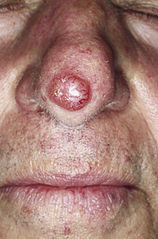
Response: Basal cell carcinoma (BCC) and squamous cell carcinoma (SCC) collectively referred to as “keratinocyte cancers” are the commonest forms of cancers of the skin. Although these cancers are less aggressive than melanoma, due to their large numbers, they pose a significant burden to the healthcare expenditure. Also, these cancers are relatively understudied when compared with melanoma. Notably, BCC and SCC are not routinely reported in cancer registries. In Australia, Medicare data are used to estimate the incidence and costs associated with these cancers. Expenditure in Australia for the diagnosis, treatment and pathology, almost exceeds $700 million for both BCC and squamous cell carcinoma. In Unites States, the average annual cost for skin cancer including melanoma is approximately $8.1 billion.
Previous research has led to identification of 29 BCC and 11 squamous cell carcinoma genetic risk variants and 7 of them overlap with both BCC and SCC risk. So, to strengthen the preventive efforts and to reveal new therapeutics, it is very timely and critical to explore more on the genetic susceptibility of these deadly cancers. We analysed ~48,000 cancer cases with ~630,000 skin cancer free controls from European ancestry population in Australia, UK and USA.
Upekha Liyanage[/caption]
Upekha Liyanage MBBS | PhD Student
School of Medicine | University of Queensland
Statistical Genetics Laboratory
QIMR Berghofer Medical Research Institute
MedicalResearch.com: What is the background for this study? What types of skin cancers are linked to these genes?
Response: Basal cell carcinoma (BCC) and squamous cell carcinoma (SCC) collectively referred to as “keratinocyte cancers” are the commonest forms of cancers of the skin. Although these cancers are less aggressive than melanoma, due to their large numbers, they pose a significant burden to the healthcare expenditure. Also, these cancers are relatively understudied when compared with melanoma. Notably, BCC and SCC are not routinely reported in cancer registries. In Australia, Medicare data are used to estimate the incidence and costs associated with these cancers. Expenditure in Australia for the diagnosis, treatment and pathology, almost exceeds $700 million for both BCC and squamous cell carcinoma. In Unites States, the average annual cost for skin cancer including melanoma is approximately $8.1 billion.
Previous research has led to identification of 29 BCC and 11 squamous cell carcinoma genetic risk variants and 7 of them overlap with both BCC and SCC risk. So, to strengthen the preventive efforts and to reveal new therapeutics, it is very timely and critical to explore more on the genetic susceptibility of these deadly cancers. We analysed ~48,000 cancer cases with ~630,000 skin cancer free controls from European ancestry population in Australia, UK and USA.