MedicalResearch.com Interview with:
[caption id="attachment_52201" align="alignleft" width="200"]

Dr. Pierre Amarenco[/caption]
Pierre Amarenco, MD
Professor and Chairman
Paris University, Paris, France
INSERM
Department of Neurology and Stroke Centre
Bichat Hospital
Paris, France
MedicalResearch.com: What is the background for this study?
Response: The rationale of the Treat Stroke to target trial was that after we published the SPARCL trial in 2006 (atorvastatin 80 mg/day vs placebo in patients with stroke) which showed a 16% relative risk reduction of recurrent stroke, we performed several pre specified and post hoc analyses, showing that in SPARCL patients randomized with "atherosclerotic disease" the risk reduction for the primary endpoint was much higher (33%), and in in patients achieving a LDL cholesterol of less than 70 mg/dL as compared to those achieving a LDL cholesterol 100 mg/dL or higher, the risk reduction was 28%.
Therefore to confirm this findings, we designed the TST trial, which was an investigator initiated trial funded by the french ministry of health, and enrolled patients with an ischemic stroke due to atherosclerotic stenosis and randomized them to either a target LDL cholesterol of less than 70 mg/dL or a target LDL cholesterol of 90 to 110 mg/dL. To achieve these goals, the investigators could use any statin available on the market, and titrate the dosage of the statin to get to the assigned target. They could also use ezetimibe on top of statin therapy if a high dosage of statin was not sufficient to get to the target level assigned by randomization.


 Dr. Wheeler[/caption]
Ben Wheeler,MB ChB(Otago) DCH PhD CCE FRACP
Paediatrician, Associate
Department of Women's and Children's Health (Dunedin)
University of Otag
MedicalResearch.com: What is the background for this study?
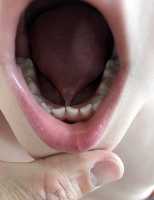
Response: All tongues have a frenulum, which is a small band of tissue that helps connect them to the floor of the mouth. Tongue tie (or ankyloglossia) is when this frenulum causes restriction to the movement of the tongue, and can interfere with successful breastfeeding in infants. This may be improved with an operation to cut the frenulum of the tongue (frenotomy). Internationally, tongue-tie diagnosis and treatment has increased substantially (reported at over 10-15% in some locations). This has led to growing concerns of potential overtreatment. The surgical treatment is often discussed as a minor surgery with little risk, but there is growing awareness this may not be the case. There is a paucity of studies examining moderate to severe complications following frenotomy.
Therefore we aimed to determine rates of moderate to severe complications of tongue tie procedures presenting to hospital-based paediatricians in New Zealand, and describe this population.
Dr. Wheeler[/caption]
Ben Wheeler,MB ChB(Otago) DCH PhD CCE FRACP
Paediatrician, Associate
Department of Women's and Children's Health (Dunedin)
University of Otag
MedicalResearch.com: What is the background for this study?
Response: All tongues have a frenulum, which is a small band of tissue that helps connect them to the floor of the mouth. Tongue tie (or ankyloglossia) is when this frenulum causes restriction to the movement of the tongue, and can interfere with successful breastfeeding in infants. This may be improved with an operation to cut the frenulum of the tongue (frenotomy). Internationally, tongue-tie diagnosis and treatment has increased substantially (reported at over 10-15% in some locations). This has led to growing concerns of potential overtreatment. The surgical treatment is often discussed as a minor surgery with little risk, but there is growing awareness this may not be the case. There is a paucity of studies examining moderate to severe complications following frenotomy.
Therefore we aimed to determine rates of moderate to severe complications of tongue tie procedures presenting to hospital-based paediatricians in New Zealand, and describe this population.