MedicalResearch.com Interview with:
[caption id="attachment_50532" align="alignleft" width="150"]

Dr. Thiel[/caption]
Cassandra L. Thiel, PhD
Assistant Professor
NYU Langone School of Medicine
Department of Population Health
NYU Wagner Graduate School of Public Service
NYU Tandon School of Engineering
MedicalResearch.com: What is the background for this study?
Response: Most healthcare professionals and researchers are aware that the healthcare sector makes up about 18% of the US Gross Domestic Product. What many do not realize is that all of that economic activity results in sizable resource consumption and environmental emissions. The healthcare industry is responsible for 10% of the US’s greenhouse gas (GHG) emissions and 9% of air pollutants.
1 Sustainability in healthcare is a developing field of research and practice, and my lab offers data and information by quantifying resource use and emissions of healthcare delivery. We started looking at cataract surgery a few years ago, in part because operating rooms (ORs) typically represent the largest portion of spending and garbage generation in a hospital.
2,3 Cataract surgeries are interesting because they are one of the most common surgeries performed in the world. In the US, we spend $6.8 billion on them each year. Any changes we can make to individual cases would have much larger, global impacts.
I studied cataract surgeries at a world-renowned, high-volume eye surgery center in India and helped validate that clinical care could be designed in a way that was effective, cost-efficient, and resource efficient. Compared to the same procedure in the UK, this surgery center generates only 5% of the carbon emissions (with the same outcomes).
2 This site’s standard policy is to multi-dose their eye drops, or use them on multiple patients until the bottle was empty. As such, the site generated very little waste.
Returning to the US, I observed cataract cases and heard the complaints of OR staff that they had to throw out many partially used or unused pharmaceuticals. In reviewing the literature, we could not find a study that quantified
how much we were throwing away and what it cost us to do so. We, therefore, set up a study to look at this particular issue.


 Upekha Liyanage[/caption]
Upekha Liyanage MBBS | PhD Student
School of Medicine | University of Queensland
Statistical Genetics Laboratory
QIMR Berghofer Medical Research Institute
MedicalResearch.com: What is the background for this study? What types of skin cancers are linked to these genes?
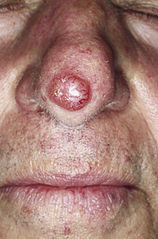
Response: Basal cell carcinoma (BCC) and squamous cell carcinoma (SCC) collectively referred to as “keratinocyte cancers” are the commonest forms of cancers of the skin. Although these cancers are less aggressive than melanoma, due to their large numbers, they pose a significant burden to the healthcare expenditure. Also, these cancers are relatively understudied when compared with melanoma. Notably, BCC and SCC are not routinely reported in cancer registries. In Australia, Medicare data are used to estimate the incidence and costs associated with these cancers. Expenditure in Australia for the diagnosis, treatment and pathology, almost exceeds $700 million for both BCC and squamous cell carcinoma. In Unites States, the average annual cost for skin cancer including melanoma is approximately $8.1 billion.
Previous research has led to identification of 29 BCC and 11 squamous cell carcinoma genetic risk variants and 7 of them overlap with both BCC and SCC risk. So, to strengthen the preventive efforts and to reveal new therapeutics, it is very timely and critical to explore more on the genetic susceptibility of these deadly cancers. We analysed ~48,000 cancer cases with ~630,000 skin cancer free controls from European ancestry population in Australia, UK and USA.
Upekha Liyanage[/caption]
Upekha Liyanage MBBS | PhD Student
School of Medicine | University of Queensland
Statistical Genetics Laboratory
QIMR Berghofer Medical Research Institute
MedicalResearch.com: What is the background for this study? What types of skin cancers are linked to these genes?
Response: Basal cell carcinoma (BCC) and squamous cell carcinoma (SCC) collectively referred to as “keratinocyte cancers” are the commonest forms of cancers of the skin. Although these cancers are less aggressive than melanoma, due to their large numbers, they pose a significant burden to the healthcare expenditure. Also, these cancers are relatively understudied when compared with melanoma. Notably, BCC and SCC are not routinely reported in cancer registries. In Australia, Medicare data are used to estimate the incidence and costs associated with these cancers. Expenditure in Australia for the diagnosis, treatment and pathology, almost exceeds $700 million for both BCC and squamous cell carcinoma. In Unites States, the average annual cost for skin cancer including melanoma is approximately $8.1 billion.
Previous research has led to identification of 29 BCC and 11 squamous cell carcinoma genetic risk variants and 7 of them overlap with both BCC and SCC risk. So, to strengthen the preventive efforts and to reveal new therapeutics, it is very timely and critical to explore more on the genetic susceptibility of these deadly cancers. We analysed ~48,000 cancer cases with ~630,000 skin cancer free controls from European ancestry population in Australia, UK and USA. 


















 Dr. Dunn[/caption]
Dr. Amy Dunn, PhD
Kaczorowski lab
The Jackson Laboratory
MedicalResearch.com: What is the background for this study? What are the main findings?
Response: Environmental factors, such as a poor diet, are known risk factors for Alzheimer’s disease. But the mechanisms are complex, and it is not known how such environmental perturbations interact with individual genetic variation to confer disease risk. Previous studies have not adequately addressed how the combination of genetic variant and environmental factors combine to alter cognitive response to a poor diet.
To investigate gene-by-environment interactions, we fed either a normal diet or a high-fat diet to a genetically diverse Alzheimer’s disease mouse model population starting at six months of age and monitored metabolic and cognitive function.
We observed accelerated working memory decline in the mice on the high-fat diet after eight weeks, with substantial gene-by diet effects on both cognitive and metabolic traits.
Metabolic dysfunction was more closely related to cognitive function in mice carrying Alzheimer’s mutations than in those without. Interestingly, the high-fat diet affected metabolic function differently in female versus male mice.
Dr. Dunn[/caption]
Dr. Amy Dunn, PhD
Kaczorowski lab
The Jackson Laboratory
MedicalResearch.com: What is the background for this study? What are the main findings?
Response: Environmental factors, such as a poor diet, are known risk factors for Alzheimer’s disease. But the mechanisms are complex, and it is not known how such environmental perturbations interact with individual genetic variation to confer disease risk. Previous studies have not adequately addressed how the combination of genetic variant and environmental factors combine to alter cognitive response to a poor diet.
To investigate gene-by-environment interactions, we fed either a normal diet or a high-fat diet to a genetically diverse Alzheimer’s disease mouse model population starting at six months of age and monitored metabolic and cognitive function.
We observed accelerated working memory decline in the mice on the high-fat diet after eight weeks, with substantial gene-by diet effects on both cognitive and metabolic traits.
Metabolic dysfunction was more closely related to cognitive function in mice carrying Alzheimer’s mutations than in those without. Interestingly, the high-fat diet affected metabolic function differently in female versus male mice. 


 Dr. Hui Wang[/caption]
Prof Hui Wang PhD
Wuhan University
China
MedicalResearch.com: What is the background for this study? What are the main findings?
Response: We started our work in the adverse outcome of maternal caffeine intake during pregnancy about 15 years ago. Then, we found that prenatal caffeine intake could result in nonalcoholic fatty liver disease in the offspring. However, the underlying mechanism was unclear.
So, we start the current work, and found that hat maternal caffeine intake disrupts liver development before and after birth, which might be the trigger of the adult non-alcoholic fatty liver disease in the offspring rats. Moreover, we further found that the fetal programming of liver glucocorticoid – insulin like growth factor 1 axis, a new endocrine axis first reported by our team, might participate in such process.
Dr. Hui Wang[/caption]
Prof Hui Wang PhD
Wuhan University
China
MedicalResearch.com: What is the background for this study? What are the main findings?
Response: We started our work in the adverse outcome of maternal caffeine intake during pregnancy about 15 years ago. Then, we found that prenatal caffeine intake could result in nonalcoholic fatty liver disease in the offspring. However, the underlying mechanism was unclear.
So, we start the current work, and found that hat maternal caffeine intake disrupts liver development before and after birth, which might be the trigger of the adult non-alcoholic fatty liver disease in the offspring rats. Moreover, we further found that the fetal programming of liver glucocorticoid – insulin like growth factor 1 axis, a new endocrine axis first reported by our team, might participate in such process.


 Kazuo Kitagawa, MD PhD
Department of Neurology
Tokyo Women's Medical University
Tokyo, Japan
MedicalResearch.com: What is the background for this study? What are the main findings
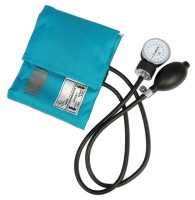
Response: Reduction in blood pressure (BP) reduces the rates of recurrent stroke, but the optimum BP target remained unclear.
The results of RESPECT Study together with up-dated meta-analysis showed the benefit of intensive blood pressure lowering (<130/80 mmHg) compared with standard BP lowering (<140/90 mmHg).
Kazuo Kitagawa, MD PhD
Department of Neurology
Tokyo Women's Medical University
Tokyo, Japan
MedicalResearch.com: What is the background for this study? What are the main findings
Response: Reduction in blood pressure (BP) reduces the rates of recurrent stroke, but the optimum BP target remained unclear.
The results of RESPECT Study together with up-dated meta-analysis showed the benefit of intensive blood pressure lowering (<130/80 mmHg) compared with standard BP lowering (<140/90 mmHg).