MedicalResearch.com Interview with:
[caption id="attachment_50105" align="alignleft" width="158"]

Dr Natasha van Zy[/caption]
Dr. Natasha van Zyl, MBChB (Cape Town), FRACS
FRACS Plastic and Reconstructive Surgeon
Melbourne, Australia
MedicalResearch.com: What is the background for this study? What are the main findings?
Response: The estimated global incidence of spinal cord injury (SCI) from all causes is 40 to 80 new cases per million population per year which means that every year between 250 000 to 500 000 people worldwide suffer SCI
(1)(chap 2 p 17). In Australia the age standardised, annual incident rate of persisting traumatic SCI for Australian residents aged 15 years and above is 11.8 cases per million.
(2) Just over 50% of all spinal cord injuries in Australia occur at the cervical level resulting in tetraplegia.
(2)
Cervical spinal cord injury is a devastating, life-changing injury impacting almost every aspect of a person’s work, family and social life. Although compared to many other health conditions it has a relatively low incidence, it is certainly a high cost health condition, with the lifetime cost per tetraplegia incident case estimated to be AU$9.5 million.
(3) For those living with tetraplegia improvement in hand function is their highest ranked goal.
(4) As such, reconstruction of upper extremity function in cervical spinal cord injury is a crucial component of the surgical rehabilitation of people with mid/low cervical spinal cord injury as it has the capacity to restore critical functions such as elbow extension, wrist extension, grasp, key pinch and release. Traditionally these functions have been reconstructed using tendon transfers, which move a functioning muscle to a new insertion site to recreate the function of a paralysed muscle.
(5)





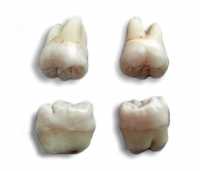

 It was noted that the differentiation of the structures of the developing jaws is ahead of other divisions. The presence of chromophobic spindle-shaped cells migrating in the direction of the tooth rudiments and their location in the region surrounding the enamel organ indicates intercellular interactions in the development of teeth in humans that differ from these processes in lower vertebrates. At the present stage, it is known that ectomesenchyme is involved in cell assemblies participating in the development of dentin.