MedicalResearch.com Interview with:
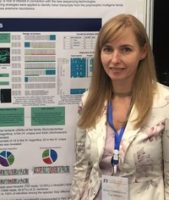
[caption id="attachment_45344" align="alignleft" width="200"]

Dr. Mackey[/caption]
Rachel H. Mackey, PhD, MPH, FAHA
Assistant Professor of Epidemiology
Graduate School of Public Health
University of Pittsburgh
MedicalResearch.com: What is the background for this study?
Response: “Hardening,” or stiffening, of the arteries is a risk factor for heart attacks and other cardiovascular disease. Arterial stiffness can be measured by pulse wave velocity (PWV), because the pulse pressure wave travels faster in stiffer arteries. Stiffer arteries transmit increased pulsatile blood flow to the brain and are linked with markers of silent, or subclinical, brain disease, which are related to increased risk of dementia. However, it was not clear whether arterial stiffening would predict risk of dementia, especially in older adults, who often have existing subclinical brain disease. Therefore, a
University of Pittsburgh team, led by Chendi Cui, M.S, doctoral student, and Rachel Mackey, PhD, MPH, FAHA, assistant professor of epidemiology at
Pitt Public Health, analyzed the association between arterial stiffness and 15-year risk of dementia among 356 older adults, with an average age of 78. Study participants were part of the Cardiovascular Health Study Cognition Study (CHS‐CS), a long‐term study to identify dementia risk factors, led by coauthors Oscar Lopez MD and Lewis Kuller, MD, DrPH. In 1996-2000, study participants had had arterial stiffness measured by pulse wave velocity (PWV), brain imaging by MRI, and had annual follow-up visits for cognitive status.




 Dr. Nicole Karcher, PhD
Post-doctoral scholar with the NIMH Training in Clinical Sciences fellowship
Department of Psychiatry
Washington University School of Medicine
MedicalResearch.com: What is the background for this study? What are the main findings?
Response: For over fifteen years, researchers have debated the role that cannabis use plays in the development of both psychotic disorders as well as subthreshold psychotic symptoms, such as psychotic-like experiences (PLEs). There is still a lack of consensus regarding the nature of the association between cannabis use and psychosis risk, with some research finding evidence for genetic overlap, while other research finds evidence for potentially causal pathways.
The current study examined data from twins and siblings from two different samples, the U.S.-based Human Connectome Project and the Australian Twin Registry, with a total of 4,674 participants. Overall, psychotic-like experiences were associated with three separate cannabis use variables [frequent (≥100 times) use, a Cannabis Use Disorder diagnosis, and current cannabis use]. Furthermore, the current research found evidence for both shared genetic and individual-specific contributions to the association between PLEs and these three cannabis use variables. More specifically, while the association between cannabis use and psychotic-like experiences was largely attributable to shared genetic factors, cannabis users were more likely to endorse PLEs in comparison to the relative who used cannabis less.
Dr. Nicole Karcher, PhD
Post-doctoral scholar with the NIMH Training in Clinical Sciences fellowship
Department of Psychiatry
Washington University School of Medicine
MedicalResearch.com: What is the background for this study? What are the main findings?
Response: For over fifteen years, researchers have debated the role that cannabis use plays in the development of both psychotic disorders as well as subthreshold psychotic symptoms, such as psychotic-like experiences (PLEs). There is still a lack of consensus regarding the nature of the association between cannabis use and psychosis risk, with some research finding evidence for genetic overlap, while other research finds evidence for potentially causal pathways.
The current study examined data from twins and siblings from two different samples, the U.S.-based Human Connectome Project and the Australian Twin Registry, with a total of 4,674 participants. Overall, psychotic-like experiences were associated with three separate cannabis use variables [frequent (≥100 times) use, a Cannabis Use Disorder diagnosis, and current cannabis use]. Furthermore, the current research found evidence for both shared genetic and individual-specific contributions to the association between PLEs and these three cannabis use variables. More specifically, while the association between cannabis use and psychotic-like experiences was largely attributable to shared genetic factors, cannabis users were more likely to endorse PLEs in comparison to the relative who used cannabis less.