MedicalResearch.com Interview with:
[caption id="attachment_55140" align="alignleft" width="142"]

Dr. Karaca Mandic[/caption]
Pinar Karaca-Mandic, PhD
Professor, Finance Department
Arthur Williams Jr. Professor of Healthcare Risk Management
Academic Director, Medical Industry Leadership Institute (MILI)
Carlson School of Management
University of Minnesota
MedicalResearch.com: What is the background for this study?
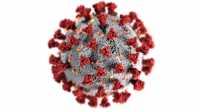
Response: Several studies have highlighted disparities in COVID-19 infection rates and deaths. Less is known about disparities in hospitalizations. Reports from the Centers for Disease Control showed that in the nation overall, non-Hispanic Blacks, Hispanics and American Indian Alaska
Native persons have substantially higher rates of COVID-19 hospitalization. Our study extends this work by providing a state-by-state analysis of race/ethnic prevalence of cumulative COVID-19 hospitalizations and comparing this prevalence to ethnic/racial composition of each state’s population.
Through our University of Minnesota Covid-19 hospitalization tracking project (
https://carlsonschool.umn.edu/mili-misrc-covid19-tracking-project) we collect data every day from state department of health websites, and we started collecting information on race/ethnicity breakdown of the hospitalizations as soon as states started reporting such data. During our study period, between April 30 and June 24, 12 states reported cumulative hospitalizations by race/ethnicity. By the end of our study, our data from these 12 states represented almost 50,000 hospitalizations.




 Ankur Dalsania[/caption]
Ankur Dalsania
Rutgers New Jersey Medical School (NJMS)
M.D. Candidate 2021
MedicalResearch.com: What is the background for this study?
Response: Similar to past pandemics, prior studies and news articles have highlighted the disproportionate impact of COVID-19 mortality in marginalized populations, especially Black Americans. Rather than biological differences, other factors like neighborhood conditions, educational attainment, economic stability, healthcare access, and social contexts have been hypothesized to influence the racial disparities.
Using county-level data, we sought to quantitatively determine how these factors, collectively referred to as social determinants of health, impact COVID-19 mortality in Black Americans.
Ankur Dalsania[/caption]
Ankur Dalsania
Rutgers New Jersey Medical School (NJMS)
M.D. Candidate 2021
MedicalResearch.com: What is the background for this study?
Response: Similar to past pandemics, prior studies and news articles have highlighted the disproportionate impact of COVID-19 mortality in marginalized populations, especially Black Americans. Rather than biological differences, other factors like neighborhood conditions, educational attainment, economic stability, healthcare access, and social contexts have been hypothesized to influence the racial disparities.
Using county-level data, we sought to quantitatively determine how these factors, collectively referred to as social determinants of health, impact COVID-19 mortality in Black Americans. 




 Dr. Goyal[/caption]
Dr. Monika K. Goyal, MD
Associate Division Chief, Emergency Medicine
Children’s National Hospital
Department of Pediatrics, School of Medicine and Health Sciences
The George Washington University
Washington, District of Columbia
MedicalResearch.com: What is the background for this study?
Response: There has been growing attention to the disproportionate use of police force in communities of color. Therefore, we sought to investigate whether Black and Hispanic teenagers have higher rates of death due to police shootings when compared to white youth.
Dr. Goyal[/caption]
Dr. Monika K. Goyal, MD
Associate Division Chief, Emergency Medicine
Children’s National Hospital
Department of Pediatrics, School of Medicine and Health Sciences
The George Washington University
Washington, District of Columbia
MedicalResearch.com: What is the background for this study?
Response: There has been growing attention to the disproportionate use of police force in communities of color. Therefore, we sought to investigate whether Black and Hispanic teenagers have higher rates of death due to police shootings when compared to white youth.





 Dr. Ratnasiri[/caption]
Anura Ratnasiri PhD
Senior Research Scientist
(Epidemiology and Biostatistics) Benefits Division
Department of Health Care Services
Sacramento, CA 95899-7417
MedicalResearch.com: What is the background for this study?
Response: Infant mortality rate (IMR) is a widely-reported indicator of population health and is used as a standardized measurement of deaths in the first year of life per thousand live births. While IMR has been steadily declining in the United States, it remains relatively high compared with other developed countries.
Even though significant improvements have been made in the quality and access to neonatal and infant care during the past decade, large educational, socioeconomic, racial, ethnic, geographic and behavioral disparities persist, and appear to be responsible for significant differences in IMR among different subgroups. Certain maternal and infant characteristics have important associations with IMR, and this study attempted to quantify major maternal and infant predictors, and trace associated mortality trends during the study period.
There were no recent studies on infant mortality using a large data set such as California State. Moreover, gestational age based on obstetric estimates from fetal ultrasound, prepregnancy obesity, and smoking during pregnancy were not available in prior population-based studies in California.
Dr. Ratnasiri[/caption]
Anura Ratnasiri PhD
Senior Research Scientist
(Epidemiology and Biostatistics) Benefits Division
Department of Health Care Services
Sacramento, CA 95899-7417
MedicalResearch.com: What is the background for this study?
Response: Infant mortality rate (IMR) is a widely-reported indicator of population health and is used as a standardized measurement of deaths in the first year of life per thousand live births. While IMR has been steadily declining in the United States, it remains relatively high compared with other developed countries.
Even though significant improvements have been made in the quality and access to neonatal and infant care during the past decade, large educational, socioeconomic, racial, ethnic, geographic and behavioral disparities persist, and appear to be responsible for significant differences in IMR among different subgroups. Certain maternal and infant characteristics have important associations with IMR, and this study attempted to quantify major maternal and infant predictors, and trace associated mortality trends during the study period.
There were no recent studies on infant mortality using a large data set such as California State. Moreover, gestational age based on obstetric estimates from fetal ultrasound, prepregnancy obesity, and smoking during pregnancy were not available in prior population-based studies in California.

 Dr. Travers[/caption]
Colm Travers, M.D., MSPH
Assistant Professor
Department of Pediatrics
University of Alabama at Birmingham
MedicalResearch.com: What is the background for this study?
Response: It is known that black mothers are much more likely to deliver preterm and low birth weight infants. The purpose of this study was to determine whether racial/ethnic disparities in care practices and outcomes were decreasing or increasing among extremely preterm infants.
These are infants born from 22 to 27 weeks of gestation who have a high risk of death and major illnesses.
Dr. Travers[/caption]
Colm Travers, M.D., MSPH
Assistant Professor
Department of Pediatrics
University of Alabama at Birmingham
MedicalResearch.com: What is the background for this study?
Response: It is known that black mothers are much more likely to deliver preterm and low birth weight infants. The purpose of this study was to determine whether racial/ethnic disparities in care practices and outcomes were decreasing or increasing among extremely preterm infants.
These are infants born from 22 to 27 weeks of gestation who have a high risk of death and major illnesses. 
 Dr. Cavanaugh[/caption]
Alyson Cavanaugh, PT, PhD
Joint Doctoral Program in Epidemiology
University of California, San Diego/ San Diego State University
MedicalResearch.com: What is the background for this study?
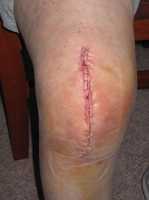
Response: More than 700,000 total knee replacements are performed annually in the United States, but there is a racial disparity in outcomes after the surgery. If the knee replacement procedure is considered a highly effective treatment, why don't black women present with the same outcomes as whites?
Physical function when going into surgery has a large impact on the potential functional outcomes after surgery. Our hypothesis was that black women were presenting to surgery with poorer physical function, which was contributing to poorer functional outcomes after surgery.
Dr. Cavanaugh[/caption]
Alyson Cavanaugh, PT, PhD
Joint Doctoral Program in Epidemiology
University of California, San Diego/ San Diego State University
MedicalResearch.com: What is the background for this study?
Response: More than 700,000 total knee replacements are performed annually in the United States, but there is a racial disparity in outcomes after the surgery. If the knee replacement procedure is considered a highly effective treatment, why don't black women present with the same outcomes as whites?
Physical function when going into surgery has a large impact on the potential functional outcomes after surgery. Our hypothesis was that black women were presenting to surgery with poorer physical function, which was contributing to poorer functional outcomes after surgery.