MedicalResearch.com Interview with:
[caption id="attachment_29381" align="alignleft" width="200"]

Dr. Barry Sample[/caption]
Dr. Barry Sample PhD
Senior director, science and technology
Quest Diagnostics Employer Solutions
A business of Quest Diagnostics
MedicalResearch.com: What is the background for this study of drug testing of the U.S. workforce?
Response: As a leader in the drug testing industry, our primary goal at Quest Diagnostics Employer Solutions is to help employers maintain drug-free workplaces and combat the impacts of substance abuse such as higher absenteeism, increased risk of injury and lower productivity and performance.
One way we support these efforts is to offer analysis and information from resources like the Quest Diagnostics Drug Testing Index™, which we publish as a public service for government, media, and industry. We’ve published the Drug Testing Index since 1988, which is also the year that Congress passed the Drug-Free Workplace Act.
The Drug Testing Index examines positivity rates – the proportion of positive drug test results – among three major testing populations: federally-mandated, safety-sensitive workers; the general (private sector) U.S. workforce; and the combined U.S. workforce. Thresholds for positivity are determined by cutoff levels as established by the administrating authority; these cutoff levels determine the threshold for positivity for a specific substance. Should a metabolite appear at or above the level of the cutoff, a test is determined to be positive.
Over the last few decades, testing policies have evolved to serve a dual purpose of protecting the health, safety, and welfare of both employees and the general public. That’s especially important in certain industries, such as transportation, where an impaired driver, pilot, or operator can create substantial public risk. The positivity rate in 1998, the year of the first Drug Testing Index, was 13.6 percent. Over the last 25 years, as we have tracked the overall positivity rate, we have noted other significant trends in the American workforce based on workplace drug tests. For example, our 2003 analysis revealed that amphetamine positivity had grown by 70 percent over the previous five years. The 2011 Drug Testing Index found that hydrocodone and oxycodone led U.S. general workforce positives. In both 2010 and 2011, the overall drug positivity rate was 3.5 percent, the lowest rate since we began publishing the Drug Testing Index. This year, we found positivity is at a ten-year high.
What that tells us is that trends come and go, and that we cannot rely on assumptions about drug use.

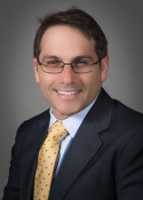 Dr. Devon A. Klein[/caption]
Devon A. Klein, MD, MPH
Asst. Professor of Radiology and Orthopaedics
Hofstra Northwell School of Medicine
Associate Chairman, Radiology
Lenox Hill Hospital
New York, NY 10075
MedicalResearch.com: What is the background for this study? What are the main findings?
Response: As our Emergency Department continued to grow our Radiology Department was challenged to accommodate the resultant increased volume with fixed resources (i.e. CT Scanners) and maintain CT scan throughput. Uncoordinated insular efforts within the Department of Radiology failed to resolve the problem. A collaborative approach utilizing Six Sigma lean and involving stakeholders from the Departments of Radiology, Emergency, Medicine, and Patient Transportation was able to better illustrate the “bottlenecks” and devise solutions.
Dr. Devon A. Klein[/caption]
Devon A. Klein, MD, MPH
Asst. Professor of Radiology and Orthopaedics
Hofstra Northwell School of Medicine
Associate Chairman, Radiology
Lenox Hill Hospital
New York, NY 10075
MedicalResearch.com: What is the background for this study? What are the main findings?
Response: As our Emergency Department continued to grow our Radiology Department was challenged to accommodate the resultant increased volume with fixed resources (i.e. CT Scanners) and maintain CT scan throughput. Uncoordinated insular efforts within the Department of Radiology failed to resolve the problem. A collaborative approach utilizing Six Sigma lean and involving stakeholders from the Departments of Radiology, Emergency, Medicine, and Patient Transportation was able to better illustrate the “bottlenecks” and devise solutions.