MedicalResearch.com Interview with:
[caption id="attachment_54230" align="alignleft" width="200"]

Dr. Malats[/caption]
Dr. Núria Malats, MD PhD,
Head of the Genetic and Molecular Epidemiology Group
Spanish National Cancer Research Centre (CNIO)
MedicalResearch.com: What is the background for this study?
Response: The high mortality of pancreatic cancer is a consequence of late diagnosis because of the absence of symptoms in the earliest stages, and defining risk populations is therefore crucial to be able to carry out diagnostic tests that reveal the presence of the tumour as early as possible.
Diabetes and pancreatic cancer are connected because the pancreas secretes insulin; in diabetic people, this does not occur in a normal way. It is estimated that
around 50% of patients with pancreatic cancer presents diabetes. But it is an outstanding challenge for researchers to figure out which is the cause and which is the consequence.
To conduct the study, the team used data from more than 3,500 persons from
PanGenEU, a large European study involving centres from six countries, including Spain, and led by Malats, to analyse the relationship between multiple risk factors and pancreatic cancer.

 Dr. Cavanaugh[/caption]
Alyson Cavanaugh, PT, PhD
Joint Doctoral Program in Epidemiology
University of California, San Diego/ San Diego State University
MedicalResearch.com: What is the background for this study?
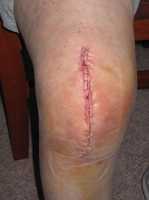
Response: More than 700,000 total knee replacements are performed annually in the United States, but there is a racial disparity in outcomes after the surgery. If the knee replacement procedure is considered a highly effective treatment, why don't black women present with the same outcomes as whites?
Physical function when going into surgery has a large impact on the potential functional outcomes after surgery. Our hypothesis was that black women were presenting to surgery with poorer physical function, which was contributing to poorer functional outcomes after surgery.
Dr. Cavanaugh[/caption]
Alyson Cavanaugh, PT, PhD
Joint Doctoral Program in Epidemiology
University of California, San Diego/ San Diego State University
MedicalResearch.com: What is the background for this study?
Response: More than 700,000 total knee replacements are performed annually in the United States, but there is a racial disparity in outcomes after the surgery. If the knee replacement procedure is considered a highly effective treatment, why don't black women present with the same outcomes as whites?
Physical function when going into surgery has a large impact on the potential functional outcomes after surgery. Our hypothesis was that black women were presenting to surgery with poorer physical function, which was contributing to poorer functional outcomes after surgery.

 Dr. Van der Pol[/caption]
Barbara Van Der Pol, PhD, MPH
President, American STD Association
President-Elect, International Society fo STD Research
Professor of Medicine & Public Health
Director, STD Diagnostics Lab
Director, UAB STD Clinical Research Organization
University of Alabama at Birmingham
Birmingham, AL 35294
MedicalResearch.com: What is the background for this study?
Response: For many decades, public health programs focused on control and prevention of sexually transmitted infections (STI) have relied on lab based tests that required a 1-day to 1-week wait for test results. Efforts to shorten the duration of infection lead to treating at the time of the clinic visit based on the association between certain clinical signs or symptoms and the likelihood of infection.
Unfortunately, more than ½ of infected persons do not have signs or symptoms so they receive no treatment until test results are available. Thus, a test that could be performed at the clinical site with a limited wait time would improve the accuracy of treatment and shorten the duration of infection. Such a strategy will hopefully reduce the number of return clinic visits, the possibility of transmission, and the potential for consequences of untreated infection such as infertility.
Dr. Van der Pol[/caption]
Barbara Van Der Pol, PhD, MPH
President, American STD Association
President-Elect, International Society fo STD Research
Professor of Medicine & Public Health
Director, STD Diagnostics Lab
Director, UAB STD Clinical Research Organization
University of Alabama at Birmingham
Birmingham, AL 35294
MedicalResearch.com: What is the background for this study?
Response: For many decades, public health programs focused on control and prevention of sexually transmitted infections (STI) have relied on lab based tests that required a 1-day to 1-week wait for test results. Efforts to shorten the duration of infection lead to treating at the time of the clinic visit based on the association between certain clinical signs or symptoms and the likelihood of infection.
Unfortunately, more than ½ of infected persons do not have signs or symptoms so they receive no treatment until test results are available. Thus, a test that could be performed at the clinical site with a limited wait time would improve the accuracy of treatment and shorten the duration of infection. Such a strategy will hopefully reduce the number of return clinic visits, the possibility of transmission, and the potential for consequences of untreated infection such as infertility. 


 Dr. Tandon[/caption]
Pooja S. Tandon, MD, MPH
Center for Child Health, Behavior and Development
Seattle Children's Research Institute
MedicalResearch.com: What is the background for this study?
Response: Cell phone use is common among middle and high school students, yet we do not have an understanding of school cell phone policies and practices in the U.S. We conducted a survey of public schools serving grades 6-12. The survey sent to over 1,100 school principals, representing a national sample of schools across the U.S., asked questions about the presence of a cell phone policy for students and staff and restrictions on phone use. Additional questions addressed consequences of policy violation, the use of cell phones for curricular activities and principals’ attitudes toward cell phone policies.
Dr. Tandon[/caption]
Pooja S. Tandon, MD, MPH
Center for Child Health, Behavior and Development
Seattle Children's Research Institute
MedicalResearch.com: What is the background for this study?
Response: Cell phone use is common among middle and high school students, yet we do not have an understanding of school cell phone policies and practices in the U.S. We conducted a survey of public schools serving grades 6-12. The survey sent to over 1,100 school principals, representing a national sample of schools across the U.S., asked questions about the presence of a cell phone policy for students and staff and restrictions on phone use. Additional questions addressed consequences of policy violation, the use of cell phones for curricular activities and principals’ attitudes toward cell phone policies. 

 Dr. Kaufman[/caption]
Gregory Kaufman, M.D.
Senior Vice President
Global Clinical and Medical Affairs
Specialty at Lupin
MedicalResearch.com: What is the background for this study? Would you briefly explain what is meant by trichomoniasis? How common is this infection?
Response: The Phase 3 trial evaluated the effectiveness and safety of a single oral dose of Solosec® (secnidazole) 2g oral granules for the treatment of trichomoniasis in adult women. Top-line results were positive and showed that Solosec was generally well-tolerated.
Trichomoniasis is the most common non-viral sexually transmitted infection (STI) in the U.S., and is caused by a protozoan parasite called Trichomonas vaginalis.
Dr. Kaufman[/caption]
Gregory Kaufman, M.D.
Senior Vice President
Global Clinical and Medical Affairs
Specialty at Lupin
MedicalResearch.com: What is the background for this study? Would you briefly explain what is meant by trichomoniasis? How common is this infection?
Response: The Phase 3 trial evaluated the effectiveness and safety of a single oral dose of Solosec® (secnidazole) 2g oral granules for the treatment of trichomoniasis in adult women. Top-line results were positive and showed that Solosec was generally well-tolerated.
Trichomoniasis is the most common non-viral sexually transmitted infection (STI) in the U.S., and is caused by a protozoan parasite called Trichomonas vaginalis.



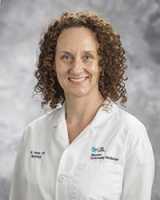 Dr. Yancy[/caption]
Holly Yancy, DO
Headache medicine specialist
Banner – University Medicine Neuroscience Institute
Phoenix, AZ
Dr. Yancy comments on the recent Neurology journal article on the potential impact of yoga on migraine.
MedicalResearch.com: What is the background for this study? How might yoga reduce migraine intensity or frequency?
Response: The authors of this trial have studied the benefits of yoga when added to medical management of episodic migraine. They expand on prior, smaller reports of the potential benefit of yoga and mindfulness to migraine patients with a well-designed study that shows yoga, as an adjunct to preventive medication, can lower the intensity, frequency and impact of migraines. Participants even used less abortive medication.
The authors propose multiple potential mechanisms of action, including an increase in parasympathetic / decrease in sympathetic nervous system activity, decreased muscle tension, and stress management.
Dr. Yancy[/caption]
Holly Yancy, DO
Headache medicine specialist
Banner – University Medicine Neuroscience Institute
Phoenix, AZ
Dr. Yancy comments on the recent Neurology journal article on the potential impact of yoga on migraine.
MedicalResearch.com: What is the background for this study? How might yoga reduce migraine intensity or frequency?
Response: The authors of this trial have studied the benefits of yoga when added to medical management of episodic migraine. They expand on prior, smaller reports of the potential benefit of yoga and mindfulness to migraine patients with a well-designed study that shows yoga, as an adjunct to preventive medication, can lower the intensity, frequency and impact of migraines. Participants even used less abortive medication.
The authors propose multiple potential mechanisms of action, including an increase in parasympathetic / decrease in sympathetic nervous system activity, decreased muscle tension, and stress management. 


 Dr. Alladina[/caption]
Jehan Alladina MD
Massachusetts General Hospital
Pulmonary and Critical Care Medicine
Boston, Massachusetts
MedicalResearch.com: What is the background for this study?
Response: During the pandemic, clinicians around the world have shared anecdotal experiences to help inform care of patients with COVID-19. However, these anecdotes and observations, without careful analysis, can bias clinicians; many clinicians have even recommended experimental therapies based on this information alone.
To that end, the goal of our study was to rigorously examine the respiratory failure experienced by critically ill patients with COVID-19 and understand their response to the standards of care for respiratory failure.
Dr. Alladina[/caption]
Jehan Alladina MD
Massachusetts General Hospital
Pulmonary and Critical Care Medicine
Boston, Massachusetts
MedicalResearch.com: What is the background for this study?
Response: During the pandemic, clinicians around the world have shared anecdotal experiences to help inform care of patients with COVID-19. However, these anecdotes and observations, without careful analysis, can bias clinicians; many clinicians have even recommended experimental therapies based on this information alone.
To that end, the goal of our study was to rigorously examine the respiratory failure experienced by critically ill patients with COVID-19 and understand their response to the standards of care for respiratory failure.

 Prof. Dagna[/caption]
Prof. Lorenzo Dagna MD FACP
Ospedale San Raffaele and
Vita-Salute San Raffaele University
Milan, Italy
MedicalResearch.com: What is the background for this study?
Response: Upon encountering pathogens, our immune system produces pro-inflammatory mediators, called cytokines. Cytokines activate cells from the immune system. In most people, production of cytokines is an appropriate and protective response to infection. However, some individuals develop excessive and detrimental inflammatory responses, which are even more harmful than the pathogen itself to the host organism.
We hypothesized that some patients with COVID-19 might develop excessive and detrimental inflammation, and that treatment with anti-inflammatory agents might be beneficial in this population.
Anakinra is an inhibitor of the pro-inflammatory molecule interleukin 1 (IL-1). It was originally marketed for the treatment of rheumatoid arthritis, but is now mostly used to treat a variety of pediatric inflammatory diseases.
Prof. Dagna[/caption]
Prof. Lorenzo Dagna MD FACP
Ospedale San Raffaele and
Vita-Salute San Raffaele University
Milan, Italy
MedicalResearch.com: What is the background for this study?
Response: Upon encountering pathogens, our immune system produces pro-inflammatory mediators, called cytokines. Cytokines activate cells from the immune system. In most people, production of cytokines is an appropriate and protective response to infection. However, some individuals develop excessive and detrimental inflammatory responses, which are even more harmful than the pathogen itself to the host organism.
We hypothesized that some patients with COVID-19 might develop excessive and detrimental inflammation, and that treatment with anti-inflammatory agents might be beneficial in this population.
Anakinra is an inhibitor of the pro-inflammatory molecule interleukin 1 (IL-1). It was originally marketed for the treatment of rheumatoid arthritis, but is now mostly used to treat a variety of pediatric inflammatory diseases.