MedicalResearch.com Interview with:
[caption id="attachment_53699" align="alignleft" width="160"]

Prof. Coleman[/caption]
Professor Carl Coleman, JD
Professor of Law
Seton Hall Law School
MedicalResearch.com: Do health care workers have an ethical and/or legal obligation to provide treatment during an infectious disease outbreak? Are there exceptions such as pregnancy, if the health care worker is her/himself immunocompromised or have young children at home?
Response: As a legal matter, health care workers can generally be required to fulfill pre-existing employment or contractual obligations during an infectious disease outbreak. For example, an emergency room nurse who refuses to come to work during a pandemic can be disciplined or fired; a physician who breaches a contractual obligation to provide on-call services during an outbreak can be held liable for damages. In addition to loss of employment and contractual damages, other potential consequences for failing to honor pre-existing commitments during a pandemic could include professional discipline for patient abandonment and, for physicians with on-call responsibilities in hospital emergency departments, civil fines under the federal Emergency Medical Treatment and Active Labor Act.
This does not mean that health care workers are obligated to show up for work during a pandemic regardless of the circumstances. For example, under the Americans with Disabilities Act, health care workers who are immunocompromised can ask for a "reasonable accommodation," such as the right to work remotely (if possible) or to take leave. Under the Family and Medical Leave Act, employers with more than 50 employees must give workers up to 12 weeks of unpaid time off to care for a seriously ill immediate family member. In addition, federal labor laws allow employees to refuse to work under "abnormally dangerous conditions," which might apply in situations where an employer fails to provide necessary protective equipment. However, assuming protective equipment is available, it is not clear that an outbreak itself would be considered "abnormally dangerous," particularly in fields like emergency medicine, where exposure to contagious disease is always a foreseeable risk.
In most states, health care workers without pre-existing employment or contractual obligations cannot be compelled to treat patients during a pandemic. However, a few states have laws that authorize public health authorities to require health care professionals to work during public health emergencies. I am not aware of any state that has invoked this authority so far.
As for ethical obligations, in 2004, the American Medical Association (AMA) declared that "individual physicians have an obligation to provide urgent medical care during disasters," and that "this ethical obligation holds even in the face of greater than usual risks to their own safety, health or life." Some academic ethicists have expressed similar views. Common justifications for this position are that physicians "assumed the risk" of exposure to infectious diseases when they voluntarily committed themselves to the healing professions; that a "social contract" requires physicians to assume risks in exchange for their social status and privileges; and that individuals who are uniquely capable of providing life-saving care have an obligation to do so.
However, I am not persuaded that all physicians -- let alone health care workers more generally -- have an ethical obligation to provide treatment when doing so involves significant risk. A willingness to accept risk is not a condition of obtaining a medical license, nor is it part of the oaths that students commonly take at medical school graduation. While I agree that physicians have ethical obligations to contribute to society, there are many ways they can fulfill these obligations without assuming personal health risks. And even assuming that individuals who are in a unique position to provide life-saving care should normally do so, we generally do not expect people to rescue others from danger at significant risk to themselves.








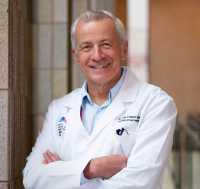
 Dr. Bin Cao[/caption]
Bin Cao, Yeming Wang, Guohui Fan,
Lianghan Shang, Jiuyang Xu, DingyuZhang, Chen Wang
on behalf of LOTUS-China Study Group
China-Japan Friendship Hospital; Wuhan Jintinyan Hospital;
Institute of Respiratory Medicine, Chinese Academy of Medical Science
MedicalResearch.com: What is the background for this study?
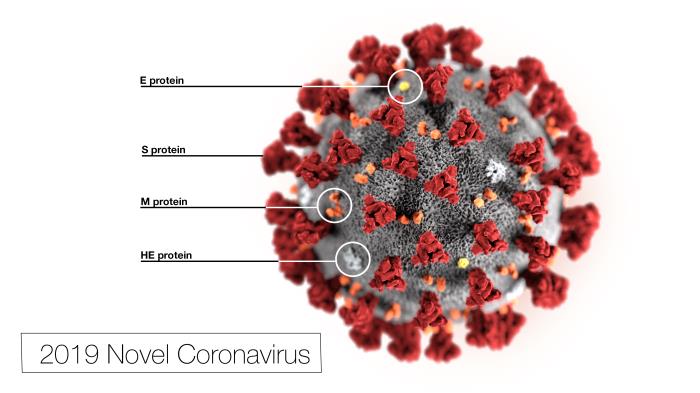
Response: In the past two months, the outbreak of Coronavirus Disease 2019 (COVID-19) has been spreading rapidly across the world. Science and technology is the most powerful weapon for human to fight against diseases, especially in such a pandemic setting. Seeking for effective antiviral medication is the most critical and urgent among the many scientific tasks in the pandemic.
At the most critical moment in the fight against COVID-19, Chinese clinical scientists have stepped forward under extremely difficult research conditions to carry out clinical trials in antiviral treatment including lopinavir–ritonavir and remdesivir, in a swift, decisive and effective manner. These trials have attracted worldwide attention.
Recently, the Lopinavir–ritonavir Trial for suppression of SARS-CoV-2 in China (LOTUS-China) has been completed, which, with great clinical significance, can provide strong evidence for the treatment of COVID-19 both in China and around the world.
Dr. Bin Cao[/caption]
Bin Cao, Yeming Wang, Guohui Fan,
Lianghan Shang, Jiuyang Xu, DingyuZhang, Chen Wang
on behalf of LOTUS-China Study Group
China-Japan Friendship Hospital; Wuhan Jintinyan Hospital;
Institute of Respiratory Medicine, Chinese Academy of Medical Science
MedicalResearch.com: What is the background for this study?
Response: In the past two months, the outbreak of Coronavirus Disease 2019 (COVID-19) has been spreading rapidly across the world. Science and technology is the most powerful weapon for human to fight against diseases, especially in such a pandemic setting. Seeking for effective antiviral medication is the most critical and urgent among the many scientific tasks in the pandemic.
At the most critical moment in the fight against COVID-19, Chinese clinical scientists have stepped forward under extremely difficult research conditions to carry out clinical trials in antiviral treatment including lopinavir–ritonavir and remdesivir, in a swift, decisive and effective manner. These trials have attracted worldwide attention.
Recently, the Lopinavir–ritonavir Trial for suppression of SARS-CoV-2 in China (LOTUS-China) has been completed, which, with great clinical significance, can provide strong evidence for the treatment of COVID-19 both in China and around the world.








 Dr. Jeffrey Smith[/caption]
Jeffrey R. Smith, MD PhD
Department of Medicine, Division of Genetic Medicine
Vanderbilt-Ingram Cancer Center, and Vanderbilt Genetics Institute
Vanderbilt University Medical Center
Medical Research Service
Tennessee Valley Healthcare System, Veterans Administration
Nashville, TN
MedicalResearch.com: What is the background for this study?
Response: Roughly 20% of men with prostate cancer have a family history of the disease, and 5% meet criteria for hereditary prostate cancer. Although prostate cancer has the greatest heritability of all common cancers (twice that of breast cancer), extensive heterogeneity of its inherited causes has presented a considerable obstacle for traditional pedigree-based genetic investigative approaches. Inherited causes across, as well as within families are diverse.
This study introduced a new familial case-control study design that uses extent of family history as a proxy for genetic burden. It compared a large number of men with prostate cancer, each from a separate family with a strong history of the disease, to screened men with no personal or family history. The study comprehensively deconstructs how the 8q24 chromosomal region impacts risk of hereditary prostate cancer, introducing several new analytical approaches. The locus had been known to alter risk of prostate, breast, colon, ovarian, and numerous additional cancers.
Dr. Jeffrey Smith[/caption]
Jeffrey R. Smith, MD PhD
Department of Medicine, Division of Genetic Medicine
Vanderbilt-Ingram Cancer Center, and Vanderbilt Genetics Institute
Vanderbilt University Medical Center
Medical Research Service
Tennessee Valley Healthcare System, Veterans Administration
Nashville, TN
MedicalResearch.com: What is the background for this study?
Response: Roughly 20% of men with prostate cancer have a family history of the disease, and 5% meet criteria for hereditary prostate cancer. Although prostate cancer has the greatest heritability of all common cancers (twice that of breast cancer), extensive heterogeneity of its inherited causes has presented a considerable obstacle for traditional pedigree-based genetic investigative approaches. Inherited causes across, as well as within families are diverse.
This study introduced a new familial case-control study design that uses extent of family history as a proxy for genetic burden. It compared a large number of men with prostate cancer, each from a separate family with a strong history of the disease, to screened men with no personal or family history. The study comprehensively deconstructs how the 8q24 chromosomal region impacts risk of hereditary prostate cancer, introducing several new analytical approaches. The locus had been known to alter risk of prostate, breast, colon, ovarian, and numerous additional cancers. 














 Dr. Kooraki[/caption]
Soheil Kooraki MSR MS, MD
on behalf of Dr. Ali Gholamrezanezhad MD and co-authors
Department of Radiological Sciences,
David Geffen School of Medicine, University of California at Los Angeles
Los Angeles, California
MedicalResearch.com: What is the background for this study? What are the main findings?
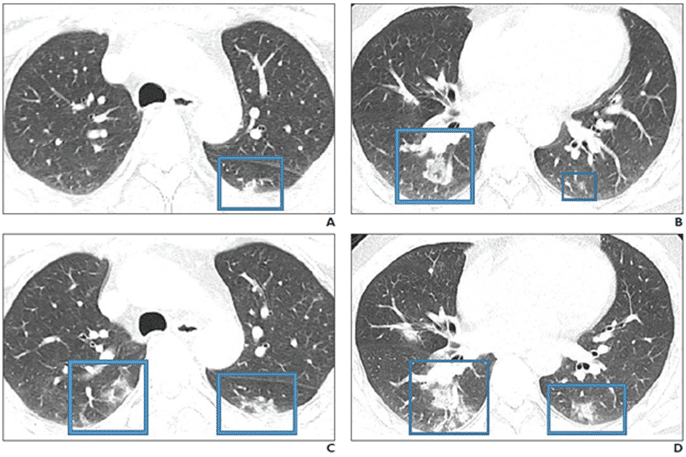
Response: COVID19 is a novel strain of the coronavirus family causing pneumonia. Two similar strains were discovered in 2003 and 2012 to cause the so-called SARS and MERS outbreaks, respectively. Radiologists need to be prepared for the escalating incidence of COVID-19. We reviewed the literature to extract the epidemiologic and imaging features of SARS and MERS in comparison with known imaging features of COVID-19 pneumonia to have a better understanding of the imaging features of the COVID19 pneumonia in acute and post-recovery stages.
Dr. Kooraki[/caption]
Soheil Kooraki MSR MS, MD
on behalf of Dr. Ali Gholamrezanezhad MD and co-authors
Department of Radiological Sciences,
David Geffen School of Medicine, University of California at Los Angeles
Los Angeles, California
MedicalResearch.com: What is the background for this study? What are the main findings?
Response: COVID19 is a novel strain of the coronavirus family causing pneumonia. Two similar strains were discovered in 2003 and 2012 to cause the so-called SARS and MERS outbreaks, respectively. Radiologists need to be prepared for the escalating incidence of COVID-19. We reviewed the literature to extract the epidemiologic and imaging features of SARS and MERS in comparison with known imaging features of COVID-19 pneumonia to have a better understanding of the imaging features of the COVID19 pneumonia in acute and post-recovery stages.