MedicalResearch.com Interview with:
[caption id="attachment_50105" align="alignleft" width="158"]

Dr Natasha van Zy[/caption]
Dr. Natasha van Zyl, MBChB (Cape Town), FRACS
FRACS Plastic and Reconstructive Surgeon
Melbourne, Australia
MedicalResearch.com: What is the background for this study? What are the main findings?
Response: The estimated global incidence of spinal cord injury (SCI) from all causes is 40 to 80 new cases per million population per year which means that every year between 250 000 to 500 000 people worldwide suffer SCI
(1)(chap 2 p 17). In Australia the age standardised, annual incident rate of persisting traumatic SCI for Australian residents aged 15 years and above is 11.8 cases per million.
(2) Just over 50% of all spinal cord injuries in Australia occur at the cervical level resulting in tetraplegia.
(2)
Cervical spinal cord injury is a devastating, life-changing injury impacting almost every aspect of a person’s work, family and social life. Although compared to many other health conditions it has a relatively low incidence, it is certainly a high cost health condition, with the lifetime cost per tetraplegia incident case estimated to be AU$9.5 million.
(3) For those living with tetraplegia improvement in hand function is their highest ranked goal.
(4) As such, reconstruction of upper extremity function in cervical spinal cord injury is a crucial component of the surgical rehabilitation of people with mid/low cervical spinal cord injury as it has the capacity to restore critical functions such as elbow extension, wrist extension, grasp, key pinch and release. Traditionally these functions have been reconstructed using tendon transfers, which move a functioning muscle to a new insertion site to recreate the function of a paralysed muscle.
(5)



 Prof. Michaelides[/caption]
Professor Michel Michaelides BSc MB BS MD(Res) FRCOphth FACS
Professor of Ophthalmology and Consultant Ophthalmic Surgeon
UCL Institute of Ophthalmology and Moorfields Eye Hospital
MedicalResearch.com: What is the background for this study?
Prof. Michaelides[/caption]
Professor Michel Michaelides BSc MB BS MD(Res) FRCOphth FACS
Professor of Ophthalmology and Consultant Ophthalmic Surgeon
UCL Institute of Ophthalmology and Moorfields Eye Hospital
MedicalResearch.com: What is the background for this study?


 Dr. Davaasambuu[/caption]
Dr Ganmaa Davaasambuu MD PhD
Associate Professor
Harvard T.H. Chan School of Public Health
MedicalResearch.com: What is the background for this study?
Response: The crucial role of vitamin D in facilitating calcium absorption from the diet and promoting calcium deposition in bones (known as 'mineralization') has been a long-established understanding. Furthermore, some observational studies have reported an association between low vitamin D levels and a heightened risk of bone fractures in children. This raised the possibility that vitamin D supplements could potentially play a role in decreasing fracture risk in children with initially low baseline levels. However, clinical trials assessing the causal link between low vitamin D status and reduced fracture risk were necessary, and such trials had not been conducted before.
Dr. Davaasambuu[/caption]
Dr Ganmaa Davaasambuu MD PhD
Associate Professor
Harvard T.H. Chan School of Public Health
MedicalResearch.com: What is the background for this study?
Response: The crucial role of vitamin D in facilitating calcium absorption from the diet and promoting calcium deposition in bones (known as 'mineralization') has been a long-established understanding. Furthermore, some observational studies have reported an association between low vitamin D levels and a heightened risk of bone fractures in children. This raised the possibility that vitamin D supplements could potentially play a role in decreasing fracture risk in children with initially low baseline levels. However, clinical trials assessing the causal link between low vitamin D status and reduced fracture risk were necessary, and such trials had not been conducted before.


 Lotfi Khemiri
Centre for Psychiatry Research
Stockholm, Sweden
MedicalResearch.com: What is the background for this study?
Response: Our study used large-scale national register data in close to 2 million children, and found that parental abuse of both alcohol and drugs are associated with increased risk of intellectual disability in the offspring. Importantly, the risk increase was observed in both mothers and fathers which to the best of our knowledge is a novel finding, and may be explained by both genetic and environmental factors including toxic effects of substance intake on fetal development.
Lotfi Khemiri
Centre for Psychiatry Research
Stockholm, Sweden
MedicalResearch.com: What is the background for this study?
Response: Our study used large-scale national register data in close to 2 million children, and found that parental abuse of both alcohol and drugs are associated with increased risk of intellectual disability in the offspring. Importantly, the risk increase was observed in both mothers and fathers which to the best of our knowledge is a novel finding, and may be explained by both genetic and environmental factors including toxic effects of substance intake on fetal development.



 Yuxia Wei[/caption]
Yuxia Wei | PhD Student
Unit of Epidemiology
Institute of Environmental Medicine
Karolinska Institutet
Stockholm | Sweden
MedicalResearch.com: What is the background for this study?
Response: Diabetes is traditionally known for having two types (type 1 diabetes and type 2 diabetes). However, it is becoming increasingly clear that diabetes is much more complex than this traditional classification. Several attempts have been made to address this heterogeneity and in 2018, a Swedish ground-breaking study proposed that there are five distinct subtypes of diabetes in adults. They have been replicated in different populations and it has been shown that there are differences between the subtypes in terms of genetics and risks of complications. Another way of elucidating the relevance of these subtypes is to investigate whether the influence of known risk factors for diabetes is different on different subtypes. Our study is one of the first attempts to address this. We used a study design known as Mendelian randomization, to investigate the influence of childhood obesity on these diabetes subtypes that typically occur after age 35. This work was a collaboration between Karolinska institutet in Stockholm, University of Bristol in the UK and Sun Yat-Sen University in China.
Yuxia Wei[/caption]
Yuxia Wei | PhD Student
Unit of Epidemiology
Institute of Environmental Medicine
Karolinska Institutet
Stockholm | Sweden
MedicalResearch.com: What is the background for this study?
Response: Diabetes is traditionally known for having two types (type 1 diabetes and type 2 diabetes). However, it is becoming increasingly clear that diabetes is much more complex than this traditional classification. Several attempts have been made to address this heterogeneity and in 2018, a Swedish ground-breaking study proposed that there are five distinct subtypes of diabetes in adults. They have been replicated in different populations and it has been shown that there are differences between the subtypes in terms of genetics and risks of complications. Another way of elucidating the relevance of these subtypes is to investigate whether the influence of known risk factors for diabetes is different on different subtypes. Our study is one of the first attempts to address this. We used a study design known as Mendelian randomization, to investigate the influence of childhood obesity on these diabetes subtypes that typically occur after age 35. This work was a collaboration between Karolinska institutet in Stockholm, University of Bristol in the UK and Sun Yat-Sen University in China.

 Dr. Guttman-Yassky[/caption]
Dr. Emma Guttman-Yassky, MD, PhD
Waldman Professor and System Chair
The Kimberly and Eric J. Waldman Department of Dermatology
Director, Center of Excellence in Eczema
Director, Laboratory of Inflammatory Skin Diseases
Icahn School of Medicine at Mount Sinai
MedicalResearch.com: What is the background for this study? What are the main findings?
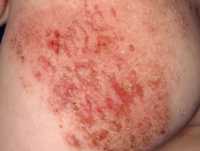
Response: The background for this study are studies that show that OX40 is a pathway that is upregulated in patients with atopic dermatitis (or eczema). OX40 is involved in activation of immune molecules associated with allergy and atopy, and also with formation of memory immune cells that are required for disease recurrence. The hypothesis to the study was that giving an OX40 antagonist will not only ameliorate the disease but perhaps have a remittive effect in that the disease will not come back.
Indeed all drug doses were significantly effective at week 16, the primary endpoint compared to placebo and continued to improve towards week 36, the secondary endpoint. In addition, the responders to treatment maintained their responses for an additional 20 weeks, which is unusual, suggesting a potential for disease modification.
Dr. Guttman-Yassky[/caption]
Dr. Emma Guttman-Yassky, MD, PhD
Waldman Professor and System Chair
The Kimberly and Eric J. Waldman Department of Dermatology
Director, Center of Excellence in Eczema
Director, Laboratory of Inflammatory Skin Diseases
Icahn School of Medicine at Mount Sinai
MedicalResearch.com: What is the background for this study? What are the main findings?
Response: The background for this study are studies that show that OX40 is a pathway that is upregulated in patients with atopic dermatitis (or eczema). OX40 is involved in activation of immune molecules associated with allergy and atopy, and also with formation of memory immune cells that are required for disease recurrence. The hypothesis to the study was that giving an OX40 antagonist will not only ameliorate the disease but perhaps have a remittive effect in that the disease will not come back.
Indeed all drug doses were significantly effective at week 16, the primary endpoint compared to placebo and continued to improve towards week 36, the secondary endpoint. In addition, the responders to treatment maintained their responses for an additional 20 weeks, which is unusual, suggesting a potential for disease modification.






 Matt Spick[/caption]
Matt Spick, Post-Graduate Researcher
University of Surrey
Faculty of Engineering and Physical Sciences
Guildford, UK
MedicalResearch.com: What is the background for this study? Are you measuring lipids or the virus?
Response: In this study, we aimed to detect what the virus does to us, rather than the virus itself. The gold standard for detecting COVID-19 is the RT-PCR test, but by their nature, PCR tests only provide diagnostic information, and at times during the pandemic the availability of PCR tests has been a bottleneck for the identification of the disease. Our goal was to investigate a novel method for the diagnosis of COVID-19, at the same time as learning more about what the disease does to us through lipidomics.
Matt Spick[/caption]
Matt Spick, Post-Graduate Researcher
University of Surrey
Faculty of Engineering and Physical Sciences
Guildford, UK
MedicalResearch.com: What is the background for this study? Are you measuring lipids or the virus?
Response: In this study, we aimed to detect what the virus does to us, rather than the virus itself. The gold standard for detecting COVID-19 is the RT-PCR test, but by their nature, PCR tests only provide diagnostic information, and at times during the pandemic the availability of PCR tests has been a bottleneck for the identification of the disease. Our goal was to investigate a novel method for the diagnosis of COVID-19, at the same time as learning more about what the disease does to us through lipidomics.


 Dr. KantersA[/caption]
Response: A watershed moment for the fight against HIV was the antiretroviral treatment (ART) scale-up that made HIV treatments available around the world. While HIV activism led to its initiation, two key ingredients to the ART scale-up were the advent of a once-daily single-pill HIV treatment and the creation of the World Health Organization (WHO) clinical guidelines for treatment and prevention of HIV. The HIV treatment in question combines three drugs in a single pill and centers around a drug called efavirenz.
The WHO guidelines use a public health framework, which is to say that it uses a treatment algorithm that is both equitable and simple enough to allow some task-shifting to less specialized workers. As such, the guidelines suggest a single preferred treatment for people initiating HIV treatment. While resource rich countries can use a personalized medicine approach, many settings where HIV is endemic cannot.
In 2015, our review found strong evidence that a newer HIV drug, called dolutegravir, was better than efavirenz in respect to efficacy, tolerability and safety; however, there was not enough evidence to support its use in key populations, such as people with HIV-tuberculosis co-infections and pregnant women. For this and other reasons, the WHO could not recommend its use as the preferred treatment at initiation.
Since then, we have continued to dynamically assess the evidence to determine the best treatment to have as the preferred ART for first-time HIV treatment. This is the culmination of 6 years of work and its findings have helped the WHO change its recommended preferred first-line therapy from an efavirenz-based ART to a dolutegravir-based ART.
Dr. KantersA[/caption]
Response: A watershed moment for the fight against HIV was the antiretroviral treatment (ART) scale-up that made HIV treatments available around the world. While HIV activism led to its initiation, two key ingredients to the ART scale-up were the advent of a once-daily single-pill HIV treatment and the creation of the World Health Organization (WHO) clinical guidelines for treatment and prevention of HIV. The HIV treatment in question combines three drugs in a single pill and centers around a drug called efavirenz.
The WHO guidelines use a public health framework, which is to say that it uses a treatment algorithm that is both equitable and simple enough to allow some task-shifting to less specialized workers. As such, the guidelines suggest a single preferred treatment for people initiating HIV treatment. While resource rich countries can use a personalized medicine approach, many settings where HIV is endemic cannot.
In 2015, our review found strong evidence that a newer HIV drug, called dolutegravir, was better than efavirenz in respect to efficacy, tolerability and safety; however, there was not enough evidence to support its use in key populations, such as people with HIV-tuberculosis co-infections and pregnant women. For this and other reasons, the WHO could not recommend its use as the preferred treatment at initiation.
Since then, we have continued to dynamically assess the evidence to determine the best treatment to have as the preferred ART for first-time HIV treatment. This is the culmination of 6 years of work and its findings have helped the WHO change its recommended preferred first-line therapy from an efavirenz-based ART to a dolutegravir-based ART. 
 Dr. Schünemann[/caption]
Holger Schünemann, MD, PhD, FRCPC
Professor of Clinical Epidemiology and of Medicine
Co-Director, WHO Collaborating Centre for Infectious Diseases,
Research Methods and Recommendations
Director, Cochrane Canada and McMaster GRADE Centre
Department of Health Research Methods, Evidence, and Impact
Canada
MedicalResearch.com: What is the background for this study?
Response: Many countries and regions have issued conflicting advice about physical distancing to reduce transmission of COVID-19, based on limited information. In addition, the questions of whether masks and eye coverings might reduce transmission of COVID-19 in the general population, and what the optimum use of masks in healthcare settings is, have been debated during the pandemic.
Dr. Schünemann[/caption]
Holger Schünemann, MD, PhD, FRCPC
Professor of Clinical Epidemiology and of Medicine
Co-Director, WHO Collaborating Centre for Infectious Diseases,
Research Methods and Recommendations
Director, Cochrane Canada and McMaster GRADE Centre
Department of Health Research Methods, Evidence, and Impact
Canada
MedicalResearch.com: What is the background for this study?
Response: Many countries and regions have issued conflicting advice about physical distancing to reduce transmission of COVID-19, based on limited information. In addition, the questions of whether masks and eye coverings might reduce transmission of COVID-19 in the general population, and what the optimum use of masks in healthcare settings is, have been debated during the pandemic.