MedicalResearch.com Interview with:
[caption id="attachment_49917" align="alignleft" width="128"]

Dr. Shehabi[/caption]
Yahya Shehabi PhD, FANZCA, FCICM, EMBA, GAICD
Director of Research, Critical Care and Peri-operative Medicine, Monash Health
Professor, School of Clinical Sciences, Faculty of Medicine Nursing and Health Sciences, Monash University
Professor Intensive Care Medicine, Clinical School of Medicine, University New South Wales
Critical Care and Peri-Operative Medicine Lead – Monash Health Translational Precinct
MedicalResearch.com: What is the background for this study?
Response: SPICE III was the final phase of a series of SPICE studies. SPICE I showed 2 important findings,
first, deep sedation in the first 48 hours is strongly associated with higher mortality, longer ventilation time and higher risk of delirium.
Second; that Dexmedetomidine is mainly used as an adjunct secondary agent 3-4 days after commencing mechanical ventilation and not as a primary sedative agent. In addition, albeit with several limitations, previous RCTs comparing Dexmedetomidine with conventional sedatives showed reduced iatrogenic coma, shortened ventilation time and reduced delirium with Dexmedetomidine treatment.
So based on the above we hypothesized that using Dexmedetomidine soon after commencing ventilation as a primary sedative agent, through reducing early iatrogenic coma, ventilation time and delirium, would impact 90 day-mortality.

 Dr. Trudo[/caption]
Frank Trudo, MD MBA
Vice President, US Medical Affairs
Respiratory & Immunology
AstraZeneca
MedicalResearch.com: What is the background for this study?
Response: ETHOS is a randomized, double-blinded, multi-center, parallel-group, 52-week trial to assess the efficacy and safety of PT010 in symptomatic patients with moderate to very severe COPD and a history of exacerbation(s) in the previous year. Outcomes in the ETHOS trial included, as a primary endpoint, the rate of moderate or severe exacerbations.
MedicalResearch.com: How does PT010 differ from other treatments for COPD?
Dr. Trudo[/caption]
Frank Trudo, MD MBA
Vice President, US Medical Affairs
Respiratory & Immunology
AstraZeneca
MedicalResearch.com: What is the background for this study?
Response: ETHOS is a randomized, double-blinded, multi-center, parallel-group, 52-week trial to assess the efficacy and safety of PT010 in symptomatic patients with moderate to very severe COPD and a history of exacerbation(s) in the previous year. Outcomes in the ETHOS trial included, as a primary endpoint, the rate of moderate or severe exacerbations.
MedicalResearch.com: How does PT010 differ from other treatments for COPD?





 Dr. Bin Cao[/caption]
Bin Cao, Yeming Wang, Guohui Fan,
Lianghan Shang, Jiuyang Xu, DingyuZhang, Chen Wang
on behalf of LOTUS-China Study Group
China-Japan Friendship Hospital; Wuhan Jintinyan Hospital;
Institute of Respiratory Medicine, Chinese Academy of Medical Science
MedicalResearch.com: What is the background for this study?
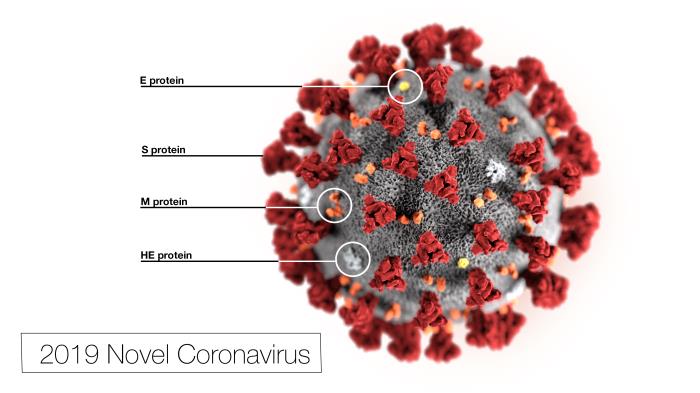
Response: In the past two months, the outbreak of Coronavirus Disease 2019 (COVID-19) has been spreading rapidly across the world. Science and technology is the most powerful weapon for human to fight against diseases, especially in such a pandemic setting. Seeking for effective antiviral medication is the most critical and urgent among the many scientific tasks in the pandemic.
At the most critical moment in the fight against COVID-19, Chinese clinical scientists have stepped forward under extremely difficult research conditions to carry out clinical trials in antiviral treatment including lopinavir–ritonavir and remdesivir, in a swift, decisive and effective manner. These trials have attracted worldwide attention.
Recently, the Lopinavir–ritonavir Trial for suppression of SARS-CoV-2 in China (LOTUS-China) has been completed, which, with great clinical significance, can provide strong evidence for the treatment of COVID-19 both in China and around the world.
Dr. Bin Cao[/caption]
Bin Cao, Yeming Wang, Guohui Fan,
Lianghan Shang, Jiuyang Xu, DingyuZhang, Chen Wang
on behalf of LOTUS-China Study Group
China-Japan Friendship Hospital; Wuhan Jintinyan Hospital;
Institute of Respiratory Medicine, Chinese Academy of Medical Science
MedicalResearch.com: What is the background for this study?
Response: In the past two months, the outbreak of Coronavirus Disease 2019 (COVID-19) has been spreading rapidly across the world. Science and technology is the most powerful weapon for human to fight against diseases, especially in such a pandemic setting. Seeking for effective antiviral medication is the most critical and urgent among the many scientific tasks in the pandemic.
At the most critical moment in the fight against COVID-19, Chinese clinical scientists have stepped forward under extremely difficult research conditions to carry out clinical trials in antiviral treatment including lopinavir–ritonavir and remdesivir, in a swift, decisive and effective manner. These trials have attracted worldwide attention.
Recently, the Lopinavir–ritonavir Trial for suppression of SARS-CoV-2 in China (LOTUS-China) has been completed, which, with great clinical significance, can provide strong evidence for the treatment of COVID-19 both in China and around the world.




 Dr. Kistler[/caption]
Professor Peter M Kistler MBBS, PhD, FRACP
Head of Clinical Electrophysiology Research
Baker Heart and Diabetes Institute
Head of Electrophysiology at The Alfred hospital
Professor of Medicine
University of Melbourne.
MedicalResearch.com: What is the background for this study?
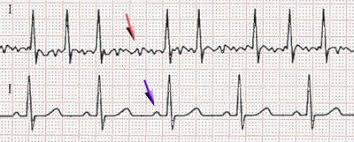
Response: There is a well known association between alcohol intake and atrial fibrillation form population based studies which demonstrate that for every 1 standard drink the incidence of AFib increases by 8%.
This is the first randomised study to determine of alcohol reduction/abstinence leads to a reduction in AFib episodes and time to recurrence.
Dr. Kistler[/caption]
Professor Peter M Kistler MBBS, PhD, FRACP
Head of Clinical Electrophysiology Research
Baker Heart and Diabetes Institute
Head of Electrophysiology at The Alfred hospital
Professor of Medicine
University of Melbourne.
MedicalResearch.com: What is the background for this study?
Response: There is a well known association between alcohol intake and atrial fibrillation form population based studies which demonstrate that for every 1 standard drink the incidence of AFib increases by 8%.
This is the first randomised study to determine of alcohol reduction/abstinence leads to a reduction in AFib episodes and time to recurrence.