
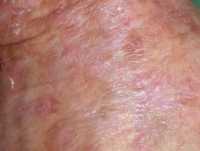
11 Feb Once Daily Five-Day Course of Novel Topical Agent Clears Actinic Keratoses
MedicalResearch.com Interview with: Jane Fang, MD Clinical Athenex, Inc. [caption id="attachment_47929" align="alignleft" width="200"]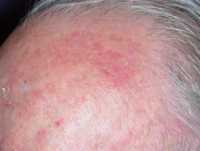 One example of actinic keratoses on scalp
DermNZ[/caption] MedicalResearch.com: What is the background for this study? Would you briefly explain what is meant by actinic keratoses? How common are they and who is primarily affected? Response: Actinic keratosis is a very common precancerous skin condition that affects about 58 millions people in the US. Most commonly affected people are older (over 40 years old) men with fair skin type. Actinic keratosis lesions are red scaly bumps on sun-damaged skin mostly on the face, scalp, back of hands, forearms and legs. As there is a risk of 0.025-16% per year for each actinic keratosis to progress to skin cancer and it is not possible to predict which actinic keratosis will become cancerous, early treatment of actinic keratosis is generally recommended. Currently approved topical treatments require weeks or months of application and may lead to intolerable side effects that undermine compliance and reduce efficacy of treatment. Tirbanibulin ointment is a novel anti-proliferative agent that inhibits tubulin polymerization and disrupts Src kinase signaling, and has the potential to inhibit growth of abnormal skin cells in actinic keratosis. The current report described two Phase 3 randomized vehicle or placebo-controlled clinical studies that demonstrated that a 5-day course of tirbanibulin ointment applied once daily by patients was safe, well-tolerated, and effective in clearing actinic keratosis on the face or scalp compared to vehicle control.

 Response: The background for the study is the steady rise of cannabis use as a therapeutic in Israel and in many countries around the world. This largest increasing population of patients treated with medical cannabis is the older adults. However, very little data was published about cannabis treatment in older adults, and specifically about the cardiovascular and metabolic implications. T
he main finding of the study is that cannabis treatment for 3 months was associated with a reduction in both systolic and diastolic blood pressure values, as measured by consequent 24-hours ABPM tests. In addition, no significant changes were found in blood lipids profile, hemoglobin A1C, fasting insulin, C-reactive protein, kidney function tests, electrolytes, anthropometric measurements, and ECG parameters.
Response: The background for the study is the steady rise of cannabis use as a therapeutic in Israel and in many countries around the world. This largest increasing population of patients treated with medical cannabis is the older adults. However, very little data was published about cannabis treatment in older adults, and specifically about the cardiovascular and metabolic implications. T
he main finding of the study is that cannabis treatment for 3 months was associated with a reduction in both systolic and diastolic blood pressure values, as measured by consequent 24-hours ABPM tests. In addition, no significant changes were found in blood lipids profile, hemoglobin A1C, fasting insulin, C-reactive protein, kidney function tests, electrolytes, anthropometric measurements, and ECG parameters. 
 Dr. Garantziotis[/caption]
Stavros Garantziotis MD
Division of Intramural Research
National Institute of Environmental Health Sciences
Research Triangle Park, NC
MedicalResearch.com: What is the background for this study? How does hyaluronan differ from other medications for COPD? Is it used for other medical conditions?
Response: Hyaluronan is a natural sugar found in the human body, including in the lung. We have found that when the lungs are exposed to pollution, this sugar breaks down, and the breakdown fragments cause inflammation in the lung. We also found that if we give back the natural form of hyaluronan, it protects the lung from inflammation. Patients suffering from COPD also have a lot of hyaluronan breakdown in their lungs. We therefore reasoned, that giving them back the natural form of hyaluronan, as an inhalation treatment, would help them reduce inflammation. We tested this, as a first step, in the treatment acute inflammation of the lungs in COPD patients who are suffering an exacerbation of their disease.
Hyaluronan is different from existing medications in that it is a natural product of the body. It is used in Europe for conditions like cystic fibrosis, and after sinus surgery to humidify the airways. Because it is given by inhalation, it acts locally in the lungs.
Dr. Garantziotis[/caption]
Stavros Garantziotis MD
Division of Intramural Research
National Institute of Environmental Health Sciences
Research Triangle Park, NC
MedicalResearch.com: What is the background for this study? How does hyaluronan differ from other medications for COPD? Is it used for other medical conditions?
Response: Hyaluronan is a natural sugar found in the human body, including in the lung. We have found that when the lungs are exposed to pollution, this sugar breaks down, and the breakdown fragments cause inflammation in the lung. We also found that if we give back the natural form of hyaluronan, it protects the lung from inflammation. Patients suffering from COPD also have a lot of hyaluronan breakdown in their lungs. We therefore reasoned, that giving them back the natural form of hyaluronan, as an inhalation treatment, would help them reduce inflammation. We tested this, as a first step, in the treatment acute inflammation of the lungs in COPD patients who are suffering an exacerbation of their disease.
Hyaluronan is different from existing medications in that it is a natural product of the body. It is used in Europe for conditions like cystic fibrosis, and after sinus surgery to humidify the airways. Because it is given by inhalation, it acts locally in the lungs. 





 Elodie Warren[/caption]
Elodie C. Warren, MPH
Columbia University Mailman School of Public Health Graduate
MedicalResearch.com: What is the background for this study? What are the main findings?
Response: We know that the US has been experiencing an opioid crisis for the past two decades. And we know that among communities of color, rates of overdose deaths are continuing to increase, even though overall national rates decreased between 2017 and 2018.
To better understand how the opioid crisis has differently affected racial/ethnic groups, we looked at how heroin treatment admissions changed over time by race/ethnicity, age, and sex. We found that there were stark differences when comparing non-Hispanic Black men and women to non-Hispanic White men and women.
Importantly, our study suggests the existence of an aging cohort of Black men and women (likely including survivors of a heroin epidemic that hit urban areas more than 40 years ago) that continues to struggle with heroin addiction. This points to the need for targeted interventions in chronically underserved communities.
Elodie Warren[/caption]
Elodie C. Warren, MPH
Columbia University Mailman School of Public Health Graduate
MedicalResearch.com: What is the background for this study? What are the main findings?
Response: We know that the US has been experiencing an opioid crisis for the past two decades. And we know that among communities of color, rates of overdose deaths are continuing to increase, even though overall national rates decreased between 2017 and 2018.
To better understand how the opioid crisis has differently affected racial/ethnic groups, we looked at how heroin treatment admissions changed over time by race/ethnicity, age, and sex. We found that there were stark differences when comparing non-Hispanic Black men and women to non-Hispanic White men and women.
Importantly, our study suggests the existence of an aging cohort of Black men and women (likely including survivors of a heroin epidemic that hit urban areas more than 40 years ago) that continues to struggle with heroin addiction. This points to the need for targeted interventions in chronically underserved communities. 


 Ankur Dalsania[/caption]
Ankur Dalsania
Rutgers New Jersey Medical School (NJMS)
M.D. Candidate 2021
MedicalResearch.com: What is the background for this study?
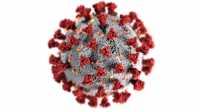
Response: Similar to past pandemics, prior studies and news articles have highlighted the disproportionate impact of COVID-19 mortality in marginalized populations, especially Black Americans. Rather than biological differences, other factors like neighborhood conditions, educational attainment, economic stability, healthcare access, and social contexts have been hypothesized to influence the racial disparities.
Using county-level data, we sought to quantitatively determine how these factors, collectively referred to as social determinants of health, impact COVID-19 mortality in Black Americans.
Ankur Dalsania[/caption]
Ankur Dalsania
Rutgers New Jersey Medical School (NJMS)
M.D. Candidate 2021
MedicalResearch.com: What is the background for this study?
Response: Similar to past pandemics, prior studies and news articles have highlighted the disproportionate impact of COVID-19 mortality in marginalized populations, especially Black Americans. Rather than biological differences, other factors like neighborhood conditions, educational attainment, economic stability, healthcare access, and social contexts have been hypothesized to influence the racial disparities.
Using county-level data, we sought to quantitatively determine how these factors, collectively referred to as social determinants of health, impact COVID-19 mortality in Black Americans. 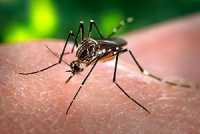
 Dr. Devine[/caption]
Gregor J. Devine, Ph.D
Mosquito Control LaboratoryQIMR Berghofer Medical Research Institute
Brisbane, Queensland, Australia
MedicalResearch.com: What is the background for this study?
Scale of the problem: Dengue, Zika and chikungunya are all transmitted by the same mosquito species. That mosquito, Aedes aegypti, is superbly adapted to the human, urban environment – it lays its eggs and develops in the standing water that collects in the myriad containers associated with modern living (plastic bottles, food packaging, buckets, planters, crumpled tarpaulins etc.). Unusually they rely almost entirely on human blood for their nutritional requirements and they subsequently bite multiple times during each egg laying cycle. That reliance on human blood means that they are usually found resting indoors, a behaviour that also offers them some protection from weather extremes and predators. Once infected, and having incubated the virus until it is transmissible, a mosquito that survives for just a couple of weeks can infect many humans within the same and neighbouring households.
In poorer tropical urban environments with dense human populations, unscreened houses, no air-conditioning, and innumerable rain-filled containers to develop in, Aedes aegypti proliferates and so do those diseases, causing ca 400M annual infections of dengue alone by some estimates. The economic impact of the dengue, which normally causes a high fever, muscle and joint pains and nausea, is pronounced; especially in poor households with few savings and no welfare system. Every year, about 500,000 of those dengue cases develop into severe dengue, or dengue haemorrhagic fever (typified by plasma leakage, severe bleeding and organ impairment). There are about 25,000 deaths annually.
Dr. Devine[/caption]
Gregor J. Devine, Ph.D
Mosquito Control LaboratoryQIMR Berghofer Medical Research Institute
Brisbane, Queensland, Australia
MedicalResearch.com: What is the background for this study?
Scale of the problem: Dengue, Zika and chikungunya are all transmitted by the same mosquito species. That mosquito, Aedes aegypti, is superbly adapted to the human, urban environment – it lays its eggs and develops in the standing water that collects in the myriad containers associated with modern living (plastic bottles, food packaging, buckets, planters, crumpled tarpaulins etc.). Unusually they rely almost entirely on human blood for their nutritional requirements and they subsequently bite multiple times during each egg laying cycle. That reliance on human blood means that they are usually found resting indoors, a behaviour that also offers them some protection from weather extremes and predators. Once infected, and having incubated the virus until it is transmissible, a mosquito that survives for just a couple of weeks can infect many humans within the same and neighbouring households.
In poorer tropical urban environments with dense human populations, unscreened houses, no air-conditioning, and innumerable rain-filled containers to develop in, Aedes aegypti proliferates and so do those diseases, causing ca 400M annual infections of dengue alone by some estimates. The economic impact of the dengue, which normally causes a high fever, muscle and joint pains and nausea, is pronounced; especially in poor households with few savings and no welfare system. Every year, about 500,000 of those dengue cases develop into severe dengue, or dengue haemorrhagic fever (typified by plasma leakage, severe bleeding and organ impairment). There are about 25,000 deaths annually.



 Dr. Warnick[/caption]
Benjamin J. Warnick, PhD
Assistant Professor of Entrepreneurship
Carson College of Business
Washington State University Vancouver
MedicalResearch.com: What is the background for this study?
Response: Popular culture has perpetuated a notion that cannabis users are more creative. Along these lines, some successful CEOs and entrepreneurs—like Steve Jobs, for example—have claimed that cannabis use has benefitted their creativity at work.
Despite such claims and increased legalization and use of cannabis, the implications of cannabis use for entrepreneurs’ creativity has yet to be rigorously tested. My coauthors and I were very intrigued to dive into the implications of cannabis use for entrepreneurs, whether good or bad. This seemed all the more relevant given the increasing legalization, destigmatization, and use of cannabis.
Dr. Warnick[/caption]
Benjamin J. Warnick, PhD
Assistant Professor of Entrepreneurship
Carson College of Business
Washington State University Vancouver
MedicalResearch.com: What is the background for this study?
Response: Popular culture has perpetuated a notion that cannabis users are more creative. Along these lines, some successful CEOs and entrepreneurs—like Steve Jobs, for example—have claimed that cannabis use has benefitted their creativity at work.
Despite such claims and increased legalization and use of cannabis, the implications of cannabis use for entrepreneurs’ creativity has yet to be rigorously tested. My coauthors and I were very intrigued to dive into the implications of cannabis use for entrepreneurs, whether good or bad. This seemed all the more relevant given the increasing legalization, destigmatization, and use of cannabis. 




 Dr. Master[/caption]
Christina L. Master, MD, FAAP, CAQSM, FACSM
Professor of Clinical Pediatrics
Perelman School of Medicine at the University of Pennsylvania
Co-Director, Minds Matter Concussion Program
Pediatric and Adolescent Sports Medicine, Division of Pediatric Orthopedics
Attending Physician, Care Network - Karabots Center
The Children's Hospital of Philadelphia
Philadelphia, PA 19104
MedicalResearch.com: What is the background for this study?
Response: There have been multiple studies investigating potential sex differences in outcomes from concussion which have sometimes had conflicting results with some studies indicating that females take longer to recover than males and some studies reporting no difference in recovery between females and males, with most of these studies being conducted either retrospectively or prospectively in smaller cohorts. This large-scale multi-center prospective study in collegiate athletes provided an opportunity to compare females and males across comparable sports to examine both potential intrinsic or biologic factors (sex differences) or extrinsic (environmental or gender differences) that contribute to outcomes.
Dr. Master[/caption]
Christina L. Master, MD, FAAP, CAQSM, FACSM
Professor of Clinical Pediatrics
Perelman School of Medicine at the University of Pennsylvania
Co-Director, Minds Matter Concussion Program
Pediatric and Adolescent Sports Medicine, Division of Pediatric Orthopedics
Attending Physician, Care Network - Karabots Center
The Children's Hospital of Philadelphia
Philadelphia, PA 19104
MedicalResearch.com: What is the background for this study?
Response: There have been multiple studies investigating potential sex differences in outcomes from concussion which have sometimes had conflicting results with some studies indicating that females take longer to recover than males and some studies reporting no difference in recovery between females and males, with most of these studies being conducted either retrospectively or prospectively in smaller cohorts. This large-scale multi-center prospective study in collegiate athletes provided an opportunity to compare females and males across comparable sports to examine both potential intrinsic or biologic factors (sex differences) or extrinsic (environmental or gender differences) that contribute to outcomes.

 Dr. Kovács[/caption]
Balázs Kovács PhD
Associate Professor of Organizational Behavior
Yale School of Management
MedicalResearch.com: What is the background for this study?
Response: Our study looks at the association between the prevalence of legal cannabis stores, called “dispensaries”, and opioid-related mortality rates in the U.S. We find that higher cannabis dispensary counts are associated with reduced opioid-related mortality rates. We find this relationship holds for both medical dispensaries, which only serve patients who have a state-approved medical card or doctor’s recommendation, as well as for recreational dispensaries, which sell to adults 21 years and older. The statistical associations we find appears most pronounced with the class of opioids that includes fentanyl and its analogs.
Dr. Kovács[/caption]
Balázs Kovács PhD
Associate Professor of Organizational Behavior
Yale School of Management
MedicalResearch.com: What is the background for this study?
Response: Our study looks at the association between the prevalence of legal cannabis stores, called “dispensaries”, and opioid-related mortality rates in the U.S. We find that higher cannabis dispensary counts are associated with reduced opioid-related mortality rates. We find this relationship holds for both medical dispensaries, which only serve patients who have a state-approved medical card or doctor’s recommendation, as well as for recreational dispensaries, which sell to adults 21 years and older. The statistical associations we find appears most pronounced with the class of opioids that includes fentanyl and its analogs. 




 Dr. Silverstein[/caption]
Dr. Michael Silverstein M.D., M.P.H
Professor of Pediatrics
Director of the Division of General Academic Pediatrics
Vice Chair of Research, Department of Pediatrics
Boston University School of Medicine
MedicalResearch.com: What is the background for this study? What are the main findings?
Response: Tobacco use is the leading preventable cause of disease, disability, and death in the United States and quitting is one of the best things people can do for their health. Additionally, smoking during pregnancy can cause serious harms to both the pregnant person and the baby.
The Task Force continues to recommend that clinicians ask all adults and pregnant people about their tobacco use, advise those who use tobacco to quit, and connect them to proven, safe methods to help them quit.
Dr. Silverstein[/caption]
Dr. Michael Silverstein M.D., M.P.H
Professor of Pediatrics
Director of the Division of General Academic Pediatrics
Vice Chair of Research, Department of Pediatrics
Boston University School of Medicine
MedicalResearch.com: What is the background for this study? What are the main findings?
Response: Tobacco use is the leading preventable cause of disease, disability, and death in the United States and quitting is one of the best things people can do for their health. Additionally, smoking during pregnancy can cause serious harms to both the pregnant person and the baby.
The Task Force continues to recommend that clinicians ask all adults and pregnant people about their tobacco use, advise those who use tobacco to quit, and connect them to proven, safe methods to help them quit.