MedicalResearch.com Interview with:
[caption id="attachment_47964" align="alignleft" width="200"]

Dr. Rattray[/caption]
Nicholas A. Rattray, Ph.D.
Research Scientist/Investigator
VA HSR&D Center for Health Information and Communication
Implementation Core, Precision Monitoring to Transform Care (PRISM) QUERI
Richard L. Roudebush Veterans Affairs Medical Center
Indiana University Center for Health Services & Outcomes Research
Regenstrief Institute, Inc.
Indianapolis, Indiana
on behalf of study co-authors re:
Rattray NA, Flanagan ME, Militello LG, Barach P, Franks Z, Ebright P, Rehman SU,
Gordon HS, Frankel RM
MedicalResearch.com: What is the background for this study? What are the main findings?
Response: End-of-shift handoffs pose a substantial patient safety risk. The transition of care from one doctor to another has been associated with delays in diagnosis and treatment, duplication of tests or treatment and patient discomfort, inappropriate care, medication errors and longer hospital stays with more laboratory testing. Handoff education varies widely in medical schools and residency training programs. Although there have been efforts to improve transfers of care, they have not shown meaningful improvement.
Led for the last decade by Richard Frankel, Ph.D., a senior health scientist at Regenstrief Institute and Indiana University and professor at Indiana University School of Medicine, our team has studied how health practitioners communicate during end-of-shift handoffs. In this current study, funded by VA Health Services and Research Development, we conducted interviews with 35 internal medicine and surgery residents at three VA medical centers about a recent handoff and analyzed the responses. Our team also video-recorded and analyzed more than 150 handoffs.
Published in the Journal of General Internal Medicine, this study explains how the person receiving the handoff can affect the interaction. Medical residents said they changed their delivery based on the doctor or resident who was taking over (i.e., training level, preference for fewer details, day or night shift). We found that handoff communication involves a complex combination of socio-technical information where residents balance relational factors against content and risk. It is not a mechanistic process of merely transferring clinical data but rather is based on learned habits of communication that are context-sensitive and variable, what we refer to as “recipient design”.
In another paper led by Laura Militello, we focus on how residents cognitively prepare for handoffs. In the paper published in The Joint Commission Journal of Quality and Patient Safety®, researchers detailed the tasks involved in cognitively preparing for handoffs. A third paper, published in BMC Medical Education, reports on the limited training that physicians receive during their residency. Residents said they were only partially prepared for enacting handoffs as interns, and clinical experience and enacting handoffs actually taught them the most.





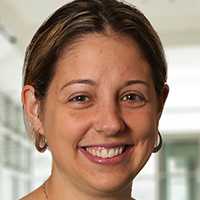
 Dr. Rood[/caption]
Dr. Kara Rood MD
Maternal-fetal Medicine Physician
The Ohio State University Wexner Medical Center
MedicalResearch.com: What is the background for this study? What are the main findings?
Response: This is a simple, rapid, non-invasive test for early recognition of preeclampsia.
MedicalResearch.com: What should readers take away from your report?
Response: Aid in timely diagnosis to help provide closer observations to pregnancies with complicated by preeclampsia, to prevent the devastating adverse pregnancies outcomes for mom's and babies that can occur when pregnancies become complicated by preeclampsia.
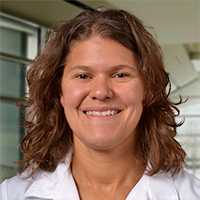
Dr. Rood[/caption]
Dr. Kara Rood MD
Maternal-fetal Medicine Physician
The Ohio State University Wexner Medical Center
MedicalResearch.com: What is the background for this study? What are the main findings?
Response: This is a simple, rapid, non-invasive test for early recognition of preeclampsia.
MedicalResearch.com: What should readers take away from your report?
Response: Aid in timely diagnosis to help provide closer observations to pregnancies with complicated by preeclampsia, to prevent the devastating adverse pregnancies outcomes for mom's and babies that can occur when pregnancies become complicated by preeclampsia.






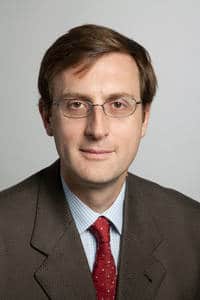








 Dr. Zhu[/caption]
Wenjia Zhu, PhD.
Marshall J. Seidman Fellow
Department of Health Care Policy
Harvard Medical School
MedicalResearch.com: What is the background for this study? What are the main findings?
Response: The current opioid epidemic continues to cause deaths and tremendous suffering in the United States, driven in large part by overuse of prescription opioids. Of special concern are new opioid prescriptions, i.e. opioids given to patients who have not used opioids before, which research tells us are an important gateway to long-term opioid use, misuse, overdoes and death. Recently, in their efforts to curb over prescribing of opioids, the CDC issued guidelines (December 2015 in draft form; March 2016 in final version) to encourage opioid prescribers to limit the use, duration and dose of opioids, particularly opioids to first-time users. Despite these, little is known about the prescribing of opioids to first-time users on a national scale, particularly among commercially insured patients.
In this study, we examined national monthly trends in the rate at which opioid therapy was started among commercially insured patients. Using administrative claims from Blue Cross Blue Shield Association commercial insurers from 2012 to 2017, we analyzed more than 86 million commercially insured patients across the United States.
Dr. Zhu[/caption]
Wenjia Zhu, PhD.
Marshall J. Seidman Fellow
Department of Health Care Policy
Harvard Medical School
MedicalResearch.com: What is the background for this study? What are the main findings?
Response: The current opioid epidemic continues to cause deaths and tremendous suffering in the United States, driven in large part by overuse of prescription opioids. Of special concern are new opioid prescriptions, i.e. opioids given to patients who have not used opioids before, which research tells us are an important gateway to long-term opioid use, misuse, overdoes and death. Recently, in their efforts to curb over prescribing of opioids, the CDC issued guidelines (December 2015 in draft form; March 2016 in final version) to encourage opioid prescribers to limit the use, duration and dose of opioids, particularly opioids to first-time users. Despite these, little is known about the prescribing of opioids to first-time users on a national scale, particularly among commercially insured patients.
In this study, we examined national monthly trends in the rate at which opioid therapy was started among commercially insured patients. Using administrative claims from Blue Cross Blue Shield Association commercial insurers from 2012 to 2017, we analyzed more than 86 million commercially insured patients across the United States.





 Dr. Leung[/caption]
Alexander A. Leung, MD, MPH
Department of Community Health Sciences
Department of Medicine
University of Calgary
Calgary, Alberta, Canada
MedicalResearch.com: What is the background for this study?
Response: The 2017 American College of Cardiology and American Heart Association (ACC/AHA) blood pressure guidelines redefined hypertension according to a blood pressure cutoff of ≥130/80 mm Hg, compared to the traditional cutoff of ≥140/90 mm Hg.
Dr. Leung[/caption]
Alexander A. Leung, MD, MPH
Department of Community Health Sciences
Department of Medicine
University of Calgary
Calgary, Alberta, Canada
MedicalResearch.com: What is the background for this study?
Response: The 2017 American College of Cardiology and American Heart Association (ACC/AHA) blood pressure guidelines redefined hypertension according to a blood pressure cutoff of ≥130/80 mm Hg, compared to the traditional cutoff of ≥140/90 mm Hg.