
22 Feb Effects of Morning Exercise With/Without Breaks in Sitting on Blood Pressure
Posted at 02:08h
in AHA Journals, Author Interviews, Blood Pressure - Hypertension, Exercise - Fitness
MedicalResearch.com Interview with:
[caption id="attachment_47606" align="alignleft" width="200"] Michael J. Wheeler[/caption]
Michael J. Wheeler
Baker Heart and Diabetes Institute
Melbourne, Victoria, Australia
MedicalResearch.com: What is the background for this study? What are the main findings?
Response: We conducted this study because separate lines of inquiry have determined that a bout of exercise can acutely lower blood pressure, and more recently that prolonged sitting can increase blood pressure over the space of a day. We wanted to know whether the blood pressure lowering effects of an exercise bout would be diminished by a subsequent period of prolonged sitting or enhanced by a subsequent period of sitting that is regularly interrupted with short walking breaks.
We found an additive blood pressure lowering effect when exercise was combined with breaks in sitting as opposed to exercise plus prolonged sitting. However, this was only true for women. Men had equal blood pressure lowering effects following exercise regardless of whether-or-not subsequent sitting was interrupted










 Dr. Immler[/caption]
Dr Simone Immler PhD
School of Biological Sciences
University of East Anglia
MedicalResearch.com: What is the background for this study?
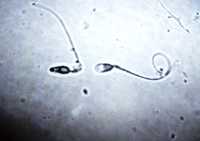
Response: Sperm produced by one male vary substantially both in their genetic content as well as their swimming ability including speed and duration. In a previous study in the zebrafish, we showed that sperm swimming duration is at least partly determined by the underlying haploid genetic content carried by the different sperm within an ejaculate (alavioon et al. 2017 PNAS). If sperm with different swimming ability differ in their genetic content, we expect to see differences among the offspring sired by sperm that vary on their swimming ability.
In our new study, we tested how selection on sperm swimming duration affects offspring fitness. We performed in vitro fertilisation assays mimicking natural conditions in the externally fertilising zebrafish. We split the ejaculate of one male into two halves and in one half we added the sperm straight away to the eggs, allowing all motile sperm to have a go at fertilising an egg. In the second half, we activated the sperm but delayed the moment of fertilisation by 25 seconds and thus selected for the longer swimming sperm. In this treatment only sperm that were still swimming after this period of time (about 50%) were able to fertilise an egg.
We then reared the offspring to adulthood and measured number of offspring produced throughout life and measured lifespan. We found that sperm that were able to swim for longer sired offspring that not only produced more and healthier offspring but also lived for longer than their full siblings sired by sperm with reduced swimming ability. Our previous research (Alavioon et al. 2017 PNAS) suggests that these differences are caused at least partly by genetic differences among sperm.
Dr. Immler[/caption]
Dr Simone Immler PhD
School of Biological Sciences
University of East Anglia
MedicalResearch.com: What is the background for this study?
Response: Sperm produced by one male vary substantially both in their genetic content as well as their swimming ability including speed and duration. In a previous study in the zebrafish, we showed that sperm swimming duration is at least partly determined by the underlying haploid genetic content carried by the different sperm within an ejaculate (alavioon et al. 2017 PNAS). If sperm with different swimming ability differ in their genetic content, we expect to see differences among the offspring sired by sperm that vary on their swimming ability.
In our new study, we tested how selection on sperm swimming duration affects offspring fitness. We performed in vitro fertilisation assays mimicking natural conditions in the externally fertilising zebrafish. We split the ejaculate of one male into two halves and in one half we added the sperm straight away to the eggs, allowing all motile sperm to have a go at fertilising an egg. In the second half, we activated the sperm but delayed the moment of fertilisation by 25 seconds and thus selected for the longer swimming sperm. In this treatment only sperm that were still swimming after this period of time (about 50%) were able to fertilise an egg.
We then reared the offspring to adulthood and measured number of offspring produced throughout life and measured lifespan. We found that sperm that were able to swim for longer sired offspring that not only produced more and healthier offspring but also lived for longer than their full siblings sired by sperm with reduced swimming ability. Our previous research (Alavioon et al. 2017 PNAS) suggests that these differences are caused at least partly by genetic differences among sperm. 










 Dr. Kitchener[/caption]
Professor Henry Kitchener, MD FRCOG FRCS
University of Manchester, Manchester, UK
MedicalResearch.com: What is the background for this study?
Response: We now have reliable and affordable technologies to detect human papillomavirus (HPV), a virus which is universally accepted as the cause of cervical cancer. Various large trials confirmed that cervical screening could be improved by replacing the smear (cytology) test that has been in use for decades, with HPV testing. Many countries are now making the switch. In England, this is planned for the end of 2019. To test how to run HPV testing within the English National Health Service, a pilot was initiated in 2013 in six screening laboratories. We also wanted to determine whether the encouraging findings from the trials could be translated to everyday practice. This is important not only because we will be using different HPV tests, but also because women undergoing screening in trials are much more selected than those who are invited to population-based screening.
Dr. Kitchener[/caption]
Professor Henry Kitchener, MD FRCOG FRCS
University of Manchester, Manchester, UK
MedicalResearch.com: What is the background for this study?
Response: We now have reliable and affordable technologies to detect human papillomavirus (HPV), a virus which is universally accepted as the cause of cervical cancer. Various large trials confirmed that cervical screening could be improved by replacing the smear (cytology) test that has been in use for decades, with HPV testing. Many countries are now making the switch. In England, this is planned for the end of 2019. To test how to run HPV testing within the English National Health Service, a pilot was initiated in 2013 in six screening laboratories. We also wanted to determine whether the encouraging findings from the trials could be translated to everyday practice. This is important not only because we will be using different HPV tests, but also because women undergoing screening in trials are much more selected than those who are invited to population-based screening. 

 Dr. Kishan[/caption]
Amar U. Kishan, MD
Assistant Professor
Department of Radiation Oncology
University of California, Los Angeles
MedicalResearch.com: What is the background for this study? What are the main findings?
Response: Typical external beam radiation courses range up to 8-9 weeks in length (39-45 treatments). There are data that shorter courses, delivering a higher dose per day, may be just as effective.
Stereotactic body radiotherapy (SBRT) really pushes this concept by condensing the treatment to just four to five treatments, with a high dose per day.
Here, we present the pooled results of the outcomes of 2142 men with low and intermediate risk prostate cancer and a median of 6.9 years of followup.
We demonstrate a very favorable efficacy and safety profile. Specifically, the rates of recurrences were 4.5% and 10.2% for low and intermediate risk disease at 7 years, and rates of late severe toxicity were 2.4% for urinary toxicity and 0.4% for gastrointestinal toxicity.
Dr. Kishan[/caption]
Amar U. Kishan, MD
Assistant Professor
Department of Radiation Oncology
University of California, Los Angeles
MedicalResearch.com: What is the background for this study? What are the main findings?
Response: Typical external beam radiation courses range up to 8-9 weeks in length (39-45 treatments). There are data that shorter courses, delivering a higher dose per day, may be just as effective.
Stereotactic body radiotherapy (SBRT) really pushes this concept by condensing the treatment to just four to five treatments, with a high dose per day.
Here, we present the pooled results of the outcomes of 2142 men with low and intermediate risk prostate cancer and a median of 6.9 years of followup.
We demonstrate a very favorable efficacy and safety profile. Specifically, the rates of recurrences were 4.5% and 10.2% for low and intermediate risk disease at 7 years, and rates of late severe toxicity were 2.4% for urinary toxicity and 0.4% for gastrointestinal toxicity.