MedicalResearch.com Interview with:
[caption id="attachment_47008" align="alignleft" width="150"]

Dr. Shenoy[/caption]
ESS=
Erica S. Shenoy, MD, PhD
Harvard Medical School
Division of Infectious Diseases, Department of Medicine
Massachusetts General Hospital, Boston
[caption id="attachment_47011" align="alignleft" width="150"]

Dr. Blumenthal[/caption]
KGB=
Kimberly G. Blumenthal MD, MSc
Division of Rheumatology, Allergy and Immunology
Department of Medicine, Massachusetts General Hospital,Boston
[caption id="attachment_47012" align="alignleft" width="100"]

Dr. Macy[/caption]
EMM=
Eric M. Macy MD, MS
Department of Allergy
Southern California Permanente Medical Group
San Diego Medical Center
[caption id="attachment_47013" align="alignleft" width="150"]

Dr. Rowe[/caption]
TR=
Theresa Rowe, DO, MS
General Internal Medicine and Geriatrics
Feinberg School of Medicine
Northwestern University, Chicago, Illinois
MedicalResearch.com: What is the background for this review?
ESS: A key component of reducing antimicrobial resistance is improving how antimicrobials are prescribed—both reducing inappropriate use (i.e., not prescribing when not needed) and favoring the use of narrow-spectrum agents that are less likely to contribute to the development of antimicrobial resistance.
KGB: Because unverified penicillin allergy labels are so prevalent with greater than 32 million Americans affected, and these labels lead to the use of alternative antibiotics that are often more broad-spectrum, we now know that penicillin allergy evaluations are an emerging important component of antibiotic stewardship. When patients with a reported penicillin allergy are tested, more than 95% of them are not allergic, and thus could (and should) receive penicillins, and often related drugs, when appropriate.




 Dr. Coupet[/caption]
Edouard Coupet Jr, MD, MS
Assistant Professor
Department of Emergency Medicine
Yale School of Medicine
MedicalResearch.com: What is the background for this study? What are the main findings?
Response: For many individuals with nonfatal firearm injuries, their only point of contact with the healthcare system may be the emergency department. Both hospital-based violence intervention programs and counseling and safe firearm storage have shown promise in reducing the burden of firearm injury.
In this study, one third of individuals with firearm injuries presented to non-trauma centers. Only 1 out of 5 firearm injuries were assault injuries that led to admission to trauma centers, the population most likely to receive interventions to reduce re-injury.
Dr. Coupet[/caption]
Edouard Coupet Jr, MD, MS
Assistant Professor
Department of Emergency Medicine
Yale School of Medicine
MedicalResearch.com: What is the background for this study? What are the main findings?
Response: For many individuals with nonfatal firearm injuries, their only point of contact with the healthcare system may be the emergency department. Both hospital-based violence intervention programs and counseling and safe firearm storage have shown promise in reducing the burden of firearm injury.
In this study, one third of individuals with firearm injuries presented to non-trauma centers. Only 1 out of 5 firearm injuries were assault injuries that led to admission to trauma centers, the population most likely to receive interventions to reduce re-injury.

 Dr. Seidler[/caption]
Rachael D. Seidler, PhD
Professor, Applied Physiology & Kinesiology
University of Florida
MedicalResearch.com: What is the background for this study?
Response: There is accumulating evidence that spaceflight impacts the human brain: the brain is shifted higher within the skull and there are some regions of gray matter increases and decreases.
To date, no studies have looked at the impact of spaceflight on human brain white matter pathways. Rodents flown in space show decreased myelination of white matter pathways. Here, we analyzed brain MRI scans pre and post spaceflight to quantify fluid shifts and white matter changes.
Dr. Seidler[/caption]
Rachael D. Seidler, PhD
Professor, Applied Physiology & Kinesiology
University of Florida
MedicalResearch.com: What is the background for this study?
Response: There is accumulating evidence that spaceflight impacts the human brain: the brain is shifted higher within the skull and there are some regions of gray matter increases and decreases.
To date, no studies have looked at the impact of spaceflight on human brain white matter pathways. Rodents flown in space show decreased myelination of white matter pathways. Here, we analyzed brain MRI scans pre and post spaceflight to quantify fluid shifts and white matter changes.















 Dr. Vallerand[/caption]
Isabelle Vallerand, PhD
Epidemiologist, MD Student
Department of Community Health Sciences
Cumming School of Medicine
University of Calgary
MedicalResearch.com: What is the background for this study? What are the main findings?
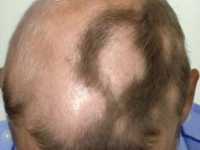
Response: It is well known that patients with alopecia areata, a form of autoimmune hair loss, are at a higher risk of suffering from depression than the general population. But in practice, we often hear patients tell us that they believe their hair loss developed as a result of stress or problems with mental health – certainly the phrase “so stressed your hair is falling out” is something most people have heard of. Despite this, there has actually been very little research investigating the role that mental health may have on development of alopecia areata.
Interestingly, depression has recently been associated with increased systemic inflammatory markers, so there is biologic plausibility that depression could increase the risk of alopecia areata. Our group was interested in addressing this question, and used a large population-level health records database with up to 26 years of follow-up to study it. We ultimately found that not only does depression increase one’s risk of alopecia areata, but that it increases their risk by nearly 90% compared to people who have never had depression. We also found that using antidepressants can significantly decrease the risk of developing alopecia areata in patients with depression. So there appears to be an important link between mental health and development of hair loss from alopecia areata.
Dr. Vallerand[/caption]
Isabelle Vallerand, PhD
Epidemiologist, MD Student
Department of Community Health Sciences
Cumming School of Medicine
University of Calgary
MedicalResearch.com: What is the background for this study? What are the main findings?
Response: It is well known that patients with alopecia areata, a form of autoimmune hair loss, are at a higher risk of suffering from depression than the general population. But in practice, we often hear patients tell us that they believe their hair loss developed as a result of stress or problems with mental health – certainly the phrase “so stressed your hair is falling out” is something most people have heard of. Despite this, there has actually been very little research investigating the role that mental health may have on development of alopecia areata.
Interestingly, depression has recently been associated with increased systemic inflammatory markers, so there is biologic plausibility that depression could increase the risk of alopecia areata. Our group was interested in addressing this question, and used a large population-level health records database with up to 26 years of follow-up to study it. We ultimately found that not only does depression increase one’s risk of alopecia areata, but that it increases their risk by nearly 90% compared to people who have never had depression. We also found that using antidepressants can significantly decrease the risk of developing alopecia areata in patients with depression. So there appears to be an important link between mental health and development of hair loss from alopecia areata.