MedicalResearch.com Interview with:
[caption id="attachment_47448" align="alignleft" width="200"]

Yurii Aulchenko[/caption]
Yurii Aulchenko Co-founder and Chief Scientist of PolyOmica
PolyOmica is a research & development company providing services and tools for quantitative genetics and functional genomics.
[caption id="attachment_47449" align="alignleft" width="150"]

Peter Fedichev[/caption]
Peter Fedichev Founder and Chief Science Officer of Gero
Gero is a data-driven longevity company developing innovative therapies that will strongly extend the healthy period of life also known as healthspan
MedicalResearch.com: What is the background for this study? What are the main findings?
Peter Fedichev, Gero: Age is the most important risk factor behind age-related diseases and death. Lifespan has increased quite dramatically over the last 150-200 years mostly due to the eradication of early-life mortality. What we find, however, is that the healthspan, understood as the chronic diseases-free period, is also on the rise, but not so much. It appears that lifespan is modifiable by interventions, at least in lab animals. It is therefore crucial to understand if the biology behind human healthspan. Is it the same as that of lifespan? What are the molecular pathways and genetic factors controlling the healthspan? At the end, we would like to develop interventions that extend not only lifespan, but also the healthspan. Everyone wants to stay healthy!
Yurii Aulchenko, PolyOmica: We studied the incidence of the most prevalent age-related diseases in the large UK Biobank, one of the best repositories of biologically and medically relevant data from a very large cohort of aging individuals. We observed that the incidence (the chances of) all the major diseases increased exponentially with age. The diseases risk doubling time was about eight years, same as the mortality doubling time from the
Gompertz mortality law, discovered as early as in 1825 and used in life insurance ever since. The similar patterns of age-dependent risk acceleration suggest a major common driver behind the diseases, that is most plausibly aging itself.
Peter Fedichev, Gero: The incidence of the diseases could, therefore, be used as a biomarker of aging process. We used the age at the onset of the first age-related disease (the end of healthspan) as the target for a genome-wide association study (GWAS) and identified as many as 12 genetic loci associated with human healthspan.






 Dr. Lischke[/caption]
Dr. Alexander Lischke, Dipl.-Psych.
Universität Greifswald
Institut für Psychologie
Physiologische und Klinische Psychologie/Psychotherapie
University of Greifswald, Germany
MedicalResearch.com: What is the background for this study?
Response: We know for a long time that cyclic variations in womens' estrogen and progesterone levels affect their emotion recognition abilities by modulating neural activity in brain regions implicated in emotion processing. We also know that oral contraceptives suppress cyclic variations in womens' estrogen and progesterone levels. We, thus, assumed that oral contraceptives would affect womens' emotion recognition abilities due to the aforementioned suppression of cylic variations in estrogen and progesterone levels that modulate neural activity in brain regions during emotion processing. To test this assumption, at least with respect to the behavioral effects of oral contraceptive use on emotion recognition, we performed the current study.
We recruited regular cylcling women with and without oral contraceptive use for our study. None of the women were in psychotherapeutical or psychopharmacological treatment at the time of the study. During the study, women performed a emotion recognition task that required the recognition of complex emotional expressions like, for example, pride or contempt.
Dr. Lischke[/caption]
Dr. Alexander Lischke, Dipl.-Psych.
Universität Greifswald
Institut für Psychologie
Physiologische und Klinische Psychologie/Psychotherapie
University of Greifswald, Germany
MedicalResearch.com: What is the background for this study?
Response: We know for a long time that cyclic variations in womens' estrogen and progesterone levels affect their emotion recognition abilities by modulating neural activity in brain regions implicated in emotion processing. We also know that oral contraceptives suppress cyclic variations in womens' estrogen and progesterone levels. We, thus, assumed that oral contraceptives would affect womens' emotion recognition abilities due to the aforementioned suppression of cylic variations in estrogen and progesterone levels that modulate neural activity in brain regions during emotion processing. To test this assumption, at least with respect to the behavioral effects of oral contraceptive use on emotion recognition, we performed the current study.
We recruited regular cylcling women with and without oral contraceptive use for our study. None of the women were in psychotherapeutical or psychopharmacological treatment at the time of the study. During the study, women performed a emotion recognition task that required the recognition of complex emotional expressions like, for example, pride or contempt.




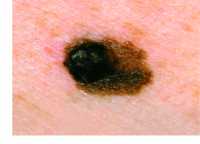
 Example of one type of melanoma[/caption]
Dr. Catherine M. Olsen
Associate Professor
Cancer Control Group
QIMR Berghofer Medical Research Institute
MedicalResearch.com: What is the background for this study?
Response: Melanoma incidence and mortality rates are increasing globally. Public health campaigns aiming to reduce sun exposure and use of sunbed have been implemented in many parts of the world, but there is significant variability in terms of the history and reach of these campaigns across countries. We examined melanoma incidence rates in eight different countries with different patterns of sun exposure and varying approaches to melanoma control.
Example of one type of melanoma[/caption]
Dr. Catherine M. Olsen
Associate Professor
Cancer Control Group
QIMR Berghofer Medical Research Institute
MedicalResearch.com: What is the background for this study?
Response: Melanoma incidence and mortality rates are increasing globally. Public health campaigns aiming to reduce sun exposure and use of sunbed have been implemented in many parts of the world, but there is significant variability in terms of the history and reach of these campaigns across countries. We examined melanoma incidence rates in eight different countries with different patterns of sun exposure and varying approaches to melanoma control.











 Dr. Kessler[/caption]
MedicalResearch.com Interview with:
Lawrence M. Kessler, PhD Research Assistant Professor
[caption id="attachment_47359" align="alignleft" width="112"]
Dr. Kessler[/caption]
MedicalResearch.com Interview with:
Lawrence M. Kessler, PhD Research Assistant Professor
[caption id="attachment_47359" align="alignleft" width="112"] Dr. Harris[/caption]
Matthew C. Harris, PhD Assistant Professor
Boyd Center for Business and Economic Research and Department of Economics
The University of Tennessee
MedicalResearch.com: What is the background for this study?
Response: Motivation for this study came from Co-Author, Matt Murray, who was at a speaking engagement and heard a community business leader say “we’ve got jobs, but no one is applying, could opioids be a contributing factor?” This led to a conversation back at the Boyd Center between us and Matt Murray, where we decided that if we could get data on prescription rates, we could answer this question empirically.
We started by contacting each state agency in charge of their respective prescription drug monitoring program to see if they’d be willing to share county-level data on prescription opioid rates. From this letter-writing campaign we received data from 10 states, which formed the basis for our analysis. As time went on, new data was made publicly available and we were able to expand the analysis to all 50 states.
Dr. Harris[/caption]
Matthew C. Harris, PhD Assistant Professor
Boyd Center for Business and Economic Research and Department of Economics
The University of Tennessee
MedicalResearch.com: What is the background for this study?
Response: Motivation for this study came from Co-Author, Matt Murray, who was at a speaking engagement and heard a community business leader say “we’ve got jobs, but no one is applying, could opioids be a contributing factor?” This led to a conversation back at the Boyd Center between us and Matt Murray, where we decided that if we could get data on prescription rates, we could answer this question empirically.
We started by contacting each state agency in charge of their respective prescription drug monitoring program to see if they’d be willing to share county-level data on prescription opioid rates. From this letter-writing campaign we received data from 10 states, which formed the basis for our analysis. As time went on, new data was made publicly available and we were able to expand the analysis to all 50 states.






 Dr. Callaghan[/caption]