MedicalResearch.com Interview with:
[caption id="attachment_46390" align="alignleft" width="136"]

Dr. DuPaul[/caption]
George J. DuPaul, PhD
Department of Education and Human Services
Lehigh University
[caption id="attachment_46407" align="alignleft" width="144"]

Dr. Barrett[/caption]
Charles Barrett. Ph.D.
School Psychologist
Loudon County Virginia
Public Schools
MedicalResearch.com: What is the background for this study? What are the main findings?
Response: Numerous studies have shown that Black children are more likely to receive ratings that are more indicative of displaying externalizing behavior difficulties, including Attention Deficit Hyperactivity Disorder (ADHD). However, many of these studies included teachers as the informants. Consistent with most teachers in the United States, raters have typically been White females. For this reason, it is unclear if these outcomes would exist if the rater and child shared the same racial/ethnic background. Additionally, most research in the United States that involved cross-cultural comparisons has used White and Hispanic boys. Few empirical studies have examined differences between Black and White boys.
The present study sought to address several limitations in the field. Most notably, cross-cultural comparisons between Black and White boys were included instead of Hispanic and White children. Next, maternal figures, rather than teachers, were included as the informants.
The present study was developed using a similar methodology that examined Hispanic and White boys’ behavior from the perspective of Hispanic and White teachers (Dominguez de Ramirez & Shapiro, 2005). In sum, we sought to determine if there were differences in how Black and White maternal figures rated Black and White boys who were demonstrating the same level/type of behavior (i.e., sub-clinical levels of
ADHD). Notably, although the boys’ behaviors were the same, maternal ratings were not identical.
Specifically, using the ADHD Rating Scale, Fourth Edition (ARS-4), Black mothers assigned higher ratings to both Black and White boys.




 Prof. VanderWeele[/caption]
Professor Tyler VanderWeele Ph.D
John L. Loeb and Frances Lehman Loeb Professor of Epidemiology
Harvard University
MedicalResearch.com: What is the background for this study? What are the key points of the paper?
Response: Several prior studies have suggested that religious service attendance is associated with lower rates of divorce. However, many of these studies have been with small samples and have not had rigorous study designs. In addition, most studies have focused on women earlier in life and there has been little research on the effects of religious service attendance on divorce later in life. While divorce rates in the United States in general has been falling, it has in fact been increasing for middle-aged groups, doubling between 1990 and 2010.
In our study we found that among women in mid- to late- life, regular religious service attendance was subsequently associated with 50% lower divorce rates over the following 14 years of the study.
We also found that among those who were widowed, religious service attendance was associated with a 49% increase in the likelihood of remarrying over the 14 years of the study.
Prof. VanderWeele[/caption]
Professor Tyler VanderWeele Ph.D
John L. Loeb and Frances Lehman Loeb Professor of Epidemiology
Harvard University
MedicalResearch.com: What is the background for this study? What are the key points of the paper?
Response: Several prior studies have suggested that religious service attendance is associated with lower rates of divorce. However, many of these studies have been with small samples and have not had rigorous study designs. In addition, most studies have focused on women earlier in life and there has been little research on the effects of religious service attendance on divorce later in life. While divorce rates in the United States in general has been falling, it has in fact been increasing for middle-aged groups, doubling between 1990 and 2010.
In our study we found that among women in mid- to late- life, regular religious service attendance was subsequently associated with 50% lower divorce rates over the following 14 years of the study.
We also found that among those who were widowed, religious service attendance was associated with a 49% increase in the likelihood of remarrying over the 14 years of the study.



 Dr. Scullin[/caption]
Michael K. Scullin, Ph.D.
Assistant Professor of Psychology and Neuroscience
Director, Sleep Neuroscience and Cognition Laboratory
Baylor University
Waco, TX 76798
MedicalResearch.com: What is the background for this study? What are the main findings?
Response: There is a gap between what health behaviors individuals know they should adopt, and what those individuals actually end up doing. For example, a growing literature shows that simply educating students on the importance of sleep does not change their sleep behaviors. Thus, we need to think outside of the box for solutions.
In three classes, we have now investigated a motivational solution: if students can earn extra credit on their final exam for sleeping better, will they do so even during finals week?
Dr. Scullin[/caption]
Michael K. Scullin, Ph.D.
Assistant Professor of Psychology and Neuroscience
Director, Sleep Neuroscience and Cognition Laboratory
Baylor University
Waco, TX 76798
MedicalResearch.com: What is the background for this study? What are the main findings?
Response: There is a gap between what health behaviors individuals know they should adopt, and what those individuals actually end up doing. For example, a growing literature shows that simply educating students on the importance of sleep does not change their sleep behaviors. Thus, we need to think outside of the box for solutions.
In three classes, we have now investigated a motivational solution: if students can earn extra credit on their final exam for sleeping better, will they do so even during finals week?





 Dr. Bollag[/caption]
Wendy Bollag, PhD, FAHA
Professor of Physiology
VA Research Career Scientist
Augusta University, Georgia
MedicalResearch.com: What is the background for this study?
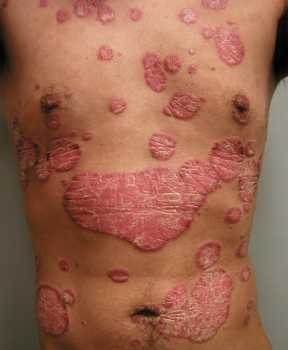
Response: We have previously shown that the lipid (fat) phosphatidylglycerol (PG) is able to inhibit rapidly growing keratinocytes (skin cells) and promote their maturation. We also found that PG can suppress skin inflammation.
Since the common skin disease psoriasis is characterized by inflammation and excessive growth and abnormal maturation of skin cells, we believed that PG might be useful as a treatment. However, the mechanism of its anti-inflammatory effect was unknown. PG in the lung has been found to inhibit inflammation induced by microbes or their components, which work by activating the innate immune system via binding to proteins called toll-like receptors (TLRs); however, psoriasis is not considered to be an infectious disease.
We hypothesized that PG would also inhibit inflammation induced by anti-microbial peptides that activate TLRs. Anti-microbial peptides, produced normally by the skin to protect against infection, are known to be excessively up-regulated in psoriatic skin.
Dr. Bollag[/caption]
Wendy Bollag, PhD, FAHA
Professor of Physiology
VA Research Career Scientist
Augusta University, Georgia
MedicalResearch.com: What is the background for this study?
Response: We have previously shown that the lipid (fat) phosphatidylglycerol (PG) is able to inhibit rapidly growing keratinocytes (skin cells) and promote their maturation. We also found that PG can suppress skin inflammation.
Since the common skin disease psoriasis is characterized by inflammation and excessive growth and abnormal maturation of skin cells, we believed that PG might be useful as a treatment. However, the mechanism of its anti-inflammatory effect was unknown. PG in the lung has been found to inhibit inflammation induced by microbes or their components, which work by activating the innate immune system via binding to proteins called toll-like receptors (TLRs); however, psoriasis is not considered to be an infectious disease.
We hypothesized that PG would also inhibit inflammation induced by anti-microbial peptides that activate TLRs. Anti-microbial peptides, produced normally by the skin to protect against infection, are known to be excessively up-regulated in psoriatic skin. 





 Dr. Daniel Romer[/caption]
Daniel Romer PhD
Annenberg Public Policy Center
The University of Pennsylvania
Philadelphia, PA
MedicalResearch.com: What is the background for this study? What are the main findings?
Response: Previous research has found some troubling relations between adolescent cannabis use and subsequent increases in conduct problems and other unhealthy consequences. These studies were done in New Zealand in the late 90’s and we wanted to re-examine those relationships using more contemporary data in the US.
We had data on 364 adolescents who were followed from age 13 to 19 in Philadelphia that could provide a more up to date picture of the effects of using cannabis on one important outcome, conduct disorder. We also wanted to use more sensitive methods than had been used in prior research that would enable us to examine reciprocal relations between cannabis use and c (CP). That is, it might be the case that youth with CP are prone to using cannabis and that this helps to explain why there appears to be a relation over time between cannabis use and CP rather than cannabis use leading to CP.
Our findings supported that hypothesis. There was no prospective relation between changes in cannabis use and subsequent changes in conduct problems. Instead, changes in conduct problems were found to predict changes in use of cannabis. Youth with conduct problems also affiliated more with peers who used cannabis, adding further to their own use. There was also no evidence that youth who used cannabis sought out peers who used it apart from the effects of CP.
Finally, both use of cannabis and conduct problems predicted subsequent development of a mild cannabis use disorder (CUD).
Dr. Daniel Romer[/caption]
Daniel Romer PhD
Annenberg Public Policy Center
The University of Pennsylvania
Philadelphia, PA
MedicalResearch.com: What is the background for this study? What are the main findings?
Response: Previous research has found some troubling relations between adolescent cannabis use and subsequent increases in conduct problems and other unhealthy consequences. These studies were done in New Zealand in the late 90’s and we wanted to re-examine those relationships using more contemporary data in the US.
We had data on 364 adolescents who were followed from age 13 to 19 in Philadelphia that could provide a more up to date picture of the effects of using cannabis on one important outcome, conduct disorder. We also wanted to use more sensitive methods than had been used in prior research that would enable us to examine reciprocal relations between cannabis use and c (CP). That is, it might be the case that youth with CP are prone to using cannabis and that this helps to explain why there appears to be a relation over time between cannabis use and CP rather than cannabis use leading to CP.
Our findings supported that hypothesis. There was no prospective relation between changes in cannabis use and subsequent changes in conduct problems. Instead, changes in conduct problems were found to predict changes in use of cannabis. Youth with conduct problems also affiliated more with peers who used cannabis, adding further to their own use. There was also no evidence that youth who used cannabis sought out peers who used it apart from the effects of CP.
Finally, both use of cannabis and conduct problems predicted subsequent development of a mild cannabis use disorder (CUD). 
 Prof. Ye[/caption]
Dr. Weimin Ye, MD MSC, PhD
Department of Medical Epidemiology and Biostatistics
Karolinska Institue
MedicalResearch.com: What is the background for this study? What are the main findings?
Response: Polycystic ovary syndrome (PCOS) is the most common endocrine disorder affecting 5-10% of women of reproductive age. Characterized by hyperandrogenism and metabolic abnormalities, PCOS is known to be related to various long-term health consequences, including diabetes, cardiovascular disease and endometrial cancer. Besides, inconsistent results have been reported for the associations between PCOS and the risk of ovarian and breast cancer. Studies addressing the risks of other cancers are scarce. Thus, we conducted a large, population-based cohort study with a long follow-up and rather sufficient confounding adjustment to explore the full picture of associations between PCOS and the risks of various cancer types.
We found that PCOS is a risk factor for certain types of cancer, including cancers of the endometrium, ovary, endocrine gland, pancreas, kidney and skeletal & hematopoietic system.
Prof. Ye[/caption]
Dr. Weimin Ye, MD MSC, PhD
Department of Medical Epidemiology and Biostatistics
Karolinska Institue
MedicalResearch.com: What is the background for this study? What are the main findings?
Response: Polycystic ovary syndrome (PCOS) is the most common endocrine disorder affecting 5-10% of women of reproductive age. Characterized by hyperandrogenism and metabolic abnormalities, PCOS is known to be related to various long-term health consequences, including diabetes, cardiovascular disease and endometrial cancer. Besides, inconsistent results have been reported for the associations between PCOS and the risk of ovarian and breast cancer. Studies addressing the risks of other cancers are scarce. Thus, we conducted a large, population-based cohort study with a long follow-up and rather sufficient confounding adjustment to explore the full picture of associations between PCOS and the risks of various cancer types.
We found that PCOS is a risk factor for certain types of cancer, including cancers of the endometrium, ovary, endocrine gland, pancreas, kidney and skeletal & hematopoietic system. 




 Mr. Butt[/caption]
Mr. Tosh Butt
Vice President, Respiratory
AstraZeneca
Mr. Butt discusses the recent announcement that the FDA has granted Orphan Drug Designation for Fasenra for the treatment of Eosinophilic Granulomatosis with Polyangiitis.
MedicalResearch.com: What is the background for this announcement? Can you tell us a little more about Eosinophilic Granulomatosis with Polyangiitis/Churg Strauss? How does it differ/resemble severe eosinophilic asthma?
Mr. Butt[/caption]
Mr. Tosh Butt
Vice President, Respiratory
AstraZeneca
Mr. Butt discusses the recent announcement that the FDA has granted Orphan Drug Designation for Fasenra for the treatment of Eosinophilic Granulomatosis with Polyangiitis.
MedicalResearch.com: What is the background for this announcement? Can you tell us a little more about Eosinophilic Granulomatosis with Polyangiitis/Churg Strauss? How does it differ/resemble severe eosinophilic asthma?