Author Interviews, MRI, Pain Research, Rheumatology / 11.10.2018
Fibromyalgia: Scan Reveals Increased Brain Activation in Pain, Emotion and Affect Areas
MedicalResearch.com Interview with:
Daniel S. Albrecht, Ph.D.
Research Fellow, Department of Radiology
Harvard Medical School
MedicalResearch.com: What is the background for this study? Can you briefly describe what is meant by fibromyalgia?
Response: Fibromyalgia (FM) is a poorly understood chronic condition characterized by widespread musculoskeletal pain, fatigue, unrefreshing sleep, memory deficits and attention difficulties, among other symptoms. FM affects an estimated 4 million adults in the U.S., but despite this prevalence, effective therapies for treating FM are lacking.
[caption id="attachment_45185" align="aligncenter" width="400"]
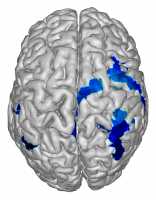
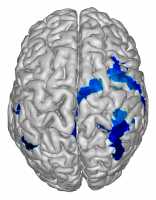
This combined MR/PET image highlights areas of the brain in which patients with fibromyalgia were found to have increased glial activation, compared with unaffected control volunteers.
Credit: Marco Loggia, PhD, Martinos Center for Biomedical Imaging, Massachusetts General Hospital[/caption] Part of the reason for the paucity of effective therapeutics is insufficient knowledge of the underlying mechanisms contributing to FM. Previous work from co-senior author of the current manuscript, Eva Kosek, MD, PhD, and collaborators at the Karolinska Institute in Sweden found elevated inflammatory molecules in the cerebrospinal fluid of FM patients, which could be reflective of brain neuroinflammation in these patients. However, no study had directly assessed the presence of neuroinflammation in the brain of FM patients. Co-senior author of the study, Marco Loggia, PhD, and collaborators showed in a 2015 Brain publication that individuals with chronic low back pain (cLBP) exhibit evidence of brain neuroinflammation, specifically activation of glial cells. Our team utilized simultaneous MR/PET imaging to image brain levels of the 18 kDa translocator protein (TSPO), which is widely used as a marker of glial activation due to vast upregulation of TSPO in glial cells, e.g. microglia and astrocytes, in preclinical models of inflammation and neurological disease. Dr. Loggia sought to extend these finding in cLBP to FM, hypothesizing that activation of glial cells may also be associated with FM pathology. To this end, we used the same TSPO PET tracer to image 20 FM patients and 16 healthy controls. During a conference where I was presenting preliminary results of the fibromyalgia study, Dr. Loggia met with Dr. Kosek and discovered that, across the Atlantic, her group was performing a very similar study, imaging 11 FM patients and 11 controls with the same TSPO PET compound. They decided to form a collaboration, and logistic talks began to determine the best strategy to combine and analyze the separate datasets. In addition to PET imaging with the TSPO tracer, which is suggested to reflect activated microglia and astrocytes, Dr. Kosek’s group also collected PET scans using a tracer thought to bind specifically to astrocytes rather than microglia. This tracer was used in order to discern the relative contributions of microglia and astrocytes to any observed differences in TSPO PET signal.
This combined MR/PET image highlights areas of the brain in which patients with fibromyalgia were found to have increased glial activation, compared with unaffected control volunteers.Credit: Marco Loggia, PhD, Martinos Center for Biomedical Imaging, Massachusetts General Hospital[/caption] Part of the reason for the paucity of effective therapeutics is insufficient knowledge of the underlying mechanisms contributing to FM. Previous work from co-senior author of the current manuscript, Eva Kosek, MD, PhD, and collaborators at the Karolinska Institute in Sweden found elevated inflammatory molecules in the cerebrospinal fluid of FM patients, which could be reflective of brain neuroinflammation in these patients. However, no study had directly assessed the presence of neuroinflammation in the brain of FM patients. Co-senior author of the study, Marco Loggia, PhD, and collaborators showed in a 2015 Brain publication that individuals with chronic low back pain (cLBP) exhibit evidence of brain neuroinflammation, specifically activation of glial cells. Our team utilized simultaneous MR/PET imaging to image brain levels of the 18 kDa translocator protein (TSPO), which is widely used as a marker of glial activation due to vast upregulation of TSPO in glial cells, e.g. microglia and astrocytes, in preclinical models of inflammation and neurological disease. Dr. Loggia sought to extend these finding in cLBP to FM, hypothesizing that activation of glial cells may also be associated with FM pathology. To this end, we used the same TSPO PET tracer to image 20 FM patients and 16 healthy controls. During a conference where I was presenting preliminary results of the fibromyalgia study, Dr. Loggia met with Dr. Kosek and discovered that, across the Atlantic, her group was performing a very similar study, imaging 11 FM patients and 11 controls with the same TSPO PET compound. They decided to form a collaboration, and logistic talks began to determine the best strategy to combine and analyze the separate datasets. In addition to PET imaging with the TSPO tracer, which is suggested to reflect activated microglia and astrocytes, Dr. Kosek’s group also collected PET scans using a tracer thought to bind specifically to astrocytes rather than microglia. This tracer was used in order to discern the relative contributions of microglia and astrocytes to any observed differences in TSPO PET signal.


![MedicalResearch.com Interview with: Gili Regev-Yochay, MD, Lead author Director of the Infection Prevention & Control Unit Sheba Medical Center Tel HaShomer, Israel. MedicalResearch.com: What is the background for this study? Response: CPE (Carbapenemase producing Enterobacteriaceae) is endemic in Israel. In our ICU we had a prolonged CPE outbreak with one particular bacteria, which is not that common (OXA-48 producing-Serratia marcescens). Enhancing our regular control measures (hand hygiene, increased cleaning etc..) did not contain the outbreak. MedicalResearch.com: What are the main findings? Response: The outbreak source were the sink-traps in nearly all the patient rooms, which were contaminated with this same bacteria. Once we understood that this was the source we took two measures: 1) Sink decontamination efforts, including intensive chlorine washes of the drainage and water system, replacement of all sink-traps, acetic acid treatment and more, all these efforts were only partially and only temporarily successful. So that even today, after a year of such efforts and a period in which we didn't have any patients with this infection, the drainage system is still contaminated with these bugs and they grow in the sink-traps and can be found in the sink outlets. 2) The second measure we took was an educational intervention, where we engaged the ICU team through workshops to the issue of the contaminated sinks and together enforced strict "sink-use guidelines" (sinks are to be used ONLY for hand washing, prohibiting placement of any materials near the sinks, etc.). Using these two measure the outbreak was fully contained. To date, nearly 1.5 years since the last outbreak case, we did not have any further infections in our ICU patients with this bug. MedicalResearch.com: What should readers take away from your report? Response: Sink-traps and drainage systems can be a major source of CPE transmission. While traditionally CPE outbreaks were attributed to patient-to patient transmission, the environment and particularly water and drainage system appears to play a major role. MedicalResearch.com: What recommendations do you have for future research as a result of this work? Response: There is urgent need to find a technological solution for drainage system contaminations. While some have suggested to get rid of sinks in ICU this is probably not realistic in the era of emerging Clostridium infections (where washing hands, and not only alcohol rubs are needed). Citation: Gili Regev-Yochay, Gill Smollan, Ilana Tal, Nani Pinas Zade, Yael Haviv, Valery Nudelman, Ohad Gal-Mor, Hanaa Jaber, Eyal Zimlichman, Nati Keller, Galia Rahav. Sink traps as the source of transmission of OXA-48–producing Serratia marcescens in an intensive care unit. Infection Control & Hospital Epidemiology, 2018; 1 DOI: 1017/ice.2018.235 [wysija_form id="3"] [last-modified] The information on MedicalResearch.com is provided for educational purposes only, and is in no way intended to diagnose, cure, or treat any medical or other condition. Always seek the advice of your physician or other qualified health and ask your doctor any questions you may have regarding a medical condition. In addition to all other limitations and disclaimers in this agreement, service provider and its third party providers disclaim any liability or loss in connection with the content provided on this website.](https://medicalresearch.com/wp-content/uploads/sink-200x150.jpg)