[caption id="attachment_45809" align="alignleft" width="160"]

Dr. Vinson[/caption]
MedicalResearch.com Interview with:
David R. Vinson, MD
Department of Emergency Medicine
Kaiser Permanente Sacramento Medical Center Sacramento, CA
MedicalResearch.com: What is the background for this study? What are the main findings?
Response: At least one-third of emergency department (ED) patients with acute blood clots in the lung, or pulmonary embolism (PE), are eligible for expedited discharged to home, either directly from the ED or after a short (<24 hour) period of observation. Yet in in most hospitals in the U.S. and around the world nearly all ED patients with acute PE are hospitalized. These unnecessary hospitalizations are a poor use of health care resources, tie up inpatient beds, and expose patients to the cost, inconvenience, and risk of inpatient care. The better-performing medical centers have two characteristics in common: they help their physicians identify which PE patients are candidates for outpatient care and they facilitate timely post-discharge follow-up. At Kaiser Permanente Northern California (KPNC), we have had the follow-up system in place for some time, but didn’t have a way to help our physicians sort out which patients with acute PE would benefit from home management.
To correct this, we designed a secure, web-based clinical decision support system that was integrated with the electronic health record. When activated, it presented to the emergency physician the validated PE Severity Index, which uses patient demographics, vital signs, examination findings, and past medical history to classify patients into different risk strata, correlated with eligibility for home care. To make use of the PE Severity Index easier and more streamlined for the physician, the tool drew in information from the patient’s comprehensive medical records to accurately auto-populate the PE Severity Index. The tool then calculated for the physician the patient’s risk score and estimated 30-day mortality, and also offered a site-of-care recommendation, for example, “outpatient management is often possible.” The tool also reminded the physician of relative contraindications to outpatient management. At the time, only 10 EDs in KPNC had an on-site physician researcher, who for this study served as physician educator, study promotor, and enrollment auditor to provide physician-specific feedback. These 10 EDs functioned as the intervention sites, while the other 11 EDs within KPNC served as concurrent controls. Our primary outcome was the percentage of eligible ED patients with acute PE who had an expedited discharge to home, as defined above.
During the 16-month study period (8-month pre-intervention and 8-months post-intervention), we cared for 1,703 eligible ED patients with acute PE. Adjusted home discharge increased at intervention sites from 17% to 28%, a greater than 60% relative increase. There were no changes in home discharge observed at the control sites (about 15% throughout the 16-month study). The increase in home discharge was not associated with an increase in short-term return visits or major complications.



 Dr. Nidich[/caption]
Sanford Nidich, Ed.D.
Director, Center for Social-Emotional Health
Maharishi University of Management Research Institute
Fairfield, Iowa
MedicalResearch.com: What is the background for this study? What are the main findings?
Response: Posttraumatic stress disorder (PTSD) is a complex and difficult-to-treat disorder, affecting 10-20% of veterans across eras. Previous research raised the question of whether a non-trauma focused treatment can be as effective as trauma exposure therapy in reducing PTSD symptoms. The overall objective of the study was to compare Transcendental Meditation (TM), a non-trauma focused practice, to prolonged exposure (PE) in a non-inferiority clinical trial, and to compare both to a PTSD health education control group.
Transcendental Meditation was found to be as effective as PE in reducing PTSD symptoms severity from baseline to three-month posttest. In standard superiority comparisons, significant reductions in PTSD symptoms were found for TM vs. HE, and PE vs. HE. Percentages of participants with clinically significant improvement, as measured by the Clinician-Administered PTSD Scale (CAPS) interview (≥10 point reduction), were TM=61%, PE=42%, and HE=32%
Dr. Nidich[/caption]
Sanford Nidich, Ed.D.
Director, Center for Social-Emotional Health
Maharishi University of Management Research Institute
Fairfield, Iowa
MedicalResearch.com: What is the background for this study? What are the main findings?
Response: Posttraumatic stress disorder (PTSD) is a complex and difficult-to-treat disorder, affecting 10-20% of veterans across eras. Previous research raised the question of whether a non-trauma focused treatment can be as effective as trauma exposure therapy in reducing PTSD symptoms. The overall objective of the study was to compare Transcendental Meditation (TM), a non-trauma focused practice, to prolonged exposure (PE) in a non-inferiority clinical trial, and to compare both to a PTSD health education control group.
Transcendental Meditation was found to be as effective as PE in reducing PTSD symptoms severity from baseline to three-month posttest. In standard superiority comparisons, significant reductions in PTSD symptoms were found for TM vs. HE, and PE vs. HE. Percentages of participants with clinically significant improvement, as measured by the Clinician-Administered PTSD Scale (CAPS) interview (≥10 point reduction), were TM=61%, PE=42%, and HE=32% 






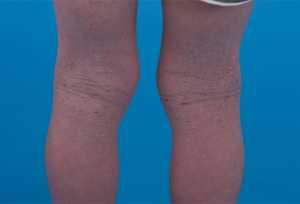



 Dr. Ard[/caption]
Dr. Jamy Ard MD
Professor of Epidemiology and Prevention
Co-director,the Wake Forest Baptist Health Weight Management Center
Wake Forest School of Medicine
MedicalResearch.com: What is the background for this study? What are the main findings?
Response: Obesity continues to be a growing health challenge, and doctors need as many resources as possible to help their patients achieve success. The OPTIWIN trial shows that a total meal replacement program like OPTIFAST can help with significant and sustained weight loss.
The OPTIFAST Program is a medically monitored weight loss program that combines meal replacement with behavioral counseling and personalized support. In the OPTIWIN study, participants were randomized to either the OPTIFAST Program (OP) or a behavioral intervention using a food-based diet (FB).
At both 26 and 52 weeks, the OP group lost, on average, twice as much of their initial body weight as the FB group:
Dr. Ard[/caption]
Dr. Jamy Ard MD
Professor of Epidemiology and Prevention
Co-director,the Wake Forest Baptist Health Weight Management Center
Wake Forest School of Medicine
MedicalResearch.com: What is the background for this study? What are the main findings?
Response: Obesity continues to be a growing health challenge, and doctors need as many resources as possible to help their patients achieve success. The OPTIWIN trial shows that a total meal replacement program like OPTIFAST can help with significant and sustained weight loss.
The OPTIFAST Program is a medically monitored weight loss program that combines meal replacement with behavioral counseling and personalized support. In the OPTIWIN study, participants were randomized to either the OPTIFAST Program (OP) or a behavioral intervention using a food-based diet (FB).
At both 26 and 52 weeks, the OP group lost, on average, twice as much of their initial body weight as the FB group:

 Cara Tannenbaum, MD, MSc
Director | Directrice
Canadian Deprescribing Network
MedicalResearch.com: What is the background for this study? What are the main findings?
Response: The D-Prescribe trial was driven by the need to show that seniors can cut down on their medication in a safe and effective manner. Pharmacists intervened in a proactive way to flag patients who were on potentially risky meds such as sleeping pills, NSAIDs and glyburide and to inform them of the risks, using an educational brochure. Pharmacists also communicated with their physician using an evidence-based pharmaceutical opinion to spark conversations about deprescribing. As a result, 43% of patients succeeded in discontinuing at least one medication over the next 6 months.
Cara Tannenbaum, MD, MSc
Director | Directrice
Canadian Deprescribing Network
MedicalResearch.com: What is the background for this study? What are the main findings?
Response: The D-Prescribe trial was driven by the need to show that seniors can cut down on their medication in a safe and effective manner. Pharmacists intervened in a proactive way to flag patients who were on potentially risky meds such as sleeping pills, NSAIDs and glyburide and to inform them of the risks, using an educational brochure. Pharmacists also communicated with their physician using an evidence-based pharmaceutical opinion to spark conversations about deprescribing. As a result, 43% of patients succeeded in discontinuing at least one medication over the next 6 months.

 Yingxi (Cimo) Chen, MD, MPH, PhD
Postdoctoral Fellow
Radiation Epidemiology Branch, DCEG, NCI, NIH
Rockville MD 20850
MedicalResearch.com: What is the background for this study?
Response: Death rates from drug overdose have more than doubled in the US in the 21st century. Similar increases in drug overdose deaths have been reported in other high-income countries but few studies have compared rates across countries.
Yingxi (Cimo) Chen, MD, MPH, PhD
Postdoctoral Fellow
Radiation Epidemiology Branch, DCEG, NCI, NIH
Rockville MD 20850
MedicalResearch.com: What is the background for this study?
Response: Death rates from drug overdose have more than doubled in the US in the 21st century. Similar increases in drug overdose deaths have been reported in other high-income countries but few studies have compared rates across countries. 




 Dr. Ray[/caption]
Joel Ray MD, MSc, FRCPC
Institute of Health Policy, Management and Evaluation
Faculty of Medicine
University of Toronto, Toronto
MedicalResearch.com: What is the background for this study? What are the main findings?
Response: Many women who die within childbirth or soon thereafter experience rapid onset of morbidity/illness before succumbing. Thus, severe maternal morbidity (SMM) offers a detectable (or set of detectable) conditions that might be dealt with before they progress to a fatality. Even so, severe maternal morbidity alone can be non-fatal, but create disability for a new mother (e.g., a stroke), or prolong separation of mother and newborn.
So, we showed that, as the number of severe maternal morbidity indicators rises, so does the probability of maternal death. This relation was exponential in nature.
Dr. Ray[/caption]
Joel Ray MD, MSc, FRCPC
Institute of Health Policy, Management and Evaluation
Faculty of Medicine
University of Toronto, Toronto
MedicalResearch.com: What is the background for this study? What are the main findings?
Response: Many women who die within childbirth or soon thereafter experience rapid onset of morbidity/illness before succumbing. Thus, severe maternal morbidity (SMM) offers a detectable (or set of detectable) conditions that might be dealt with before they progress to a fatality. Even so, severe maternal morbidity alone can be non-fatal, but create disability for a new mother (e.g., a stroke), or prolong separation of mother and newborn.
So, we showed that, as the number of severe maternal morbidity indicators rises, so does the probability of maternal death. This relation was exponential in nature. 
 Dr. Yandrapalli[/caption]
Dr. Srikanth Yandrapalli
New York Medical College
NYMC · Cardiology
MedicalResearch.com: What is the background for this study? What are the main findings?
Response: Selection of coronary artery bypass grafting over percutaneous coronary intervention during an acute myocardial infarction is influenced by the extent of coronary artery disease and patient comorbidities. Prior studies have shown sex and racial differences in coronary artery diseaseburden.
We sought to identify if there are any sex and racial differences in the utilization of coronary artery bypass grafting over percutaneous coronary intervention during a revascularized first acute myocardial infarction in the US.
We found that males had a higher coronary artery bypass grafting rate than women, and compared to Whites, Blacks had lower coronary artery bypass grafting rate and Asians had higher coronary artery bypass grafting at the time of a first myocardial infarction.
Dr. Yandrapalli[/caption]
Dr. Srikanth Yandrapalli
New York Medical College
NYMC · Cardiology
MedicalResearch.com: What is the background for this study? What are the main findings?
Response: Selection of coronary artery bypass grafting over percutaneous coronary intervention during an acute myocardial infarction is influenced by the extent of coronary artery disease and patient comorbidities. Prior studies have shown sex and racial differences in coronary artery diseaseburden.
We sought to identify if there are any sex and racial differences in the utilization of coronary artery bypass grafting over percutaneous coronary intervention during a revascularized first acute myocardial infarction in the US.
We found that males had a higher coronary artery bypass grafting rate than women, and compared to Whites, Blacks had lower coronary artery bypass grafting rate and Asians had higher coronary artery bypass grafting at the time of a first myocardial infarction.