MedicalResearch.com Interview with:
[caption id="attachment_46151" align="alignleft" width="200"]
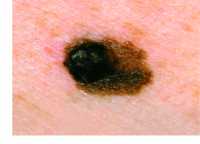
One example of malignant melanoma, courtesy of Skin Cancer Foundation[/caption]
Reza Ghiasvand, PhD
Oslo Centre for Biostatistics and Epidemiology
Faculty of Medicne
University of Oslo
Oslo, Norway
MedicalResearch.com: What is the background for this study?
Response: Melanoma is the most dangerous type of skin cancer. It is estimated that about 288,000 individuals will be diagnosed and about 61,000 will die from it in 2018, with the majority of patients in Australia, New Zealand, Europe and North America. Ultraviolet (UV) exposure (from both the sun and tanning beds) is the most important preventable risk factor for melanoma. However, the association between UV exposure and melanoma is complex and does not accord with a simple model in which risk increases directly with exposure. An individual risk of melanoma also depends on personal characteristics such as skin color and skin sensitivity to the UV exposure, hair color, number of moles, and age.
It has been hypothesized that the pattern of UV exposure may play a role in melanoma development in different body sites. For example, melanoma on the trunk (chest and back) has been linked to the recreational UV exposure such as sunbathing and frequent sunburns in people with high number of moles on their body. In contrast, melanomas on the head and neck have been linked to constant sun exposure such as occupational UV exposure, mainly in older people. Epidemiologic and molecular evidence in support of this hypothesis has been published based on analyses of small datasets. Also, melanoma on legs and arms is less studied under this hypothesis.
In our study, we examined UV exposure (sunbathing, sunburn and
sunbed use) and pigmentary factors (skin, eye, and hair color, freckling, and number of moles), and risk of melanoma on different body sites. We used information from the Norwegian Women and Cancer Study, a population-based cohort study that started in 1991, and includes more than 161,000 Norwegian women followed for an average of 18 years.















 Dr. Mangione[/caption]
Dr. Carol Mangione M.D., M.S.P.H., F.A.C.P
Ronald Reagan UCLA Medical Center
Division Chief of General Internal Medicine and Health Services Research
Professor of Medicine.
Barbara A. Levey, MD, and Gerald S. Levey, MD
Endowed chair in medicine David Geffen School of Medicine
University of California
MedicalResearch.com: What is the background for this study? What are the main findings?
Response: Unhealthy alcohol use is relatively common and is increasing among U.S. adults. Alcohol use is the third leading cause of preventable death in the U.S. and contributes to more than 88,000 deaths per year. In pregnancy, it also leads to birth defects and developmental problems in children. The Task Force found that screening tests and brief counseling interventions can help detect and reduce unhealthy alcohol use among adults, and in turn help prevent negative consequences related to alcohol use. For adolescents ages 12 to 17, clinicians should use their best judgment when deciding whether or not to screen and refer their patients to counseling, until we have better studies available.
Dr. Mangione[/caption]
Dr. Carol Mangione M.D., M.S.P.H., F.A.C.P
Ronald Reagan UCLA Medical Center
Division Chief of General Internal Medicine and Health Services Research
Professor of Medicine.
Barbara A. Levey, MD, and Gerald S. Levey, MD
Endowed chair in medicine David Geffen School of Medicine
University of California
MedicalResearch.com: What is the background for this study? What are the main findings?
Response: Unhealthy alcohol use is relatively common and is increasing among U.S. adults. Alcohol use is the third leading cause of preventable death in the U.S. and contributes to more than 88,000 deaths per year. In pregnancy, it also leads to birth defects and developmental problems in children. The Task Force found that screening tests and brief counseling interventions can help detect and reduce unhealthy alcohol use among adults, and in turn help prevent negative consequences related to alcohol use. For adolescents ages 12 to 17, clinicians should use their best judgment when deciding whether or not to screen and refer their patients to counseling, until we have better studies available.








 Dr. Pedersen[/caption]
Professor Oluf Pedersen
Novo Nordisk Foundation Center for Basic Metabolic Research
University of Copenhagen
MedicalResearch.com: What is the background for this study?
Response: We focused our study on healthy people due to the world-wide bottom-up movement among healthy adults to live gluten-free or on a low-gluten diet.
Therefore, we undertook a randomised, controlled, cross-over trial involving 60 middle-aged healthy Danish adults with two eight week interventions comparing a low-gluten diet (2 g gluten per day) and a high-gluten diet (18 g gluten per day), separated by a washout period of at least six weeks with habitual diet (12 g gluten per day).
The two diets were balanced in number of calories and nutrients including the same total amount of dietary fibres. However, the composition of fibres differed markedly between the two diets.
When the low-gluten trend started years back the trend was without any scientific evidence for health benefits. Now we bring pieces of evidence that a low-gluten diet in healthy people may be related to improved intestinal wellbeing due to changes in the intestinal microbiota which to our surprise is NOT induced by gluten itself but by the concomitant change in the type of dietary fibres linked to a low-gluten intake.
Dr. Pedersen[/caption]
Professor Oluf Pedersen
Novo Nordisk Foundation Center for Basic Metabolic Research
University of Copenhagen
MedicalResearch.com: What is the background for this study?
Response: We focused our study on healthy people due to the world-wide bottom-up movement among healthy adults to live gluten-free or on a low-gluten diet.
Therefore, we undertook a randomised, controlled, cross-over trial involving 60 middle-aged healthy Danish adults with two eight week interventions comparing a low-gluten diet (2 g gluten per day) and a high-gluten diet (18 g gluten per day), separated by a washout period of at least six weeks with habitual diet (12 g gluten per day).
The two diets were balanced in number of calories and nutrients including the same total amount of dietary fibres. However, the composition of fibres differed markedly between the two diets.
When the low-gluten trend started years back the trend was without any scientific evidence for health benefits. Now we bring pieces of evidence that a low-gluten diet in healthy people may be related to improved intestinal wellbeing due to changes in the intestinal microbiota which to our surprise is NOT induced by gluten itself but by the concomitant change in the type of dietary fibres linked to a low-gluten intake.





 Eliane Abou-Jaoude, MD
Allergy and Immunology Fellow
Henry Ford Health System
Detroit, Michigan
MedicalResearch.com: What is the background for this study?
Response: Early life exposure to diverse types of microbes is necessary for healthy immune development and may impact the risk for developing allergic disorders.
Theoretically the transfer of parental microbes to their offspring during infancy can influence a child’s developing gut microbiome and subsequent immune response patterns.
We wished to investigate whether parental pacifier cleaning methods, reported at 6-months of age, were associated with altered serum IgE trajectory over the first 18 months of life.
Eliane Abou-Jaoude, MD
Allergy and Immunology Fellow
Henry Ford Health System
Detroit, Michigan
MedicalResearch.com: What is the background for this study?
Response: Early life exposure to diverse types of microbes is necessary for healthy immune development and may impact the risk for developing allergic disorders.
Theoretically the transfer of parental microbes to their offspring during infancy can influence a child’s developing gut microbiome and subsequent immune response patterns.
We wished to investigate whether parental pacifier cleaning methods, reported at 6-months of age, were associated with altered serum IgE trajectory over the first 18 months of life.