MedicalResearch.com Interview with:
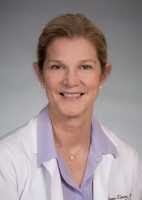
[caption id="attachment_35769" align="alignleft" width="158"]

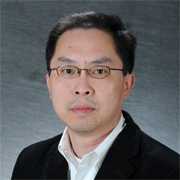
Dr. Daiger[/caption]
Stephen P. Daiger, PhD
Professor, Human Genetics Center
Thomas Stull Matney, Ph.D. Professor in Environmental and Genetic Sciences
Mary Farish Johnston Distinguished Chair in Ophthalmology
The University of Texas Health Science Center at Houston
MedicalResearch.com: What is the background for this study? What are the main findings?
Response: Thanks for your questions about our research. My research group and I have a long-term interest in finding genes and mutations causing inherited retinal diseases. Our main focus is on retinitis pigmentosa (RP) and, more specifically, the autosomal dominant form of RP.
Inherited retinal diseases are progressive, degenerative diseases of the retina. Onset can be very early in life, even at birth, or much later in life. As the degeneration develops an affected person may first experienced limited loss of vision, progressing to severe loss of vision, ending, in many cases, in legal or complete blindness. About 300,000 Americans are affected by inherited retinal disease and 50% of these have RP. RP, like most hereditary conditions, can be inherited in an autosomal dominant, autosomal recessive or X-linked fashion.
One of the surprising, and in some sense, disturbing findings in studying
retinitis pigmentosa is that mutations in many different genes can cause this disease. We now know that mutations in more than 80 genes can cause RP and thousands of different mutations have been found in these genes. With next-generations sequencing it is possible to find the cause of RP in from 50% to 80% of cases, depending on the underlying mode of inheritance.For example, in our research we can find the disease-causing mutation in about 75% of families with autosomal dominant RP. Needless to say, a primary aim of our research is to find the cause in the remaining 25%.
In looking for the cause of retinitis pigmentosa in the remaining 25%, that is, those in whom mutations were not detected by earlier methods, we found a potential dominant-acting mutation in the arrestin-1 gene (gene symbol “
SAG”) using whole-genome sequencing. Molecular modeling suggests this mutation is damaging. This was unexpected because previously-reported mutations in this gene were associated with Oguchi disease, a recessive retinal disease with symptoms distinct from RP. On further testing our cohort of patients with autosomal dominant RP, we found this mutation in nearly 4% of families. Even more surprisingly, when we looked closely at the affected families, and worked with our collaborators to test other patients, we discovered that all of the families with the dominant-acting
SAG mutation -- 12 total -- were of Hispanic origin. By interviewing informative family members we learned that these families have their roots in the Southwestern United States. Historically, the mutation may have arisen hundreds of years ago, consistent with genetic variation tracking with the mutation.

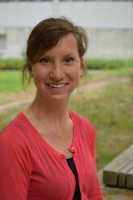
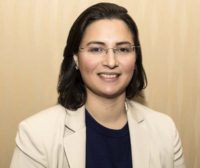
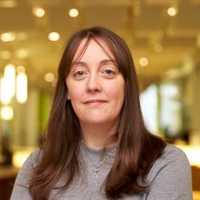 Dr. Hill[/caption]
Dr Lisa J Hill PhD
Institute of Inflammation and Ageing
Research Fellow
Neuroscience and Ophthalmology
Institute of Inflammation and Ageing
College of Medical and Dental Sciences
University of Birmingham UK
MedicalResearch.com: What is the background for this study? What are the main findings?
Response: Traumatic brain injury (TBI) is the leading cause of death and disability among young adults and, according to the World Health Organization, by 2020 TBI will become the world’s leading cause of neurological disability across all age groups. Early and correct diagnosis of traumatic brain injury is one of the most challenging aspects faced by clinicians. Being able to detect compounds in the blood that help to determine how severe the brain injury is would be of great benefit to patients and aid in their treatment. Inflammatory markers are particularly suited for biomarker discovery as TBI leads to very early alterations in inflammatory proteins. The discovery of reliable biomarkers for the management of TBI would improve clinical interventions.
We collected blood samples from 30 injured patients within the first hour of injury prior to the patient arriving at hospital and analysed them. Analysis of protein biomarkers from blood taken within the first hour of injury has never been carried out until now. We used a panel of 92 inflammation-associated human proteins when analysing the blood samples. The analysis identified three inflammatory proteins, known as CST5, AXIN1 and TRAIL, as novel biomarkers of TBI.
Dr. Hill[/caption]
Dr Lisa J Hill PhD
Institute of Inflammation and Ageing
Research Fellow
Neuroscience and Ophthalmology
Institute of Inflammation and Ageing
College of Medical and Dental Sciences
University of Birmingham UK
MedicalResearch.com: What is the background for this study? What are the main findings?
Response: Traumatic brain injury (TBI) is the leading cause of death and disability among young adults and, according to the World Health Organization, by 2020 TBI will become the world’s leading cause of neurological disability across all age groups. Early and correct diagnosis of traumatic brain injury is one of the most challenging aspects faced by clinicians. Being able to detect compounds in the blood that help to determine how severe the brain injury is would be of great benefit to patients and aid in their treatment. Inflammatory markers are particularly suited for biomarker discovery as TBI leads to very early alterations in inflammatory proteins. The discovery of reliable biomarkers for the management of TBI would improve clinical interventions.
We collected blood samples from 30 injured patients within the first hour of injury prior to the patient arriving at hospital and analysed them. Analysis of protein biomarkers from blood taken within the first hour of injury has never been carried out until now. We used a panel of 92 inflammation-associated human proteins when analysing the blood samples. The analysis identified three inflammatory proteins, known as CST5, AXIN1 and TRAIL, as novel biomarkers of TBI.
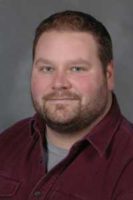


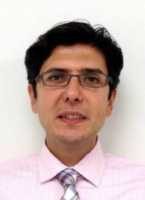

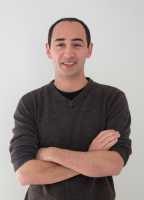
 Dr. David Kita, PhD
Founder and Head of R&D
Verseon Corporation
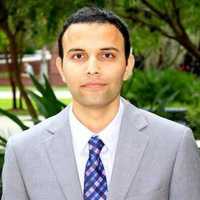
Dr. David Kita, PhD
Founder and Head of R&D
Verseon Corporation