MedicalResearch.com Interview with:
[caption id="attachment_21154" align="alignleft" width="171"]

Andrea J. Gonzalez-Mantilla, M.D.[/caption]
Andrea J. Gonzalez-Mantilla, M.D.
Postdoctoral Fellow
[caption id="attachment_21155" align="alignleft" width="163"]
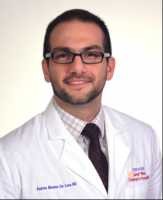
Andres Moreno-De-Luca, M.D.[/caption]
Andres Moreno-De-Luca, M.D.
Investigator I
Autism & Developmental Medicine Institute
Department of Radiology
Geisinger Health System
Danville, PA 17822
Medical Research: What is the background for this study? What are the main findings?
Response: Developmental brain disorders (DBD), such as autism, intellectual disability, and schizophrenia are a group of heterogeneous conditions characterized by deficits that affect multiple functional domains, such as cognition, behavior, communication, and motor skills. Previous studies provide strong evidence of common underlying molecular pathways and shared genetic causes among apparently different DBDs.
Large-scale genomic studies of individuals with developmental brain disorders have found that identifying multiple, independent
de novo pathogenic loss-of-function (pLOF) variants in the same gene among unrelated individuals is a powerful statistical approach to reliably identify disease-causing genes. However, genomic data from smaller cohorts and case reports are not routinely pooled with data from larger studies. Moreover, most previous studies have been restricted to cohorts of individuals ascertained based on a single diagnosis (e.g., a study will focus on only individuals with a diagnosis of autism and not consider other genomic data from individuals with a different diagnosis). Therefore, genomic data from individuals across DBD are not being jointly analyzed in search of pLOF variants in the same gene that may help build evidence for a causative role in developmental brain disorders.
In this study, we carried out data mining of previously published data to identify genes related to the DBD phenotype. We expanded the aforementioned method and developed a multilevel data-integration approach, which capitalizes on three genotype-phenotype data sources:
(1) genomic data from structural and sequence pLOF variants,
(2) phenotype data from six apparently distinct DBD (autism, intellectual disability, epilepsy, schizophrenia, bipolar disorder and attention-deficit/hyperactivity disorder), and
(3) data from large scale studies, smaller cohorts, and case reports.
We identified 241 candidate genes for developmental brain disorders, including 17 genes that had not previously been associated with developmental brain disorders.

 Dr. Art Sedrakyan[/caption]
Dr. Art Sedrakyan MD PhD ScD
Professor of Healthcare Policy and Research in Cardiothoracic Surgery
Department of Public Health
Weill Cornell Medical College
Medical Research: What is the background for this study? What are the main findings?
Dr. Sedrakyan: In the most recent years available to us for research(2011-2013) one in four women underwent repeat surgery within 90 days after breast conserving approach to cancer removal. Patients operated by higher volume physicians had lower chance of undergoing repeat surgery.Uniform guidelines and increased surgical training are needed to standardize the breast conserving surgery to reduce the high rate of repeat surgery.
Dr. Art Sedrakyan[/caption]
Dr. Art Sedrakyan MD PhD ScD
Professor of Healthcare Policy and Research in Cardiothoracic Surgery
Department of Public Health
Weill Cornell Medical College
Medical Research: What is the background for this study? What are the main findings?
Dr. Sedrakyan: In the most recent years available to us for research(2011-2013) one in four women underwent repeat surgery within 90 days after breast conserving approach to cancer removal. Patients operated by higher volume physicians had lower chance of undergoing repeat surgery.Uniform guidelines and increased surgical training are needed to standardize the breast conserving surgery to reduce the high rate of repeat surgery.




















 Dr. Lazovich[/caption]
MedicalResearch.com Interview with:
DeAnn Lazovich, Ph.D.
Associate Professor
Division of Epidemiology and Community Health
University of Minnesota
Minneapolis, MN 55454
Medical Research: What is the background for this study? What are the main findings?
Dr. Lazovich: In Minnesota, as well as nationally, melanoma rates have been increasing more steeply in women than men younger than age 50 years since about the mid-1990s. Some have speculated that this could be due to women's indoor tanning use, as women use indoor tanning much more than men do. We had data on indoor
Dr. Lazovich[/caption]
MedicalResearch.com Interview with:
DeAnn Lazovich, Ph.D.
Associate Professor
Division of Epidemiology and Community Health
University of Minnesota
Minneapolis, MN 55454
Medical Research: What is the background for this study? What are the main findings?
Dr. Lazovich: In Minnesota, as well as nationally, melanoma rates have been increasing more steeply in women than men younger than age 50 years since about the mid-1990s. Some have speculated that this could be due to women's indoor tanning use, as women use indoor tanning much more than men do. We had data on indoor 
 Prof. Bisgaard[/caption]
MedicalResearch.com Interview with:
Hans Bisgaard, MD, DMSc
Professor of Pediatrics
The Faculty of Health Sciences
University of Copenhagen
Head of the Copenhagen Prospective Studies on Asthma in Childhood
University of Copenhagen and Naestved Hospital
MedicalResearch: What is the background for this study? What are the main findings?
Dr. Bisgaard: Vitamin D deficiency has become a common health problem in westernized societies, possibly caused by a more sedentary indoor lifestyle and decreased intake of vitamin D containing foods. Vitamin D possesses a range of immune regulatory properties, and it has been speculated that vitamin D deficiency during pregnancy may affect fetal immune programming and contribute to asthma pathogenesis. Asthma often begins in early childhood and is the most common chronic childhood disorder. Observational studies have suggested that increased dietary vitamin D intake during pregnancy may protect against wheezing in the offspring, but the preventive effect of
Prof. Bisgaard[/caption]
MedicalResearch.com Interview with:
Hans Bisgaard, MD, DMSc
Professor of Pediatrics
The Faculty of Health Sciences
University of Copenhagen
Head of the Copenhagen Prospective Studies on Asthma in Childhood
University of Copenhagen and Naestved Hospital
MedicalResearch: What is the background for this study? What are the main findings?
Dr. Bisgaard: Vitamin D deficiency has become a common health problem in westernized societies, possibly caused by a more sedentary indoor lifestyle and decreased intake of vitamin D containing foods. Vitamin D possesses a range of immune regulatory properties, and it has been speculated that vitamin D deficiency during pregnancy may affect fetal immune programming and contribute to asthma pathogenesis. Asthma often begins in early childhood and is the most common chronic childhood disorder. Observational studies have suggested that increased dietary vitamin D intake during pregnancy may protect against wheezing in the offspring, but the preventive effect of  Dr. Augusto Litonjua[/caption]
MedicalResearch.com Interview with:
Augusto A. Litonjua, MD, MPH
Associate Professor
Channing Division of Network Medicine
and Division of Pulmonary and Critical Care Medicine
Department of Medicine
Brigham and Women's Hospital
Harvard Medical School
Boston, MA 02115 USA
Medical Research: What is the background for this study? What are the main findings?
Response: Vitamin D deficiency has been hypothesized to contribute to the asthma and allergy epidemic. Vitamin D has been shown to affect lung development in utero. However, observational studies have shown mixed results when studying asthma development in young children. Since most asthma cases start out as wheezing illnesses in very young children, we hypothesized that vitamin D supplementation in pregnant mothers might prevent the development of asthma and wheezing illnesses in their offspring. We randomly assigned 881 pregnant women at 10 to 18 weeks' gestation and at high risk of having children with asthma to receive daily 4,000 IU vitamin D plus a prenatal vitamin containing 400 IU vitamin D (n = 440), or a placebo plus a prenatal vitamin containing 400 IU vitamin D (n = 436). Eight hundred ten infants were born during the study period, and 806 were included in the analyses for the 3-year outcomes. The children born to mothers in the 4,400 IU group had a 20% reduction in the development of asthma or recurrent wheeze compared to the children born to mothers in the 400 IU group (24% vs 30%, respectively; an absolute reduction of 6%). However, this reduction did not reach statistical significance (p=0.051).
Dr. Augusto Litonjua[/caption]
MedicalResearch.com Interview with:
Augusto A. Litonjua, MD, MPH
Associate Professor
Channing Division of Network Medicine
and Division of Pulmonary and Critical Care Medicine
Department of Medicine
Brigham and Women's Hospital
Harvard Medical School
Boston, MA 02115 USA
Medical Research: What is the background for this study? What are the main findings?
Response: Vitamin D deficiency has been hypothesized to contribute to the asthma and allergy epidemic. Vitamin D has been shown to affect lung development in utero. However, observational studies have shown mixed results when studying asthma development in young children. Since most asthma cases start out as wheezing illnesses in very young children, we hypothesized that vitamin D supplementation in pregnant mothers might prevent the development of asthma and wheezing illnesses in their offspring. We randomly assigned 881 pregnant women at 10 to 18 weeks' gestation and at high risk of having children with asthma to receive daily 4,000 IU vitamin D plus a prenatal vitamin containing 400 IU vitamin D (n = 440), or a placebo plus a prenatal vitamin containing 400 IU vitamin D (n = 436). Eight hundred ten infants were born during the study period, and 806 were included in the analyses for the 3-year outcomes. The children born to mothers in the 4,400 IU group had a 20% reduction in the development of asthma or recurrent wheeze compared to the children born to mothers in the 400 IU group (24% vs 30%, respectively; an absolute reduction of 6%). However, this reduction did not reach statistical significance (p=0.051).
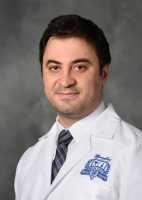 Dr. Firas Abdollah[/caption]
MedicalResearch.com Interview with:
Firas Abdollah, M.D., F.E.B.U.
(Fellow of European Board of Urology) Urology Fellow with the Center for Outcomes Research, Analytics and Evaluation
Vattikuti Urology Institute at Henry Ford Hospital in Detroit
MedicalResearch: What is the background for this study? What are the main findings?
Dr. Abdollah: Cancer screening aims to detect tumors early, before they become symptomatic. Evidence suggests that detection and treatment of early-stage tumors may reduce cancer mortality among screened individuals. Despite this potential benefit, screening programs may also cause harm. Notably, screening may identify low-risk indolent tumors that would never become clinically evident in the absence of screening (overdiagnosis), subjecting patients to the harms of unnecessary treatment. Such considerations are central to screening for prostate and breast cancers, the most prevalent solid tumors in men and women, respectively. These tumors are often slow growing, and guidelines recommend against screening (non-recommended screening) for these tumors in individuals with limited life expectancy, i.e. those with a life expectancy less than 10 years. Unfortunately, our study found that this practice is not uncommon in the US. Using a nationwide representative survey conducted in 2012, we found that among 149,514 individuals 65 years or older, 76,419 (51.1%) received any prostate/breast screening. Among these, 23,532 (30.8%) individuals had a life expectancy of less than 10 years. These numbers imply that among the screened population over 65 years old, almost one in three individuals received a non-recommended screening. This corresponds to an overall rate of non-recommended screening of 15.7% (23,532 of 149,514 individuals).
Another important finding of our study was that there were important variations in the rate of non-recommended screening from state to state; i.e. the chance of an individual older than 65 to receive a non-recommended screening varies based on his/her geographical location in United States.
Finally, on a state-by-state level, there was a correlation (40%) between non-recommended screening for prostate and breast cancer, i.e. states that are more likely to offer non-recommended screening for
Dr. Firas Abdollah[/caption]
MedicalResearch.com Interview with:
Firas Abdollah, M.D., F.E.B.U.
(Fellow of European Board of Urology) Urology Fellow with the Center for Outcomes Research, Analytics and Evaluation
Vattikuti Urology Institute at Henry Ford Hospital in Detroit
MedicalResearch: What is the background for this study? What are the main findings?
Dr. Abdollah: Cancer screening aims to detect tumors early, before they become symptomatic. Evidence suggests that detection and treatment of early-stage tumors may reduce cancer mortality among screened individuals. Despite this potential benefit, screening programs may also cause harm. Notably, screening may identify low-risk indolent tumors that would never become clinically evident in the absence of screening (overdiagnosis), subjecting patients to the harms of unnecessary treatment. Such considerations are central to screening for prostate and breast cancers, the most prevalent solid tumors in men and women, respectively. These tumors are often slow growing, and guidelines recommend against screening (non-recommended screening) for these tumors in individuals with limited life expectancy, i.e. those with a life expectancy less than 10 years. Unfortunately, our study found that this practice is not uncommon in the US. Using a nationwide representative survey conducted in 2012, we found that among 149,514 individuals 65 years or older, 76,419 (51.1%) received any prostate/breast screening. Among these, 23,532 (30.8%) individuals had a life expectancy of less than 10 years. These numbers imply that among the screened population over 65 years old, almost one in three individuals received a non-recommended screening. This corresponds to an overall rate of non-recommended screening of 15.7% (23,532 of 149,514 individuals).
Another important finding of our study was that there were important variations in the rate of non-recommended screening from state to state; i.e. the chance of an individual older than 65 to receive a non-recommended screening varies based on his/her geographical location in United States.
Finally, on a state-by-state level, there was a correlation (40%) between non-recommended screening for prostate and breast cancer, i.e. states that are more likely to offer non-recommended screening for