MedicalResearch.com Interview with:
[caption id="attachment_58681" align="alignleft" width="263"]

Prof. Rahi[/caption]
Prof. Jugnoo S Rahi
Professor of Ophthalmic Epidemiology and Honorary Consultant Ophthalmologist
NIHR Senior Investigator
Head,
Vision and Eyes Group UCL
Head, Population Policy and Practice Research and Teaching Department GOS ICH UCL
Director, Ulverscroft Vision Research Group
GOS Institute of Child Health UCL /
Great Ormond Street Hospital NHS Foundation Trust
Institute of Ophthalmology UCL /
NIHR Moorfields Biomedical Research Centre
Chair, Academic Committee
Chair, British Ophthalmological Surveillance Unit Executive Committee
Royal College of Ophthalmologists
MedicalResearch.com: What is the background for this study?
Response: We hypothesised that if changing environmental factors, in particular educational experience, are accounting for increasing frequency of myopia in the UK, a cohort effect would be discernible in changing associations with myopia, with different profiles for childhood and adult-onset forms. We investigated this using the UK Biobank Study, a unique large contemporary adult population sample whose members, born over a period of more than three decades, have undergone a detailed ophthalmic examination. This affords the opportunity to analyse ‘historical’ cohorts covering a period of important socio-demographic, economic, and educational change in the UK from which current and emerging trends may be identified and examined.
Drawing on our previous proof-of-concept study, we investigated whether there were differences between childhood-onset versus adult-onset myopia in temporal trends in both frequency and severity and in associations with key environmental factors.


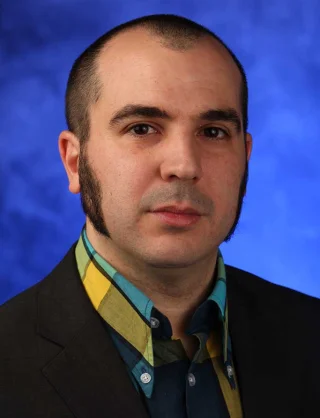
 Dr. Fernandez-Mendoza[/caption]
Julio Fernandez-Mendoza, PhD, CBSM, DBSM
Associate Professor of Psychiatry & Behavioral Health
Sleep Research & Treatment Center
Director, Behavioral Sleep Medicine Program
Penn State Health Milton S. Hershey Medical Center
MedicalResearch.com: What is the background for this study? Is insomnia familial?
Response: Consistent research has shown that about 25% of school-age children have insomnia symptoms consisting of difficulties initiating or maintaining sleep. However, what has remained unknown is to what extent those insomnia symptoms persist all the way into adulthood, or whether they developmentally remit (go away with age) as the child grows into adolescence or young adulthood. This is the question that our study focused on.
Dr. Fernandez-Mendoza[/caption]
Julio Fernandez-Mendoza, PhD, CBSM, DBSM
Associate Professor of Psychiatry & Behavioral Health
Sleep Research & Treatment Center
Director, Behavioral Sleep Medicine Program
Penn State Health Milton S. Hershey Medical Center
MedicalResearch.com: What is the background for this study? Is insomnia familial?
Response: Consistent research has shown that about 25% of school-age children have insomnia symptoms consisting of difficulties initiating or maintaining sleep. However, what has remained unknown is to what extent those insomnia symptoms persist all the way into adulthood, or whether they developmentally remit (go away with age) as the child grows into adolescence or young adulthood. This is the question that our study focused on.



 Johonniuss Chemweno
CEO of VIPStarNetwork
MedicalResearch.com: What is the mission of VIP StarNetwork?
Response: VIP StarNetwork’s mission is to expand access to healthcare services and information, especially in underserved and underprivileged communities. Our comprehensive group of health experts, leading physicians, and healthcare executives are working to create a meaningful and safe environment to ensure that patients have equitable and streamlined access to vaccines and other forms of care.
Johonniuss Chemweno
CEO of VIPStarNetwork
MedicalResearch.com: What is the mission of VIP StarNetwork?
Response: VIP StarNetwork’s mission is to expand access to healthcare services and information, especially in underserved and underprivileged communities. Our comprehensive group of health experts, leading physicians, and healthcare executives are working to create a meaningful and safe environment to ensure that patients have equitable and streamlined access to vaccines and other forms of care.

 Dr. Aris[/caption]
Izzuddin M Aris, PhD
Assistant Professor
Department of Population Medicine, Harvard Medical School
Division of Chronic Disease Research Across the Lifecourse
Harvard Pilgrim Health Care Institute
Boston, MA
MedicalResearch.com: What is the background for this study?
Response: Puberty is a key stage during child development. Previous research indicates that children in the United States are entering puberty at younger ages. These children may be in danger of developing certain diseases, such as type 2 diabetes, later in life. A better understanding of how early life factors affect puberty development is important for combating earlier puberty onset. .
Dr. Aris[/caption]
Izzuddin M Aris, PhD
Assistant Professor
Department of Population Medicine, Harvard Medical School
Division of Chronic Disease Research Across the Lifecourse
Harvard Pilgrim Health Care Institute
Boston, MA
MedicalResearch.com: What is the background for this study?
Response: Puberty is a key stage during child development. Previous research indicates that children in the United States are entering puberty at younger ages. These children may be in danger of developing certain diseases, such as type 2 diabetes, later in life. A better understanding of how early life factors affect puberty development is important for combating earlier puberty onset. .

 Dr. Kao-Ping Chua[/caption]
Kao-Ping Chua, MD, PhD
Assistant Professor,
Department of Pediatrics
Assistant Professor,
Health Management and Policy
School of Public Health
University of Michigan
MedicalResearch.com: What is the background for this study?
Response: In 2020, most insurers waived the cost of COVID-19 hospitalization for patients. In early 2021, many major insurers started to abandon those waivers. By August 2021, the vast majority of insurers had started billing patients for COVID-19 hospitalizations again.
Dr. Kao-Ping Chua[/caption]
Kao-Ping Chua, MD, PhD
Assistant Professor,
Department of Pediatrics
Assistant Professor,
Health Management and Policy
School of Public Health
University of Michigan
MedicalResearch.com: What is the background for this study?
Response: In 2020, most insurers waived the cost of COVID-19 hospitalization for patients. In early 2021, many major insurers started to abandon those waivers. By August 2021, the vast majority of insurers had started billing patients for COVID-19 hospitalizations again.


 Dr. Singh[/caption]
Dr. Saundra Singh M.D., Ph.D.
Founder & CEO/President
Dr. Singh[/caption]
Dr. Saundra Singh M.D., Ph.D.
Founder & CEO/President
 MedicalResearch.com: What is the mission of














 Dr. Connelly[/caption]
Stephen Connelly, PhD
Co-founder & Chief Scientific Officer
Dr. Connelly[/caption]
Stephen Connelly, PhD
Co-founder & Chief Scientific Officer