
07 Sep Lung Cancer: Human-AI Collaboration Can Accelerate Time to Treatment
Posted at 13:27h
in Author Interviews, Brigham & Women's - Harvard, Cancer Research, JAMA, Lancet, Lung Cancer, Medical Imaging, Technology
MedicalResearch.com Interview with:
[caption id="attachment_59510" align="alignleft" width="200"] Dr. Mak[/caption]
Raymond H. Mak, MD
Radiation Oncology Disease Center Leader for Thoracic Oncology
Director of Patient Safety and QualityDirector of Clinical Innovation
Associate Professor, Harvard Medical School
Cancer - Radiation Oncology, Radiation Oncology
Department of Radiation Oncology
Brigham and Women's Hospital
MedicalResearch.com: What is the background for this study? What is the algorithm detecting?
Response: Lung cancer, the most common cancer worldwide is highly lethal, but can be treated and cured in some cases with radiation therapy. Nearly half of lung cancer patients will eventually require some form of radiation therapy, but the planning for a course of radiation therapy currently entails manual, time-consuming, and resource-intensive work by highly trained physicians to segment (target) the cancerous tumors in the lungs and adjacent lymph nodes on three-dimensional images (CT scans). Prior studies have shown substantial variation in how expert clinicians delineate these targets, which can negatively impact outcomes and there is a projected shortage of skilled medical staff to perform these tasks worldwide as cancer rates increase.
To address this critical gap, our team developed deep learning algorithms that can automatically target lung cancer in the lungs and adjacent lymph nodes from CT scans that are used for radiation therapy planning, and can be deployed in seconds.
We trained these artificial intelligence (AI) algorithms using expert-segmented targets from over 700 cases and validated the performance in over 1300 patients in external datasets (including publicly available data from a national trial), benchmarked its performance against expert clinicians, and then further validated the clinical usefulness of the algorithm in human-AI collaboration experiments that measured accuracy, task speed, and end-user satisfaction.




 Dr. Han[/caption]
Meilan K Han MD, MS
Henry Sewall Professor of Medicine
Professor of Internal Medicine and Section Head
Division of Pulmonary and Critical Care Medicine, Medical School
University of Michigan
MedicalResearch.com: What is the background for this study? What are the main findings?
Response: In the NIH sponsored SPIROMICS study we demonstrated that symptomatic, tobacco exposed individuals have frequent exacerbations. Many of these individuals are treated with the same inhaled medications that have shown benefit in COPD, but we don’t have any evidence basis for this practice.
Dr. Han[/caption]
Meilan K Han MD, MS
Henry Sewall Professor of Medicine
Professor of Internal Medicine and Section Head
Division of Pulmonary and Critical Care Medicine, Medical School
University of Michigan
MedicalResearch.com: What is the background for this study? What are the main findings?
Response: In the NIH sponsored SPIROMICS study we demonstrated that symptomatic, tobacco exposed individuals have frequent exacerbations. Many of these individuals are treated with the same inhaled medications that have shown benefit in COPD, but we don’t have any evidence basis for this practice.

 Dr. Maki Inoue-Choi,[/caption]
Maki Inoue-Choi, Ph.D., M.S., R.D.
Staff Scientist
Metabolic Epidemiology Branch
National Institutes of Health
MedicalResearch.com: What is the background for this study?
Response: Tea is rich in bioactive compounds that can possibly protect against health conditions such as cancer and heart disease. A lower risk of death was seen among tea drinkers than non-drinkers in previous studies, but these were largely in populations where green tea drinking is common. In contrast, the studies in populations where black tea drinking is more common have been limited and the findings from these studies have been inconsistent.
Dr. Maki Inoue-Choi,[/caption]
Maki Inoue-Choi, Ph.D., M.S., R.D.
Staff Scientist
Metabolic Epidemiology Branch
National Institutes of Health
MedicalResearch.com: What is the background for this study?
Response: Tea is rich in bioactive compounds that can possibly protect against health conditions such as cancer and heart disease. A lower risk of death was seen among tea drinkers than non-drinkers in previous studies, but these were largely in populations where green tea drinking is common. In contrast, the studies in populations where black tea drinking is more common have been limited and the findings from these studies have been inconsistent.









 Dr. Bailey[/caption]
Michael Bailey Ph.D.
Senior Principal Engineer, Applied Physics Laboratory
Associate Professor. Mechanical Engineering
Adjunct Associate Professor Urology
MedicalResearch.com: What is the background for this study?
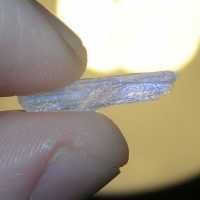
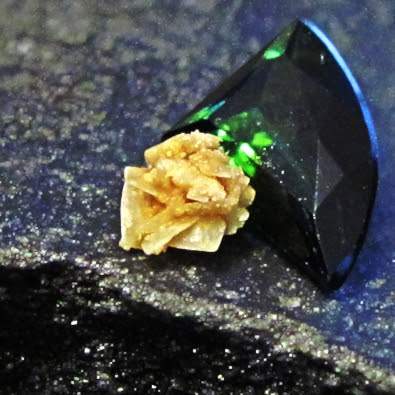
Response: Small (< 6 mm) kidney stones are common and often are asymptomatic. Do you do surgery or wait for them to cause a problem? Or specifically here if you are getting surgery already for other stones that are causing a problem do you take the time and possibly extra risk of cleaning out the small stone in the kidney or in the other kidney?
Dr. Bailey[/caption]
Michael Bailey Ph.D.
Senior Principal Engineer, Applied Physics Laboratory
Associate Professor. Mechanical Engineering
Adjunct Associate Professor Urology
MedicalResearch.com: What is the background for this study?
Response: Small (< 6 mm) kidney stones are common and often are asymptomatic. Do you do surgery or wait for them to cause a problem? Or specifically here if you are getting surgery already for other stones that are causing a problem do you take the time and possibly extra risk of cleaning out the small stone in the kidney or in the other kidney?







 Dr. Wall[/caption]
Dr Emma Wall
Senior Clinical Research Fellow, UCLH-Crick Legacy study
Consultant Infectious Diseases UCLH
MedicalResearch.com: What is the background for this study?
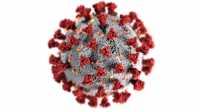
Response: Since April 2022, both the UK and US have changed their COVID-19 isolation and testing policies. The impact these changes in the guidance and vaccination on community-acquired COVID-19 caused by recent SARS-CoV-2 variants of concern (VOC) has not been fully tested, including infections with BA.2. We aimed to characterise both symptoms and viral loads over the course of COVID-19 infection in otherwise-healthy, vaccinated, non-hospitalised adults, to assess whether current guidance remains justified. All participants were included in the UCLH-Crick Legacy study, a prospective, observational cohort study of otherwise healthy adults who have been taking part in regular workplace testing for SARS-CoV-2 in London
We sent swabs by same-day courier every other day to all adults who reported a positive PCR or lateral flow test to the study team up to day 10 after the start of each infection. We confirmed which variant caused the infection by PCR and sequencing. All participants completed linked symptom diaries.
We compared symptoms and changes in the amount of virus detected in the nose and throat during infection between study participants reporting COVID-19 caused by VOCs Delta and Omicron BA.1 and BA.2. We then analysed how many of our participants would meet current UK/US isolation guidelines.
Dr. Wall[/caption]
Dr Emma Wall
Senior Clinical Research Fellow, UCLH-Crick Legacy study
Consultant Infectious Diseases UCLH
MedicalResearch.com: What is the background for this study?
Response: Since April 2022, both the UK and US have changed their COVID-19 isolation and testing policies. The impact these changes in the guidance and vaccination on community-acquired COVID-19 caused by recent SARS-CoV-2 variants of concern (VOC) has not been fully tested, including infections with BA.2. We aimed to characterise both symptoms and viral loads over the course of COVID-19 infection in otherwise-healthy, vaccinated, non-hospitalised adults, to assess whether current guidance remains justified. All participants were included in the UCLH-Crick Legacy study, a prospective, observational cohort study of otherwise healthy adults who have been taking part in regular workplace testing for SARS-CoV-2 in London
We sent swabs by same-day courier every other day to all adults who reported a positive PCR or lateral flow test to the study team up to day 10 after the start of each infection. We confirmed which variant caused the infection by PCR and sequencing. All participants completed linked symptom diaries.
We compared symptoms and changes in the amount of virus detected in the nose and throat during infection between study participants reporting COVID-19 caused by VOCs Delta and Omicron BA.1 and BA.2. We then analysed how many of our participants would meet current UK/US isolation guidelines. 

 Dr. Giebultowicz[/caption]
Dr. Jaga Giebultowicz
Professor Emeritus,
Department of Integrative Biology
Oregon State University
Corvallis, OR 97331
MedicalResearch.com: What is the background for this study? Where is blue light commonly found?
Response: Our study in short-lived model organism Drosophila revealed that cumulative, long-term exposure to blue light impacts brain function, accelerates the aging process and significantly shortens lifespan compared to flies maintained in constant darkness or in white light with blue wavelengths blocked.
Blue light is predominantly produced by the light-emitting diodes (LEDs); it appears white due to the addition of yellow fluorescent powder which is activated by blue light. LEDs has become a main source of display screens (phones, laptops, desktops, TV), and ambient lights. Indeed, humans have become awash in LEDs for most of their waking hours.
Dr. Giebultowicz[/caption]
Dr. Jaga Giebultowicz
Professor Emeritus,
Department of Integrative Biology
Oregon State University
Corvallis, OR 97331
MedicalResearch.com: What is the background for this study? Where is blue light commonly found?
Response: Our study in short-lived model organism Drosophila revealed that cumulative, long-term exposure to blue light impacts brain function, accelerates the aging process and significantly shortens lifespan compared to flies maintained in constant darkness or in white light with blue wavelengths blocked.
Blue light is predominantly produced by the light-emitting diodes (LEDs); it appears white due to the addition of yellow fluorescent powder which is activated by blue light. LEDs has become a main source of display screens (phones, laptops, desktops, TV), and ambient lights. Indeed, humans have become awash in LEDs for most of their waking hours.

 Dr. Roth[/caption]
Bryan Roth, MD, PhD
Michael Hooker Distinguished Professor
Pharmacology Director, NIMH Psychoactive Drug Screening Program
Eshelman School of Pharmacy
[caption id="attachment_59376" align="alignleft" width="125"]
Dr. Roth[/caption]
Bryan Roth, MD, PhD
Michael Hooker Distinguished Professor
Pharmacology Director, NIMH Psychoactive Drug Screening Program
Eshelman School of Pharmacy
[caption id="attachment_59376" align="alignleft" width="125"] Gavin Schmitz[/caption]
Gavin P. Schmitz
Department of Pharmacology
University of North Carolina at Chapel Hill School of Medicine
Chapel Hill, North Carolina
Department of Pharmacology, School of Medicine
University of North Carolina at Chapel Hill
Chapel Hill, North Carolina
MedicalResearch.com: What is the background for this study? What are the main findings?
Response: There is undoubtably a lot of enthusiasm for psychedelics as therapeutic tools right now both in research and more broadly; however, there are still so many questions that need to be answered. It has been established that SNPs are clinically relevant when considering how patients may respond to various atypical antipsychotic drugs, so we wanted to see if they also could impact psychedelic assisted treatment strategies.
What we found is that genetics do matter; namely, our results indicate that patients with different genes will react differently to psychedelics.
Gavin Schmitz[/caption]
Gavin P. Schmitz
Department of Pharmacology
University of North Carolina at Chapel Hill School of Medicine
Chapel Hill, North Carolina
Department of Pharmacology, School of Medicine
University of North Carolina at Chapel Hill
Chapel Hill, North Carolina
MedicalResearch.com: What is the background for this study? What are the main findings?
Response: There is undoubtably a lot of enthusiasm for psychedelics as therapeutic tools right now both in research and more broadly; however, there are still so many questions that need to be answered. It has been established that SNPs are clinically relevant when considering how patients may respond to various atypical antipsychotic drugs, so we wanted to see if they also could impact psychedelic assisted treatment strategies.
What we found is that genetics do matter; namely, our results indicate that patients with different genes will react differently to psychedelics.