MedicalResearch.com Interview with:
[caption id="attachment_60763" align="alignleft" width="200"]

Dr. Worthley[/caption]
Daniel L. Worthley
MBBS (Hons), PhD, MPH, FRACP, AGAF
Gastroenterologist
Associate Professor
University of Adelaide
MedicalResearch.com: What is the background for this study?
Response: Cells are revolutionising healthcare, from modern faecal microbial transplantation in the gut to CAR-T cells fighting cancers, life healing life. Some aspects of cellular care are so entrenched in medicine that they are almost overlooked for the miraculous cellular therapies that they are, such as stem cell transplantation to treat haematological malignancies and, of course, in vitro fertilization, life creating life. Modern medicine is slowly, but surely, pivoting from pills to cells. Professor Siddhartha Mukherjeee, oncologist, scientist, and author, provides a beautiful thesis of this in his book Song of the Cell and in his TED talk on the cellular revolution in medicine (
https://youtu.be/qG_YmIPFO68?feature=shared). I was lucky enough to have trained with Sid as a post-doc at Columbia and this concept was really drummed into me. But, as a gastroenterologist, perhaps it was the bacterial cells, rather than the blood cells, that had most to offer in the management of bowel disorders? Around the same time, Professors Jeff Hasty, Tal Danino and Omar Din from UC San Diego had been inventing and publishing, in my opinion, the best bacterial engineering work that has ever been produced to specifically target cancer. I remember when we first reviewed their 2016 Nature paper in our lab meeting (
https://www.nature.com/articles/nature18930#citeas), it was like – “We gotta meet these guys!”. Through Tal, who was by then, working at Columbia, I was introduced to Jeff and I attended his lab meeting back in 2019. That was where our project began after a lab meeting in La Jolla. Rob Cooper had presented his work on horizontal gene transfer. Everything that comes out of Jeff’s lab is both practical and reproducible but also beautiful. Beautiful in a scientific self-evident way that instantly communicates the purpose, approach and outcomes of an experiment.
Rob’s presentation that day was a case-in-point. Rob was studying genes and gene transfer in bacteria (see part of Rob’s fascinating presentation here,
https://youtu.be/5nBsRF-BsA8?feature=shared). Genes are the fundamental unit of heredity and gene transfer (or inheritance) the process by which genes are passed from one cell to another. Genes may be inherited vertically when one cell replicates its DNA and divides into two, now separate, cells (reproduction). Genes are the stuff, and vertical gene transfer is the process, by which you receive your mother’s laugh and your father’s eyebrows. Genes may also, however, be inherited horizontally when DNA is passed between unrelated cells, outside of parent to offspring inheritance. Horizontal gene transfer is quite common in the microbial world. Certain bacteria can salvage genes from cell-free DNA found within its environment. This sweeping up of cell-free DNA, into a cell, is called natural competence. So, competent bacteria can sample their nearby environment and, in doing so, acquire genes that may provide a selective advantage to that cell. Like cellular panning for flecks of gold in a stream. After Rob’s presentation, Jeff, Rob and I started to discuss the possibilities. If bacteria can take up DNA, and cancer is defined genetically by a change in its DNA then, theoretically, bacteria could be engineered to detect cancer. Colorectal cancer seemed a logical proof of concept as the colorectal lumen is full of microbes and, in the setting of cancer, full of tumour DNA. When a biophysicist, a scientist and a gastroenterologist walk into a bar, after a lab meeting, this is what can happen! Professor Susi Woods and Dr Josephine Wright, superb cancer scientists from Adelaide, Australia, were quickly recruited in as essential founding members of the group. We all got to work. Australian and US grants, lots of experiments, early morning Zoom calls across the Pacific, inventing new animal models and approaches, i.e. a many year, iterative process of design-build-test-learn, that got us all to where we are now.


 Tongyu Ma, Ph.D., MBBS, ACSM EP-C
Assistant Professor of Exercise Physiology
Franklin Pierce University
WeightControl.com: What is the background for this study?
Response: The benefit of Moderate-to-Vigorous Physical Activity (MVPA) on weight management is widely recognized. We found that timing also matters. Individuals who accumulated MVPA in the early morning had lower BMI and WC, compared to those whose MVPA were in the midday or evening.
Tongyu Ma, Ph.D., MBBS, ACSM EP-C
Assistant Professor of Exercise Physiology
Franklin Pierce University
WeightControl.com: What is the background for this study?
Response: The benefit of Moderate-to-Vigorous Physical Activity (MVPA) on weight management is widely recognized. We found that timing also matters. Individuals who accumulated MVPA in the early morning had lower BMI and WC, compared to those whose MVPA were in the midday or evening.


 Dr. Hidde ten Berg[/caption]
Dr. Hidde ten Berg
Department Emergency Medicine and
[caption id="attachment_60847" align="alignleft" width="125"]
Dr. Hidde ten Berg[/caption]
Dr. Hidde ten Berg
Department Emergency Medicine and
[caption id="attachment_60847" align="alignleft" width="125"] Dr. Steef Kurstjens[/caption]
Dr. Steef Kurstjens
Department of Clinical cChemistry and Haematology
Jeroen Bosch Hospital, 's-Hertogenbosch, The Netherlands
MedicalResearch.com: What is the background for this study?
Response: At this moment we are still in the exploratory phase, and therefore, there is no widespread or routine usage of ChatGPT in Emergency Medicine. That said, there are instances where individual physicians have used ChatGPT for specific purposes. These may include facilitating bureaucratic tasks that can often be time-consuming, aiding in writing e-mails or texts, and serving as a brainstorming tool when dealing with complex medical cases and questions. Though not yet a standardized practice, these isolated examples demonstrate a growing interest for the potential application of this novel technology.
Dr. Steef Kurstjens[/caption]
Dr. Steef Kurstjens
Department of Clinical cChemistry and Haematology
Jeroen Bosch Hospital, 's-Hertogenbosch, The Netherlands
MedicalResearch.com: What is the background for this study?
Response: At this moment we are still in the exploratory phase, and therefore, there is no widespread or routine usage of ChatGPT in Emergency Medicine. That said, there are instances where individual physicians have used ChatGPT for specific purposes. These may include facilitating bureaucratic tasks that can often be time-consuming, aiding in writing e-mails or texts, and serving as a brainstorming tool when dealing with complex medical cases and questions. Though not yet a standardized practice, these isolated examples demonstrate a growing interest for the potential application of this novel technology.

 Lotfi Khemiri
Centre for Psychiatry Research
Stockholm, Sweden
MedicalResearch.com: What is the background for this study?
Response: Our study used large-scale national register data in close to 2 million children, and found that parental abuse of both alcohol and drugs are associated with increased risk of intellectual disability in the offspring. Importantly, the risk increase was observed in both mothers and fathers which to the best of our knowledge is a novel finding, and may be explained by both genetic and environmental factors including toxic effects of substance intake on fetal development.
Lotfi Khemiri
Centre for Psychiatry Research
Stockholm, Sweden
MedicalResearch.com: What is the background for this study?
Response: Our study used large-scale national register data in close to 2 million children, and found that parental abuse of both alcohol and drugs are associated with increased risk of intellectual disability in the offspring. Importantly, the risk increase was observed in both mothers and fathers which to the best of our knowledge is a novel finding, and may be explained by both genetic and environmental factors including toxic effects of substance intake on fetal development.

 Dr. Stevermer [/caption]
James Stevermer, M.D., M.S.P.H.Vice chair for clinical affairs
Professor of family and community medicine
University of Missouri
Medical director of MU Health Care Family Medicine–Callaway Physicians,
Dr. Stevermer joined the U.S. Preventive Service Task Force in January 2021.
MedicalResearch.com: What is the background for this study?
Response: HIV continues to be a significant public health issue. The good news is that PrEP is a safe, highly effective way to help prevent HIV in people at increased risk. There are now two ways people can take PrEP – as a pill or as a shot. We encourage healthcare professionals to have a conversation with their patients about their individual risk for HIV and determine if they should consider taking whichever form of PrEP would work best for them.
Dr. Stevermer [/caption]
James Stevermer, M.D., M.S.P.H.Vice chair for clinical affairs
Professor of family and community medicine
University of Missouri
Medical director of MU Health Care Family Medicine–Callaway Physicians,
Dr. Stevermer joined the U.S. Preventive Service Task Force in January 2021.
MedicalResearch.com: What is the background for this study?
Response: HIV continues to be a significant public health issue. The good news is that PrEP is a safe, highly effective way to help prevent HIV in people at increased risk. There are now two ways people can take PrEP – as a pill or as a shot. We encourage healthcare professionals to have a conversation with their patients about their individual risk for HIV and determine if they should consider taking whichever form of PrEP would work best for them.
 Luke Cavanah[/caption]
Luke Cavanah, BS
Geisinger Commonwealth School of Medicine
Scranton, PA
MedicalResearch.com: What is the background for this study?
Response: It is well-known that schedule II stimulants, which are those that are highly addictive and include amphetamine, methylphenidate, and lisdexamfetamine, have had increasing use and misuse in the US.
Despite understanding the presence of this phenomenon, the reason for it is poorly understood. The purpose of this study was to see if rising rates of schedule II stimulants are related to the legalization of medical marijuana. We were interested in this because schedule II stimulants are primarily used as the treatment for attention-deficit hyperactivity disorder (ADHD), chronic cannabis use has been demonstrated to cause neurocognitive deficits resembling that of ADHD, and the conditions have been shown to affect similar brain regions.
Luke Cavanah[/caption]
Luke Cavanah, BS
Geisinger Commonwealth School of Medicine
Scranton, PA
MedicalResearch.com: What is the background for this study?
Response: It is well-known that schedule II stimulants, which are those that are highly addictive and include amphetamine, methylphenidate, and lisdexamfetamine, have had increasing use and misuse in the US.
Despite understanding the presence of this phenomenon, the reason for it is poorly understood. The purpose of this study was to see if rising rates of schedule II stimulants are related to the legalization of medical marijuana. We were interested in this because schedule II stimulants are primarily used as the treatment for attention-deficit hyperactivity disorder (ADHD), chronic cannabis use has been demonstrated to cause neurocognitive deficits resembling that of ADHD, and the conditions have been shown to affect similar brain regions.
 Dr. Wallis[/caption]
Christopher Wallis, MD, PhD
Assistant Professor of Urology
Department of Surgery
University of Toronto and Urologic Oncologist
Mount Sinai Hospital
MedicalResearch.com: Could you give a little context - what was the question you were looking at?
Dr. Wallis[/caption]
Christopher Wallis, MD, PhD
Assistant Professor of Urology
Department of Surgery
University of Toronto and Urologic Oncologist
Mount Sinai Hospital
MedicalResearch.com: Could you give a little context - what was the question you were looking at?



 Dr. Abdelrasoul[/caption]
Amira Abdelrasoul, Ph.D., P. Eng.
Dr. Abdelrasoul[/caption]
Amira Abdelrasoul, Ph.D., P. Eng.


 Dr. Wright[/caption]
Jason D. Wright, MD, FACOG, FACS
Sol Goldman Associate Professor
Chief, Division of Gynecologic Oncology
Vice Chair of Academic Affairs, Department of Obstetrics and Gynecology
Columbia University College of Physicians and Surgeons
New York, New York 10032
MedicalResearch.com: What is the background for this study?
Response: There is growing recognition that gender-affirming surgery (GAS) is safe and that the procedures are associated with favorable long term outcomes. Prior work has explored the use of inpatient procedures and shown that the rates of GAS have risen, but there is little contemporaneous data to examine more recent inpatient and outpatient use of GAS. This is particularly important as changes in insurance regulations may have increased access for these procedures. We examined temporal trends in performance of inpatient and outpatient GAS and examined age-specific trends in the types of procedures performed over time.
Dr. Wright[/caption]
Jason D. Wright, MD, FACOG, FACS
Sol Goldman Associate Professor
Chief, Division of Gynecologic Oncology
Vice Chair of Academic Affairs, Department of Obstetrics and Gynecology
Columbia University College of Physicians and Surgeons
New York, New York 10032
MedicalResearch.com: What is the background for this study?
Response: There is growing recognition that gender-affirming surgery (GAS) is safe and that the procedures are associated with favorable long term outcomes. Prior work has explored the use of inpatient procedures and shown that the rates of GAS have risen, but there is little contemporaneous data to examine more recent inpatient and outpatient use of GAS. This is particularly important as changes in insurance regulations may have increased access for these procedures. We examined temporal trends in performance of inpatient and outpatient GAS and examined age-specific trends in the types of procedures performed over time.


 Prof. Kaforou[/caption]
MedicalResearch.com Interview with:
Myrsini Kaforou, PhD
Prof. Kaforou[/caption]
MedicalResearch.com Interview with:
Myrsini Kaforou, PhD


 Understanding oneself is vital before exploring medical fields. What are your unique interests? Which medical areas spark your enthusiasm? It's common to advise students to reflect on their likes and dislikes in various subjects. To save some time, you might hire an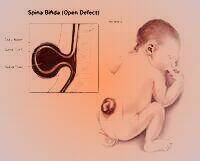
 Dr. Nicholson[/caption]
Wanda K. Nicholson, M.D., M.P.H., M.B.A.
Senior Associate Dean for Diversity, Equity, and Inclusion
Professor of Prevention and Community Health
Milken Institute School of Public Health
George Washington University
Vice chair of the U.S. Preventive Services Task Force
MedicalResearch.com: What is the background for this study?
Response: Neural tube defects are when a baby’s spinal cord or brain don’t develop properly during pregnancy, which can cause serious complications including disability and death. The good news is that taking folic acid supplements before and during early pregnancy is proven to help prevent this from happening.
Dr. Nicholson[/caption]
Wanda K. Nicholson, M.D., M.P.H., M.B.A.
Senior Associate Dean for Diversity, Equity, and Inclusion
Professor of Prevention and Community Health
Milken Institute School of Public Health
George Washington University
Vice chair of the U.S. Preventive Services Task Force
MedicalResearch.com: What is the background for this study?
Response: Neural tube defects are when a baby’s spinal cord or brain don’t develop properly during pregnancy, which can cause serious complications including disability and death. The good news is that taking folic acid supplements before and during early pregnancy is proven to help prevent this from happening.
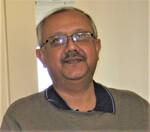

 Dr. McLoughlin Brady[/caption]
Tammy M. Brady, MD, PhD (she/her/hers)
Vice Chair for Clinical Research, Dept of Pediatrics
Associate Director, Welch Center for Prevention, Epidemiology, and Clinical Research
Associate Professor of Pediatrics, Division of Pediatric Nephrology
Medical Director, Pediatric Hypertension Program
Johns Hopkins University
Baltimore, MD 21287
MedicalResearch.com: What is the background for this study? What are the main findings?
Response: Accurate BP measurement is key to identification and treatment of hypertension which serves ultimately to prevent cardiovascular disease. Our study describes substantial measurement error that can occur in a common office and home BP measurement scenario: use of a regular cuff size for all individuals regardless of arm size. Many office triage measurements occur without individualized cuff selection and most home BP devices come with one cuff size – and our study shows that using a regular cuff size for people who have larger arms – those who require a large adult cuff or an extra-large adult cuff – can lead to blood pressure readings that are almost 5 and 20 mmHg greater than their actual BP, respectively. Those require a small adult cuff can have BP readings that are almost 4 mmHg lower than their actual BP.
Dr. McLoughlin Brady[/caption]
Tammy M. Brady, MD, PhD (she/her/hers)
Vice Chair for Clinical Research, Dept of Pediatrics
Associate Director, Welch Center for Prevention, Epidemiology, and Clinical Research
Associate Professor of Pediatrics, Division of Pediatric Nephrology
Medical Director, Pediatric Hypertension Program
Johns Hopkins University
Baltimore, MD 21287
MedicalResearch.com: What is the background for this study? What are the main findings?
Response: Accurate BP measurement is key to identification and treatment of hypertension which serves ultimately to prevent cardiovascular disease. Our study describes substantial measurement error that can occur in a common office and home BP measurement scenario: use of a regular cuff size for all individuals regardless of arm size. Many office triage measurements occur without individualized cuff selection and most home BP devices come with one cuff size – and our study shows that using a regular cuff size for people who have larger arms – those who require a large adult cuff or an extra-large adult cuff – can lead to blood pressure readings that are almost 5 and 20 mmHg greater than their actual BP, respectively. Those require a small adult cuff can have BP readings that are almost 4 mmHg lower than their actual BP.

 Prof. Leon[/caption]
Michael Leon, Professor emeritus
Prof. Leon[/caption]
Michael Leon, Professor emeritus

 Lone Star Tick Nymph-CDC image[/caption]
MedicalResearch.com: What is the background for this study? Would you briefly describe Alpha-gal Syndrome?
Response: Alpha-gal syndrome is an emerging and potentially life-threatening allergic condition that is associated with a tick bite. It is also called alpha-gal allergy, red meat allergy, or tick bite meat allergy.
Increasing case studies and anecdotal reports suggested that AGS was a growing concern, but, prior to these studies, information on clinician awareness and the number of people impacted was not available at a national level.
Lone Star Tick Nymph-CDC image[/caption]
MedicalResearch.com: What is the background for this study? Would you briefly describe Alpha-gal Syndrome?
Response: Alpha-gal syndrome is an emerging and potentially life-threatening allergic condition that is associated with a tick bite. It is also called alpha-gal allergy, red meat allergy, or tick bite meat allergy.
Increasing case studies and anecdotal reports suggested that AGS was a growing concern, but, prior to these studies, information on clinician awareness and the number of people impacted was not available at a national level.




 Mytien Nguyen[/caption]
Mytien Nguyen, MS
Department of Immunobiology,
Yale School of Medicine
New Haven, Connecticut
MedicalResearch.com: What is the background for this study?
Response: Physician-scientists are critical for innovative translational research.
Mytien Nguyen[/caption]
Mytien Nguyen, MS
Department of Immunobiology,
Yale School of Medicine
New Haven, Connecticut
MedicalResearch.com: What is the background for this study?
Response: Physician-scientists are critical for innovative translational research.