


 Dr. Fangqun Yu[/caption]
Dr. Fangqun Yu PhD
Senior Research Faculty
Atmospheric Sciences Research Center University
Albany, State University of New York
https://www.albany.edu/~yfq
[caption id="attachment_61437" align="alignleft" width="125"]
Dr. Fangqun Yu[/caption]
Dr. Fangqun Yu PhD
Senior Research Faculty
Atmospheric Sciences Research Center University
Albany, State University of New York
https://www.albany.edu/~yfq
[caption id="attachment_61437" align="alignleft" width="125"] Dr. Arshad Nair[/caption]
Dr. Arshad Arjunan Nair PhD
Postdoctoral Associate
Atmospheric Sciences Research Center
University at Albany, State University of New York
https://www.albany.edu/~an688965
MedicalResearch.com: What is the background for this study? What are the main findings?
Dr. Fangqun Yu: Legionnaires’ disease is a severe form of pneumonia with a fatality rate of 10-25% caused by inhaling or aspirating Legionella, bacteria that thrive in built environment water systems. Those most vulnerable to this disease are male, over 50 years of age, have a history of smoking, have chronic respiratory diseases, diabetes, are immunocompromised, and/or minorities. The US observed a nearly nine-fold increase in Legionnaires’ disease between 2000 and 2018, with New York State having one of the highest increases in disease rates. The reasons for the increase in incidence were unclear prior to this study.
In our study, we found:
(1) Declining sulfur dioxide concentrations (SO2) are strongly correlated with the increase in legionellosis cases and a physical mechanism explaining this link is proposed,
(2) A geostatistical epidemiological analysis links the disease with exposure to cooling towers, and
(3) Climate and weather are ruled out as factors responsible for the long-term increase in case numbers (outside of seasonal trends).
Dr. Arshad Nair[/caption]
Dr. Arshad Arjunan Nair PhD
Postdoctoral Associate
Atmospheric Sciences Research Center
University at Albany, State University of New York
https://www.albany.edu/~an688965
MedicalResearch.com: What is the background for this study? What are the main findings?
Dr. Fangqun Yu: Legionnaires’ disease is a severe form of pneumonia with a fatality rate of 10-25% caused by inhaling or aspirating Legionella, bacteria that thrive in built environment water systems. Those most vulnerable to this disease are male, over 50 years of age, have a history of smoking, have chronic respiratory diseases, diabetes, are immunocompromised, and/or minorities. The US observed a nearly nine-fold increase in Legionnaires’ disease between 2000 and 2018, with New York State having one of the highest increases in disease rates. The reasons for the increase in incidence were unclear prior to this study.
In our study, we found:
(1) Declining sulfur dioxide concentrations (SO2) are strongly correlated with the increase in legionellosis cases and a physical mechanism explaining this link is proposed,
(2) A geostatistical epidemiological analysis links the disease with exposure to cooling towers, and
(3) Climate and weather are ruled out as factors responsible for the long-term increase in case numbers (outside of seasonal trends).
 Dr. Attur[/caption]
Mukundan G. Attur, PhD
Associate Professor, Department of Medicine
NYU Grossman School of Medicine
MedicalResearch.com: What is the background for this study? What are the main findings?
Response: The study investigates the potential protective effects of a genetic variant of IL1RN against inflammation and severe outcomes, particularly in COVID-19. Previous research indicates that carriers of this genetic variant may experience less severe radiographic knee osteoarthritis and decreased inflammation in rheumatoid arthritis patients. Given the emergence of cytokine release syndrome in COVID-19 patients, the researchers sought to understand whether the same genetic variant could offer protection against inflammation and potential death in COVID-19 cases.
Dr. Attur[/caption]
Mukundan G. Attur, PhD
Associate Professor, Department of Medicine
NYU Grossman School of Medicine
MedicalResearch.com: What is the background for this study? What are the main findings?
Response: The study investigates the potential protective effects of a genetic variant of IL1RN against inflammation and severe outcomes, particularly in COVID-19. Previous research indicates that carriers of this genetic variant may experience less severe radiographic knee osteoarthritis and decreased inflammation in rheumatoid arthritis patients. Given the emergence of cytokine release syndrome in COVID-19 patients, the researchers sought to understand whether the same genetic variant could offer protection against inflammation and potential death in COVID-19 cases.

 Dr. Lee[/caption]
Soomi Lee, PhD
Associate Professor | Department of Human Development and Family Studies | Center for Healthy Aging
Director of STEALTH Lab: https://sites.psu.edu/stealth/
The Pennsylvania State University
MedicalResearch.com: What is the background for this study?
Response: Sleep quantity and quality decline with advancing age; a risk of chronic conditions also increases with age.
While previous studies report that poor sleep is a significant risk for chronic conditions, many have focused solely on a single dimension of sleep, such as duration, thereby limiting the ability to assess multiple co-occurring dimensions and their associations with chronic conditions.
This study aimed to evaluate multiple dimensions of sleep health, including regularity, satisfaction, alertness, efficiency, and duration. By analyzing data from a national sample of adults (n=3,683) collected over two time points spanning a decade, the study identified four distinct sleep health phenotypes: good sleepers, insomnia sleepers, weekend catch-up sleepers, and nappers.
Dr. Lee[/caption]
Soomi Lee, PhD
Associate Professor | Department of Human Development and Family Studies | Center for Healthy Aging
Director of STEALTH Lab: https://sites.psu.edu/stealth/
The Pennsylvania State University
MedicalResearch.com: What is the background for this study?
Response: Sleep quantity and quality decline with advancing age; a risk of chronic conditions also increases with age.
While previous studies report that poor sleep is a significant risk for chronic conditions, many have focused solely on a single dimension of sleep, such as duration, thereby limiting the ability to assess multiple co-occurring dimensions and their associations with chronic conditions.
This study aimed to evaluate multiple dimensions of sleep health, including regularity, satisfaction, alertness, efficiency, and duration. By analyzing data from a national sample of adults (n=3,683) collected over two time points spanning a decade, the study identified four distinct sleep health phenotypes: good sleepers, insomnia sleepers, weekend catch-up sleepers, and nappers.
 Herbal synergy has been around for hundreds of years. In the past, therapists naturally mixed different plants to make them more effective. From the Egyptians to the Greeks to the Chinese, people have known for a long time that mixing certain herbs can have powerful effects. These old ways of doing things paved the way for modern studies of how complex plant chemicals interact, helping us understand how herbal mixtures work together to make them more powerful. We are now looking into the possibilities of these old practices in fresh ways. For example, you can now buy hemp flower online, which makes these potentially helpful plant products more available to more people.

 Skilled medical scribing entails meticulous transcription of patient encounters, procedures, or treatment plans from spoken word into written text, capturing every detail and nuance. Transcription is a pivotal tool for ensuring that the physician follows the proper procedure and that medical records, reports, and documentation have perfect levels of accuracy.
Medical scribing is a skilled profession that requires solid knowledge of the worker's chosen healthcare field. Any misinterpretation of patient information has the potential to lead to ill-informed future decisions regarding a patient's health.
Healthcare organisations must also adhere to strict guidelines regarding the documentation of patient care, billing processes, and confidentiality protocols. Skilled medical scribes with specialised knowledge and expertise in their industry can protect organisations from costly lawsuits and ensure that patients are treated with the correct level of integrity.
In today's world, time is money. Successful medical scribes improve efficiency and take the burden off physicians having to personally record data, enabling them to see more patients and listen more attentively, ultimately contributing to reaching the healthcare company's overall productivity and financial aims.
One study found that medical scribes cut costs by $31.15 per hour, with no risk added risk to patient safety.
Skilled medical scribing entails meticulous transcription of patient encounters, procedures, or treatment plans from spoken word into written text, capturing every detail and nuance. Transcription is a pivotal tool for ensuring that the physician follows the proper procedure and that medical records, reports, and documentation have perfect levels of accuracy.
Medical scribing is a skilled profession that requires solid knowledge of the worker's chosen healthcare field. Any misinterpretation of patient information has the potential to lead to ill-informed future decisions regarding a patient's health.
Healthcare organisations must also adhere to strict guidelines regarding the documentation of patient care, billing processes, and confidentiality protocols. Skilled medical scribes with specialised knowledge and expertise in their industry can protect organisations from costly lawsuits and ensure that patients are treated with the correct level of integrity.
In today's world, time is money. Successful medical scribes improve efficiency and take the burden off physicians having to personally record data, enabling them to see more patients and listen more attentively, ultimately contributing to reaching the healthcare company's overall productivity and financial aims.
One study found that medical scribes cut costs by $31.15 per hour, with no risk added risk to patient safety.
 Dr. Wan[/caption]
Dr. Joy Wan M.D., M.S.C.E.
Assistant Professor of Dermatology
Johns Hopkins University School of Medicine
MedicalResearch.com: What is the background for this study?
Response: There has been a growing body of literature linking atopic dermatitis with diagnoses such as ADHD and learning disabilities, but studies focusing on symptoms of cognitive impairment (in contrast to relying on reported diagnoses as proxy measures of such) have been fewer and demonstrate inconsistent findings. Thus, we were interested in using data from this nationally representative sample of U.S. children to examine whether atopic dermatitis was associated with symptoms of learning or memory difficulties. Moreover, we wanted to examine how this relationship is influenced by known neurodevelopmental conditions to further characterize whether specific subgroups of children with atopic dermatitis are more susceptible to cognitive impairments.
Dr. Wan[/caption]
Dr. Joy Wan M.D., M.S.C.E.
Assistant Professor of Dermatology
Johns Hopkins University School of Medicine
MedicalResearch.com: What is the background for this study?
Response: There has been a growing body of literature linking atopic dermatitis with diagnoses such as ADHD and learning disabilities, but studies focusing on symptoms of cognitive impairment (in contrast to relying on reported diagnoses as proxy measures of such) have been fewer and demonstrate inconsistent findings. Thus, we were interested in using data from this nationally representative sample of U.S. children to examine whether atopic dermatitis was associated with symptoms of learning or memory difficulties. Moreover, we wanted to examine how this relationship is influenced by known neurodevelopmental conditions to further characterize whether specific subgroups of children with atopic dermatitis are more susceptible to cognitive impairments.
 Dr. Gunjur[/caption]
Dr Ashray Gunjur
MBBS (Hons), B. Med Sci, MPHTM FRACP
Clinical Research Training Fellow
Melbourne, Australia
MedicalResearch.com: What is the background for this study?
Response: As background, the last ~5 years have seen a surge of interest in the relationship between gut microbiota and cancer response to immune checkpoint blockade (ICB). We know that though a fraction of many different cancer types will respond to these therapies, it is currently very hard to predict who that will be- so ‘microbiome’ based biomarkers to select patients, or even strategies to change a patient’s microbiome to enhance their chance of responding, are very attractive.
A key challenge, however, has been a lack of consistency in the microbes associated with response or non-response across different studies from different regions. While geographic, methodological, and technical variation likely contribute to this, most studies examined the gut microbiome at a genus- or species- taxonomic rank level, while we know there is significant intra-species (strain-level) diversity. As such, one of our key research questions was whether we could improve the reproducibility of microbial ‘signatures’ of response across cohorts using higher resolution approaches- with our hypothesis being that strain-resolution signatures would outperform species- or lower resolution signatures.
We obtained our signature by analysing baseline faecal samples from the CA209-538 clinical trial, a wonderful investigator-initiated study sponsored by the Olivia Newton-John Cancer Research Institute (Melbourne, Australia). I was fortunate enough to work on this trial as a clinical investigator while training to be a medical oncologist.
Dr. Gunjur[/caption]
Dr Ashray Gunjur
MBBS (Hons), B. Med Sci, MPHTM FRACP
Clinical Research Training Fellow
Melbourne, Australia
MedicalResearch.com: What is the background for this study?
Response: As background, the last ~5 years have seen a surge of interest in the relationship between gut microbiota and cancer response to immune checkpoint blockade (ICB). We know that though a fraction of many different cancer types will respond to these therapies, it is currently very hard to predict who that will be- so ‘microbiome’ based biomarkers to select patients, or even strategies to change a patient’s microbiome to enhance their chance of responding, are very attractive.
A key challenge, however, has been a lack of consistency in the microbes associated with response or non-response across different studies from different regions. While geographic, methodological, and technical variation likely contribute to this, most studies examined the gut microbiome at a genus- or species- taxonomic rank level, while we know there is significant intra-species (strain-level) diversity. As such, one of our key research questions was whether we could improve the reproducibility of microbial ‘signatures’ of response across cohorts using higher resolution approaches- with our hypothesis being that strain-resolution signatures would outperform species- or lower resolution signatures.
We obtained our signature by analysing baseline faecal samples from the CA209-538 clinical trial, a wonderful investigator-initiated study sponsored by the Olivia Newton-John Cancer Research Institute (Melbourne, Australia). I was fortunate enough to work on this trial as a clinical investigator while training to be a medical oncologist.

 In recent years, the field of psychiatric care has undergone a revolutionary transformation. This is because of groundbreaking research that has redefined our understanding of mental health and treatment methodologies.
From innovative therapies to advanced diagnostic tools, transformative research has played a pivotal role in reshaping the landscape of psychiatric care.
In this article, we will explore the key contributions that researchers have made in this field. We will also talk about how their work is influencing the way mental health is approached and treated.
In recent years, the field of psychiatric care has undergone a revolutionary transformation. This is because of groundbreaking research that has redefined our understanding of mental health and treatment methodologies.
From innovative therapies to advanced diagnostic tools, transformative research has played a pivotal role in reshaping the landscape of psychiatric care.
In this article, we will explore the key contributions that researchers have made in this field. We will also talk about how their work is influencing the way mental health is approached and treated.


 The seminal Institute of Medicine's “To Err Is Human” publication sounded alarms in 1999 about the silent epidemic of American medical errors contributing to nearly 98,000 annual deaths. With time, the stakes intensified for systemic improvement. Nurse leadership emerged, accelerating cultural transformations and pioneering processes that saved countless lives.
Take Children’s Hospital Solutions for Patient Safety Network (SPS), for example. Founded by nurse scientist Marlene Miller in 2001, it aims to unite children’s hospitals to develop evidence-based harm reduction tactics and tools.
By adopting the best practices across their network, their hospitals are making significant strides in preventing serious harm. As of November 2023, this nationwide network of child healthcare has spared over 25,000 children from harm, resulting in an estimated cost savings of $500 million.
Similarly, medical experts around the world credit ICU nurses’ relentless systems analysis and testing of solutions during the COVID-19 pandemic for lifting outcomes.
The seminal Institute of Medicine's “To Err Is Human” publication sounded alarms in 1999 about the silent epidemic of American medical errors contributing to nearly 98,000 annual deaths. With time, the stakes intensified for systemic improvement. Nurse leadership emerged, accelerating cultural transformations and pioneering processes that saved countless lives.
Take Children’s Hospital Solutions for Patient Safety Network (SPS), for example. Founded by nurse scientist Marlene Miller in 2001, it aims to unite children’s hospitals to develop evidence-based harm reduction tactics and tools.
By adopting the best practices across their network, their hospitals are making significant strides in preventing serious harm. As of November 2023, this nationwide network of child healthcare has spared over 25,000 children from harm, resulting in an estimated cost savings of $500 million.
Similarly, medical experts around the world credit ICU nurses’ relentless systems analysis and testing of solutions during the COVID-19 pandemic for lifting outcomes.
 Nurse practitioners (NPs) contribute boundless compassion with their specialized expertise across healthcare fields. However, have you wondered what an average day looks like for a women’s health NP compared to an acute care specialist? Or have you pondered distinctions in clinical environments between mental health and pediatric NPs coordinating youth care teams?
In this blog post, we will shed light on four distinct NP specialties by peeking into realistic scenarios covering typical patients, evolving roles, and meaningful differences impacting their daily rounds.
Nurse practitioners (NPs) contribute boundless compassion with their specialized expertise across healthcare fields. However, have you wondered what an average day looks like for a women’s health NP compared to an acute care specialist? Or have you pondered distinctions in clinical environments between mental health and pediatric NPs coordinating youth care teams?
In this blog post, we will shed light on four distinct NP specialties by peeking into realistic scenarios covering typical patients, evolving roles, and meaningful differences impacting their daily rounds.
 There is no doubt that nursing is a promising and rewarding career. Registered Nurses earned a median salary of $81,220 in 2022, as reported by US News. The top 25% earned $101,100, while the bottom 25% earned $66,680.
But, before committing to a nursing major, consider if it resonates with your passions and values. Nursing entails dedication, empathy, and resilience beyond academic excellence to address patient care's challenges and rewards effectively. Assessing alignment with your aspirations is pivotal for a fulfilling nursing career.
Consider your innate qualities and personal motivations. Are you genuinely drawn to helping others in their times of need? Do you thrive in dynamic, fast-paced environments where critical thinking and problem-solving skills are paramount? Reflecting on these aspects can offer invaluable insight into whether nursing is the right path for you.
There is no doubt that nursing is a promising and rewarding career. Registered Nurses earned a median salary of $81,220 in 2022, as reported by US News. The top 25% earned $101,100, while the bottom 25% earned $66,680.
But, before committing to a nursing major, consider if it resonates with your passions and values. Nursing entails dedication, empathy, and resilience beyond academic excellence to address patient care's challenges and rewards effectively. Assessing alignment with your aspirations is pivotal for a fulfilling nursing career.
Consider your innate qualities and personal motivations. Are you genuinely drawn to helping others in their times of need? Do you thrive in dynamic, fast-paced environments where critical thinking and problem-solving skills are paramount? Reflecting on these aspects can offer invaluable insight into whether nursing is the right path for you.

 According to the AACR Cancer Progress Report, cancer survivors have significantly improved from 50 years ago. It constituted only 1.4 percent of the US population earlier, but they have increased considerably. The number of cancer survivors is estimated to grow to 26 million by 2040. All they need is proper treatment and support to battle it.
In this article, we'll delve into effective approaches and available aids for spouses managing the intricate challenges of caring for cancer patients. These insights and resources aim to enhance the quality of life for their beloved partners while safeguarding their own health and wellness.
According to the AACR Cancer Progress Report, cancer survivors have significantly improved from 50 years ago. It constituted only 1.4 percent of the US population earlier, but they have increased considerably. The number of cancer survivors is estimated to grow to 26 million by 2040. All they need is proper treatment and support to battle it.
In this article, we'll delve into effective approaches and available aids for spouses managing the intricate challenges of caring for cancer patients. These insights and resources aim to enhance the quality of life for their beloved partners while safeguarding their own health and wellness.
 As a future pharmacist, you are positioned at the forefront of patient care, entrusted with ensuring the safe and effective use of medications. To fulfill this role effectively, you must remain informed and adaptable to the latest advancements in pharmacy practice.
Before delving into these trends, let’s first look at some relevant statistics. With the industry witnessing constant evolution, the demand for pharmacists continues to soar even more. In the first three quarters of 2023, there were about 60,882 job postings for pharmacists. This marked an increase of 17.9% from 2022, indicating a significant push in demand for these professionals.
The data from AACP’s Pharmacy Demand Report indicates that the time is opportune to enter the industry and gain a competitive edge. However, you must be aware of the prevalent trends to reap the benefits. Utilizing free MPJE practice questions can also help you prepare effectively for your licensure exam. In this blog, we'll explore a few essential trends that every aspiring pharmacist should know.
As a future pharmacist, you are positioned at the forefront of patient care, entrusted with ensuring the safe and effective use of medications. To fulfill this role effectively, you must remain informed and adaptable to the latest advancements in pharmacy practice.
Before delving into these trends, let’s first look at some relevant statistics. With the industry witnessing constant evolution, the demand for pharmacists continues to soar even more. In the first three quarters of 2023, there were about 60,882 job postings for pharmacists. This marked an increase of 17.9% from 2022, indicating a significant push in demand for these professionals.
The data from AACP’s Pharmacy Demand Report indicates that the time is opportune to enter the industry and gain a competitive edge. However, you must be aware of the prevalent trends to reap the benefits. Utilizing free MPJE practice questions can also help you prepare effectively for your licensure exam. In this blog, we'll explore a few essential trends that every aspiring pharmacist should know.



 The importance of external support systems becomes even more crucial as the number of children with disabilities and other developmental disorders continues to surge. This trend is apparent in academic settings, where there is a rising number of students with disabilities. According to the Pew Research Center, nearly 7.3 million students with disabilities receive education from public K-12 schools in the U.S.
In the midst of this growing trend, pediatric nurses play a vital role in empowering children with disabilities. In this blog, we'll explore the vital support these professionals offer to empower children with disabilities.
The importance of external support systems becomes even more crucial as the number of children with disabilities and other developmental disorders continues to surge. This trend is apparent in academic settings, where there is a rising number of students with disabilities. According to the Pew Research Center, nearly 7.3 million students with disabilities receive education from public K-12 schools in the U.S.
In the midst of this growing trend, pediatric nurses play a vital role in empowering children with disabilities. In this blog, we'll explore the vital support these professionals offer to empower children with disabilities.
 Prof. Hampshire[/caption]
Prof. Adam Hampshire Ph.D.
Faculty of Medicine, Department of Brain Sciences
Professor in Restorative Neurosciences
Imperial College London
MedicalResearch.com: What is the background for this study?
Response: Cognitive symptoms after coronavirus disease 2019 (Covid-19), the disease caused by severe acute respiratory syndrome coronavirus 2 (SARS-CoV-2), are well-recognized. Whether objectively measurable cognitive deficits exist and how long they persist are unclear.
Prof. Hampshire[/caption]
Prof. Adam Hampshire Ph.D.
Faculty of Medicine, Department of Brain Sciences
Professor in Restorative Neurosciences
Imperial College London
MedicalResearch.com: What is the background for this study?
Response: Cognitive symptoms after coronavirus disease 2019 (Covid-19), the disease caused by severe acute respiratory syndrome coronavirus 2 (SARS-CoV-2), are well-recognized. Whether objectively measurable cognitive deficits exist and how long they persist are unclear.
 Dr. Hoshi[/caption]
Rosangela Akemi Hoshi, Ph.D.
Lemann Foundation Cardiovascular Research Postdoctoral Fellowship
Center for Lipid Metabolomics
Divisions of Preventive and Cardiovascular Medicine
Brigham and Women's Hospital
Boston, MA
MedicalResearch.com: What is the background for this study? Would you describe the IgG N-glycan profile?
Response: Glycans are sugar coatings of proteins, made of monosaccharide building blocks, that are involved in a variety of biological pathways. Different sugar structures can dictate or modify the protein’s activity through specific interactions with cellular receptors. For example, proteins lacking glycans have a reduced level or a complete loss of function. Glycans are of such importance that the 2022 Nobel Prize in chemistry was awarded for glycan-based science.
In this study, we examined glycans attached to Immunoglobulins G (IgG) and their link with incidence of cardiovascular disease (CVD) due to their impact on IgG inflammatory properties. Since inflammation is not only a cause, but also an aggravating factor and a mediator of a worse prognosis in cardiometabolic disorders and CVD, we investigated whether different glycan structures may characterize an at-risk phenotype for CVD development.
Determining glycan profiles involved in multiple conditions can serve prognostic and diagnostic purposes. Yet, unlike other types of macromolecules, glycans are still not as much explored, characterizing a promising but underappreciated class that should be further investigated.
Dr. Hoshi[/caption]
Rosangela Akemi Hoshi, Ph.D.
Lemann Foundation Cardiovascular Research Postdoctoral Fellowship
Center for Lipid Metabolomics
Divisions of Preventive and Cardiovascular Medicine
Brigham and Women's Hospital
Boston, MA
MedicalResearch.com: What is the background for this study? Would you describe the IgG N-glycan profile?
Response: Glycans are sugar coatings of proteins, made of monosaccharide building blocks, that are involved in a variety of biological pathways. Different sugar structures can dictate or modify the protein’s activity through specific interactions with cellular receptors. For example, proteins lacking glycans have a reduced level or a complete loss of function. Glycans are of such importance that the 2022 Nobel Prize in chemistry was awarded for glycan-based science.
In this study, we examined glycans attached to Immunoglobulins G (IgG) and their link with incidence of cardiovascular disease (CVD) due to their impact on IgG inflammatory properties. Since inflammation is not only a cause, but also an aggravating factor and a mediator of a worse prognosis in cardiometabolic disorders and CVD, we investigated whether different glycan structures may characterize an at-risk phenotype for CVD development.
Determining glycan profiles involved in multiple conditions can serve prognostic and diagnostic purposes. Yet, unlike other types of macromolecules, glycans are still not as much explored, characterizing a promising but underappreciated class that should be further investigated.
 Dr. Das[/caption]
Jishnu Das, Ph.D.
Center for Systems Immunology
Departments of Immunology and Computational & Systems Biology,
Assistant Professor School of Medicine
University of Pittsburgh
MedicalResearch.com: What is the background for this study? How does this new AI model work? How is it different from other models?
Response: Modern multi-omic technologies generate an enormous amount of data across scales of organization, and with differing resolution. While recent machine learning methods have harnessed these to predict clinical/physiological outcomes, they are often black boxes that do not provide meaningful inference beyond prediction. Differences in data generation modalities, redundancy in the data, as well as large numbers of irrelevant features make inference of biological mechanisms from high-dimensional omic datasets challenging.
To address these challenges, we developed a machine learning technique called SLIDE (Significant Latent Factor Interaction Discovery and Exploration). We reasoned that features that are directly measured by current technologies are constrained by strengths and weaknesses of current platforms. So, while some observed features may be excellent correlates of outcomes of interest, inferring biological mechanisms from these multi-omic datasets requires us to delve beyond the observable into the hidden states, i.e., latent factors. These hidden states encapsulate the true drivers of underlying biological processes and capture a complex multi-scale interplay between entities measured by these datasets. Our method moves beyond simple biomarkers/correlates (“the what”) to hidden states that actually explain clinical/physiological outcomes (“the how” and “the why”).
Dr. Das[/caption]
Jishnu Das, Ph.D.
Center for Systems Immunology
Departments of Immunology and Computational & Systems Biology,
Assistant Professor School of Medicine
University of Pittsburgh
MedicalResearch.com: What is the background for this study? How does this new AI model work? How is it different from other models?
Response: Modern multi-omic technologies generate an enormous amount of data across scales of organization, and with differing resolution. While recent machine learning methods have harnessed these to predict clinical/physiological outcomes, they are often black boxes that do not provide meaningful inference beyond prediction. Differences in data generation modalities, redundancy in the data, as well as large numbers of irrelevant features make inference of biological mechanisms from high-dimensional omic datasets challenging.
To address these challenges, we developed a machine learning technique called SLIDE (Significant Latent Factor Interaction Discovery and Exploration). We reasoned that features that are directly measured by current technologies are constrained by strengths and weaknesses of current platforms. So, while some observed features may be excellent correlates of outcomes of interest, inferring biological mechanisms from these multi-omic datasets requires us to delve beyond the observable into the hidden states, i.e., latent factors. These hidden states encapsulate the true drivers of underlying biological processes and capture a complex multi-scale interplay between entities measured by these datasets. Our method moves beyond simple biomarkers/correlates (“the what”) to hidden states that actually explain clinical/physiological outcomes (“the how” and “the why”).

 Dr. Frank Wang[/caption]
Frank Wang MD
William B. Taylor Endowed Professor of Clinical Dermatology
Associate Professor, Dermatology
Associate Chair for Education
Assistant Program Director, Dermatology Residency Program
University of Michigan
Ann Arbor, Michigan
MedicalResearch.com: What is the background for this study? How is the cross-linked hyaluronic acid obtained? Where was it injected?
Response: As the skin undergoes photoaging due to chronic exposure to ultraviolet light, it loses dermal collagen, which in turn leads to wrinkling, lines, and loss of support. The loss of collagen is, in large part, due to reduced function of the skin’s collagen-producing cells, dermal fibroblasts.
We wanted to investigate whether it was possible to reverse the decreased function of fibroblasts in photodamaged skin, by introducing a space-filling material into the dermis, injected CL-HA dermal filler. The CL-HA filler we used was donated to us for research purposes.
We performed injections of CL-HA into the mid-dermis (as is normally done when injected into the face) of severely photoaged forearm skin of human participants over the age of 60. We then examined skin samples at various time points, including 1, 2, 3 and 4 weeks and 3, 6, 9, and 12 months post-injection.
Dr. Frank Wang[/caption]
Frank Wang MD
William B. Taylor Endowed Professor of Clinical Dermatology
Associate Professor, Dermatology
Associate Chair for Education
Assistant Program Director, Dermatology Residency Program
University of Michigan
Ann Arbor, Michigan
MedicalResearch.com: What is the background for this study? How is the cross-linked hyaluronic acid obtained? Where was it injected?
Response: As the skin undergoes photoaging due to chronic exposure to ultraviolet light, it loses dermal collagen, which in turn leads to wrinkling, lines, and loss of support. The loss of collagen is, in large part, due to reduced function of the skin’s collagen-producing cells, dermal fibroblasts.
We wanted to investigate whether it was possible to reverse the decreased function of fibroblasts in photodamaged skin, by introducing a space-filling material into the dermis, injected CL-HA dermal filler. The CL-HA filler we used was donated to us for research purposes.
We performed injections of CL-HA into the mid-dermis (as is normally done when injected into the face) of severely photoaged forearm skin of human participants over the age of 60. We then examined skin samples at various time points, including 1, 2, 3 and 4 weeks and 3, 6, 9, and 12 months post-injection.

 Dr. Magruder[/caption]
Matthew Magruder, MD PGY3
Orthopaedic Residency Program
Department of Orthopaedic Surgery and Rehabilitation
Maimonides Medical Center
MedicalResearch.com: What is the background for this study?
Response: The prevalence of obesity and diabetes mellitus has reached epidemic proportions. Approximately 37.3 million people in the United States, accounting for 11.3% of the total population, have diabetes, and 100.1 million, or 41.9%, of all US citizens are obese. Furthermore, these numbers are only projected to increase in the coming decades. This is an issue for orthopaedic surgeons because diabetes and obesity have consistently been demonstrated to be risk factors for complications following total joint replacements, especially total hip replacements. Therefore, we are in desperate need of new and more effective tools in mitigating the risk of poor outcomes in our joint replacement patients.
Semaglutide, and other GLP-1 agonists, are potentially a new tool that can be used to help decrease the risks following joint replacement surgery. Initially a medication to treat diabetes, semaglutide has recently been approved by the FDA to treat obesity as well, as randomized controlled trials have consistently demonstrated significant weight loss with minimal side effects. The purpose of our study was to see what effect the use of semaglutide had on total hip arthroplasty patient outcomes.
Dr. Magruder[/caption]
Matthew Magruder, MD PGY3
Orthopaedic Residency Program
Department of Orthopaedic Surgery and Rehabilitation
Maimonides Medical Center
MedicalResearch.com: What is the background for this study?
Response: The prevalence of obesity and diabetes mellitus has reached epidemic proportions. Approximately 37.3 million people in the United States, accounting for 11.3% of the total population, have diabetes, and 100.1 million, or 41.9%, of all US citizens are obese. Furthermore, these numbers are only projected to increase in the coming decades. This is an issue for orthopaedic surgeons because diabetes and obesity have consistently been demonstrated to be risk factors for complications following total joint replacements, especially total hip replacements. Therefore, we are in desperate need of new and more effective tools in mitigating the risk of poor outcomes in our joint replacement patients.
Semaglutide, and other GLP-1 agonists, are potentially a new tool that can be used to help decrease the risks following joint replacement surgery. Initially a medication to treat diabetes, semaglutide has recently been approved by the FDA to treat obesity as well, as randomized controlled trials have consistently demonstrated significant weight loss with minimal side effects. The purpose of our study was to see what effect the use of semaglutide had on total hip arthroplasty patient outcomes.
 Prof. Meunier[/caption]
Prof. Frederic Meunier PhD
Professor and Academic Senior Group/Unit Leader/Supervisor
Queensland Brain Institute and
[caption id="attachment_61329" align="alignleft" width="125"]
Prof. Meunier[/caption]
Prof. Frederic Meunier PhD
Professor and Academic Senior Group/Unit Leader/Supervisor
Queensland Brain Institute and
[caption id="attachment_61329" align="alignleft" width="125"] Dr. Akefe[/caption]
Isaac O Akefe DVM, PhD
Clem Jones Centre for Ageing Dementia Research
Queensland Brain Institute
The University of Queensland St Lucia
Academy for Medical Education, Medical School
Brisbane QLD Australia
MedicalResearch.com: What is the background for this study?
Response: The brain is the body’s fattiest organ, with fatty compounds called lipids making up 60% of its weight. Fatty acids are the building blocks of a class of lipids called phospholipids.
In our study, we first showed that levels of saturated fatty acids increase in the brain during neuronal communication and long-term memory formation, but we didn’t know what was causing these changes.
Dr. Akefe[/caption]
Isaac O Akefe DVM, PhD
Clem Jones Centre for Ageing Dementia Research
Queensland Brain Institute
The University of Queensland St Lucia
Academy for Medical Education, Medical School
Brisbane QLD Australia
MedicalResearch.com: What is the background for this study?
Response: The brain is the body’s fattiest organ, with fatty compounds called lipids making up 60% of its weight. Fatty acids are the building blocks of a class of lipids called phospholipids.
In our study, we first showed that levels of saturated fatty acids increase in the brain during neuronal communication and long-term memory formation, but we didn’t know what was causing these changes.
 Dr. Ooi[/caption]
A/Prof. Joshua Ooi, PhD
Head, Regulatory T-cell Therapies
Translational Research Facility
Clinical Sciences at Monash Health,
Monash University
MedicalResearch.com: What is the background for this study?
Response: In 2017, we published a landmark Nature paper showing that people who are protected from autoimmune disease have specialized molecules on immune cells. These specific molecules are missing in patients that develop autoimmune disease.
Dr. Ooi[/caption]
A/Prof. Joshua Ooi, PhD
Head, Regulatory T-cell Therapies
Translational Research Facility
Clinical Sciences at Monash Health,
Monash University
MedicalResearch.com: What is the background for this study?
Response: In 2017, we published a landmark Nature paper showing that people who are protected from autoimmune disease have specialized molecules on immune cells. These specific molecules are missing in patients that develop autoimmune disease.

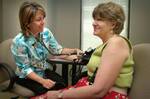 It is your lifestyle that determines your blood pressure levels. Your nutritional intake and the level of activity have a significant part as well.
First, monitor what you eat. Try to have your daily intake equally distributed among fruits, vegetables, whole grain and lean proteins. Cutting back on salty food can also do great magic.
In terms of physical activity, even minor adjustments can yield significant results. Moreover, a consistent practice of physical activity, such as brisk walking or swimming, may lower your blood pressure over a period of time. Remember, you don’t have to run a marathon – being dedicated is what you should focus on doing.
With these modifications, you are moving proactively towards normalized blood pressure levels.
It is your lifestyle that determines your blood pressure levels. Your nutritional intake and the level of activity have a significant part as well.
First, monitor what you eat. Try to have your daily intake equally distributed among fruits, vegetables, whole grain and lean proteins. Cutting back on salty food can also do great magic.
In terms of physical activity, even minor adjustments can yield significant results. Moreover, a consistent practice of physical activity, such as brisk walking or swimming, may lower your blood pressure over a period of time. Remember, you don’t have to run a marathon – being dedicated is what you should focus on doing.
With these modifications, you are moving proactively towards normalized blood pressure levels.
 Prof. Tanaka[/caption]
Takemi Tanaka, Ph. D.
Professor, Stephenson Cancer Center
Department of Pathology, School of Medicine
University of Oklahoma Health Science Center
MedicalResearch.com: What is the background for this study?
Response: Our previous cohort study has shown that breast cancer progresses 60 days after diagnostic biopsy in early-stage ER+ breast cancer. Others have also reported increased breast cancer mortality due to surgery delay. These observations raised the question of how slow-growing ER+ breast cancer progresses so quickly in just 60 days following diagnosis, prompting us to hypothesize whether needle biopsy of breast tumors accelerates pro-metastatic changes.
Prof. Tanaka[/caption]
Takemi Tanaka, Ph. D.
Professor, Stephenson Cancer Center
Department of Pathology, School of Medicine
University of Oklahoma Health Science Center
MedicalResearch.com: What is the background for this study?
Response: Our previous cohort study has shown that breast cancer progresses 60 days after diagnostic biopsy in early-stage ER+ breast cancer. Others have also reported increased breast cancer mortality due to surgery delay. These observations raised the question of how slow-growing ER+ breast cancer progresses so quickly in just 60 days following diagnosis, prompting us to hypothesize whether needle biopsy of breast tumors accelerates pro-metastatic changes.