Medical Research Interview:
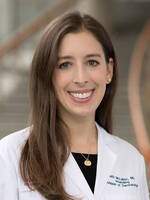
[caption id="attachment_60524" align="alignleft" width="195"]

Dr. Thomas[/caption]
Dr. Daniel Thomas MD PhD FRACP FRCPA
Program Leader, Blood Cancer
Precision Medicine Theme at the South Australia Health Medical Research Institute
Clinical Hematologist, Royal Adelaide Hospital
Associate Professor, Adelaide Medical School, The University of Adelaide
MedicalResearch.com: What is the background for this study? Would you briefly describe the condition of CMML?
Response: Chronic myelomonocytic leukemia (CMML) is a rare, but increasingly frequent, clonal stem cell disorder that results in hyperproliferation of inflammatory monocytes, a form of white blood cells. It features both myelodysplasia and myeloproliferation. CMML is most often found in older adults and leads to anemia, decreased quality of life, and an increased risk of acute myeloid leukemia (AML).
Granulocyte-macrophage colony-stimulating factor (GM-CSF) is a cytokine that stimulates production, growth, differentiation, activation, and function of myeloid cells (monocytes, neutrophils, and eosinophils). In the presence of
RAS-pathway mutations, a greater sensitivity to GM-CSF contributes to the hyperproliferation of myelocytes in myelodysplastic leukemias such as CMML, juvenile myelomonocytic leukemia (JMML), and acute myeloid leukemia (AML). In CMML, greater sensitivity to GM-CSF stimulates excessive monocytic precursor proliferation.
The PREACH-M Trial, which stands for
PREcision
Approach to
CHronic Myelomonocytic Leukemia, assesses the efficacy of lenzilumab in addition to azacitidine in treatment-naïve CMML participants with
RAS-pathway mutations (
KRAS,
NRAS,
CBL) and separately high dose ascorbate in participants with
TET2 mutations who do not have
RAS-pathway mutations. The study is currently underway and actively enrolling. It is being conducted and funded by the South Australian Health and Medical Research Institute (SAHMRI).


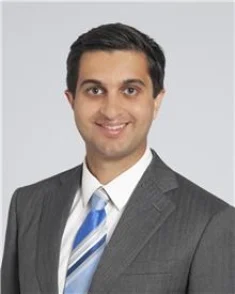
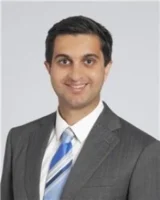 Dr. Kamath[/caption]
Dr. Suneel Kamath MD
Gastrointestinal Oncologist
Cleveland Clinic
Senior Author on this research
MedicalResearch.com: What is the background for this study?
Response: Colorectal cancer rates in young people under age 50 are skyrocketing and have been for the last 3-4 decades. We really don’t understand why because most cases (probably around 70%) are not genetic or hereditary, just random, unfortunate events. We suspect that it is some exposure(s) like excess consumption of red meat, processed foods, sugar-sweetened beverages, excess antibiotic use altering the microbiome, rising incidence of obesity or some other factors. We really don’t know why yet.
Our study used a technology called metabolomics, the study of breakdown products and production building blocks for our bodies, to look for differences in colorectal cancer in young people versus people that are older that developed colorectal cancer. Because metabolomics measures how each individual interacts with the exposures in our environment like diet, air quality, etc., it is a way to bridge the gap between our nature (determined by genetics) and nurture (determined by our exposures).
Dr. Kamath[/caption]
Dr. Suneel Kamath MD
Gastrointestinal Oncologist
Cleveland Clinic
Senior Author on this research
MedicalResearch.com: What is the background for this study?
Response: Colorectal cancer rates in young people under age 50 are skyrocketing and have been for the last 3-4 decades. We really don’t understand why because most cases (probably around 70%) are not genetic or hereditary, just random, unfortunate events. We suspect that it is some exposure(s) like excess consumption of red meat, processed foods, sugar-sweetened beverages, excess antibiotic use altering the microbiome, rising incidence of obesity or some other factors. We really don’t know why yet.
Our study used a technology called metabolomics, the study of breakdown products and production building blocks for our bodies, to look for differences in colorectal cancer in young people versus people that are older that developed colorectal cancer. Because metabolomics measures how each individual interacts with the exposures in our environment like diet, air quality, etc., it is a way to bridge the gap between our nature (determined by genetics) and nurture (determined by our exposures).
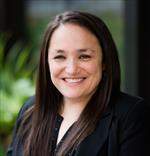


 Dr. Nowell[/caption]
W. Benjamin Nowell PhD
Director of Patient-Centered Research at Global Healthy Living Foundation
Columbia University in the City of New York
Dr. Nowell[/caption]
W. Benjamin Nowell PhD
Director of Patient-Centered Research at Global Healthy Living Foundation
Columbia University in the City of New York

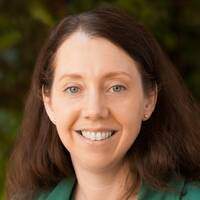

 Dr. Lova Sun[/caption]
Lova L. Sun, MD, MSCE
Medical Oncology
Assistant Professor of Medicine
Hospital of the University of Pennsylvania
MedicalResearch.com: What is the background for this study? What are the main findings?
Response: An common clinical question for patients with metastatic non-small cell lung cancer with long-term response to immunotherapy-based treatment is how long to continue treatment. The major clinical trials stopped immunotherapy at a maximum of 2 years, but in clinical practice many patients and clinicians continue treatment beyond this time point.
We conducted a retrospective study of lung cancer patients across the US with long-term response to immunotherapy, to compare survival between those who stopped treatment at 2 years vs those who continued beyond 2 years. We found that there was no statistically significant difference in survival between the two groups.
Dr. Lova Sun[/caption]
Lova L. Sun, MD, MSCE
Medical Oncology
Assistant Professor of Medicine
Hospital of the University of Pennsylvania
MedicalResearch.com: What is the background for this study? What are the main findings?
Response: An common clinical question for patients with metastatic non-small cell lung cancer with long-term response to immunotherapy-based treatment is how long to continue treatment. The major clinical trials stopped immunotherapy at a maximum of 2 years, but in clinical practice many patients and clinicians continue treatment beyond this time point.
We conducted a retrospective study of lung cancer patients across the US with long-term response to immunotherapy, to compare survival between those who stopped treatment at 2 years vs those who continued beyond 2 years. We found that there was no statistically significant difference in survival between the two groups.
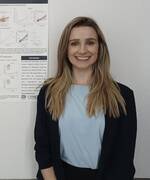

 Joanna Gorgol[/caption]
Joanna Gorgol
PhD Student
University of Warsaw
MedicalResearch.com: What is the background for this study?
Response: People differ in the time when they prefer to wake up and fall asleep: some people prefer going to bed and waking up early, while others prefer later hours. Most of the population is somewhere between them. Research indicates that being a morning person is related to reporting higher satisfaction with life and conscientiousness. Studies also show the associations between being religious and having higher life satisfaction and conscientiousness. It seems that religiosity might mediate the relationship between morningness and higher life satisfaction. To better understand these associations we conducted two questionnaire-based studies of Polish adults, one with 500 participants and the other with 728 participants. All participants completed questionnaires measuring their chronotype, satisfaction with life, personality traits, and religiosity
Joanna Gorgol[/caption]
Joanna Gorgol
PhD Student
University of Warsaw
MedicalResearch.com: What is the background for this study?
Response: People differ in the time when they prefer to wake up and fall asleep: some people prefer going to bed and waking up early, while others prefer later hours. Most of the population is somewhere between them. Research indicates that being a morning person is related to reporting higher satisfaction with life and conscientiousness. Studies also show the associations between being religious and having higher life satisfaction and conscientiousness. It seems that religiosity might mediate the relationship between morningness and higher life satisfaction. To better understand these associations we conducted two questionnaire-based studies of Polish adults, one with 500 participants and the other with 728 participants. All participants completed questionnaires measuring their chronotype, satisfaction with life, personality traits, and religiosity
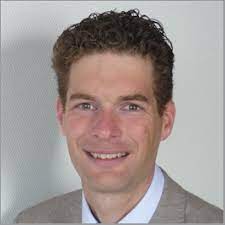
 Prof. Hiddo Lambers Heerspink, PhD PHARMD
Department of Clinical Pharmacy and Pharmacology
University Medical Center Groningen
Groningen
Prof. Hiddo Lambers Heerspink, PhD PHARMD
Department of Clinical Pharmacy and Pharmacology
University Medical Center Groningen
Groningen
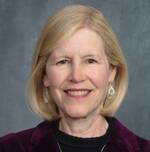 Dr. Manson[/caption]
JoAnn E. Manson, MD, DrPH, MACP
Dr. Manson[/caption]
JoAnn E. Manson, MD, DrPH, MACP

 Dr. Lovestead[/caption]
Tara M Lovestead, PhD, (She/her/hers)
Dr. Lovestead[/caption]
Tara M Lovestead, PhD, (She/her/hers)


 Dr. Finn[/caption]
Aloke V. Finn MD
Medical Director/Chief Scientific Officer
CVPath Institute Inc.
Gaithersburg, MD 20878
MedicalResearch.com: What is the background for this study?
Response:Transcatheter left atrial appendageal closure (LAAC) has become an established therapeutic approach for prevention of stroke in subjects with non-valvular atrial fibrillation who are ineligible for long-term oral anticoagulation. Device-related thrombus (DRT), developing after LAAO procedures occurs in a small proportion but patients receiving these devices but is associated with critical embolic events such as ischemic stroke. Thrombogenicity and delayed endothelialization of fabric play a role in the development of DRT. Fluorinated polymers are known to have thromboresistant properties which may favorably modify blood biomaterial interactions of a LAAO device.
In this study we compared the thrombogenicity and endothelial coverage (EC) after left atrial appendage occlusion (LAAO) between a novel fluoropolymer-coated Watchman (FP-WM (Watchman FLX PRO) and the conventional uncoated Watchman FLX (WM).
Dr. Finn[/caption]
Aloke V. Finn MD
Medical Director/Chief Scientific Officer
CVPath Institute Inc.
Gaithersburg, MD 20878
MedicalResearch.com: What is the background for this study?
Response:Transcatheter left atrial appendageal closure (LAAC) has become an established therapeutic approach for prevention of stroke in subjects with non-valvular atrial fibrillation who are ineligible for long-term oral anticoagulation. Device-related thrombus (DRT), developing after LAAO procedures occurs in a small proportion but patients receiving these devices but is associated with critical embolic events such as ischemic stroke. Thrombogenicity and delayed endothelialization of fabric play a role in the development of DRT. Fluorinated polymers are known to have thromboresistant properties which may favorably modify blood biomaterial interactions of a LAAO device.
In this study we compared the thrombogenicity and endothelial coverage (EC) after left atrial appendage occlusion (LAAO) between a novel fluoropolymer-coated Watchman (FP-WM (Watchman FLX PRO) and the conventional uncoated Watchman FLX (WM).

 Julia Cave Arbanas[/caption]
Julia Cave Arbanas
Project Manager and
Julia Cave Arbanas[/caption]
Julia Cave Arbanas
Project Manager and
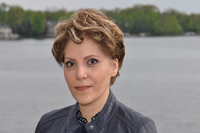

 Prof. Dubinsky[/caption]
Marla Dubinsky, M.D.
Professor of Pediatrics and Medicine
Co-director of the Susan and Leonard Feinstein IBD Clinical Center
Chief of the Division of Pediatric Gastroenterology and Nutrition
Icahn School of Medicine at Mount Sinai
MedicalResearch.com: What is the background for this study? How does MIRIKIZUMAB differ from other medications for UC?
Response: This is a phase 2 study to assess the PK (pharamcokinetics), safety and efficacy of mirikizumab in pediatric ulcerative colitis (UC).
Prof. Dubinsky[/caption]
Marla Dubinsky, M.D.
Professor of Pediatrics and Medicine
Co-director of the Susan and Leonard Feinstein IBD Clinical Center
Chief of the Division of Pediatric Gastroenterology and Nutrition
Icahn School of Medicine at Mount Sinai
MedicalResearch.com: What is the background for this study? How does MIRIKIZUMAB differ from other medications for UC?
Response: This is a phase 2 study to assess the PK (pharamcokinetics), safety and efficacy of mirikizumab in pediatric ulcerative colitis (UC).
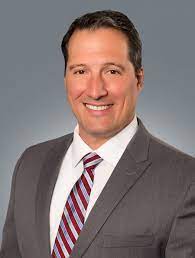
 Dr. Zirwas[/caption]
Matthew Zirwas, MD
Founder, Bexley Dermatology Research Clinic
Bexley, OH 43209
MedicalResearch.com: What is the background for this study? How does Roflumilast differ from other treatments for seb derm?
Response: Seborrheic dermatitis affects up to 5% of the population globally and can have major impacts on quality of life. Treatment regimens are often complicated given the association of seborrheic dermatitis to hair bearing areas of the body, requiring multiple treatments for different parts of the body. Our phase 2 study aimed to understand the efficacy and safety of once-daily roflumilast foam 0.3% in adults with seborrheic dermatitis on their scalp, face and trunk. Roflumilast foam is a selective and highly potent phosphodiesterase (PDE) 4 inhibition that is being studied for a range of inflammatory skin conditions.
Dr. Zirwas[/caption]
Matthew Zirwas, MD
Founder, Bexley Dermatology Research Clinic
Bexley, OH 43209
MedicalResearch.com: What is the background for this study? How does Roflumilast differ from other treatments for seb derm?
Response: Seborrheic dermatitis affects up to 5% of the population globally and can have major impacts on quality of life. Treatment regimens are often complicated given the association of seborrheic dermatitis to hair bearing areas of the body, requiring multiple treatments for different parts of the body. Our phase 2 study aimed to understand the efficacy and safety of once-daily roflumilast foam 0.3% in adults with seborrheic dermatitis on their scalp, face and trunk. Roflumilast foam is a selective and highly potent phosphodiesterase (PDE) 4 inhibition that is being studied for a range of inflammatory skin conditions.

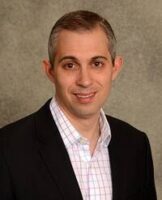 Dr. Greenhawt[/caption]
Matthew Greenhawt, MD, MBA, MSc
Professor of Pediatrics
Section of Allergy and Immunology
Director, Food Challenge and Research Unit
Children’s Hospital Colorado
University of Colorado School of Medicine
Anschutz Medical Campus
Dr. Greenhawt[/caption]
Matthew Greenhawt, MD, MBA, MSc
Professor of Pediatrics
Section of Allergy and Immunology
Director, Food Challenge and Research Unit
Children’s Hospital Colorado
University of Colorado School of Medicine
Anschutz Medical Campus