MedicalResearch.com Interview with:
 Scott Kaplan PhD
Assistant Professor of Economics
United States Naval Academy
Annapolis, MD 21402
MedicalResearch.com: What is the background for this study?
Response: Sugar-sweetened beverages (colloquially known as SSBs), which include sodas, fruit drinks, sports drinks, energy drinks, and sweetened coffee drinks, are the leading source of added sugars in the American diet, according to the CDC. They are associated with serious negative health outcomes, including type 2 diabetes, obesity, heart disease, kidney disease,
non-alcoholic liver disease, gum disease, tooth decay, and other conditions.
As a result, several cities across the US have implemented sugar-sweetened beverage excise (per ounce) taxes, generally ranging from 1-2 cents per ounce. Most existing studies evaluating the impact of SSB taxes on SSB volume purchased and prices focus on a single city; this study is among the first to provide a composite estimate of the impact of local SSB taxes on purchases and prices of SSBs using retail scanner data from five cities across the US that implemented SSB taxes between January 1, 2017 and January 1, 2018.
The five taxed cities we examine are Philadelphia, San Francisco, Oakland, Boulder, and Seattle.






 Wilson N. Merrell
Ph.D. Student
Wilson N. Merrell
Ph.D. Student


 Dr. Li Li[/caption]
Li Li, M.D., Ph.D., M.P.H
Walter M. Seward Professor
Chair of Family Medicine
Director of population health
University of Virginia School of Medicine
Editor-in-chief of The BMJ Family Medicine
Dr. Li joined the U.S. Preventive Services Task Force in January 2021
MedicalResearch.com: What is the background for this study? What are the main findings?
Response: Speech and language delays and disorders can be challenging for children and their families and can lead to difficulties with reading and writing as children grow up.
The Task Force looked at the evidence on screening for speech and language delays and, unfortunately, there is not enough evidence to tell us whether or not it is helpful to screen all children 5 years old and younger for speech and language delays and disorders.
Dr. Li Li[/caption]
Li Li, M.D., Ph.D., M.P.H
Walter M. Seward Professor
Chair of Family Medicine
Director of population health
University of Virginia School of Medicine
Editor-in-chief of The BMJ Family Medicine
Dr. Li joined the U.S. Preventive Services Task Force in January 2021
MedicalResearch.com: What is the background for this study? What are the main findings?
Response: Speech and language delays and disorders can be challenging for children and their families and can lead to difficulties with reading and writing as children grow up.
The Task Force looked at the evidence on screening for speech and language delays and, unfortunately, there is not enough evidence to tell us whether or not it is helpful to screen all children 5 years old and younger for speech and language delays and disorders.




 Dr. Di Ciano[/caption]
Patricia Di Ciano, PhD
Dr. Di Ciano[/caption]
Patricia Di Ciano, PhD



 Lauren C. Davis, MBS
Department of Medical Education
Geisinger Commonwealth School of Medicine
Scranton, PA 19409
MedicalResearch.com: What is the background for this study?
Response: Financial conflicts of interest (COIs) resulting from ties between academia and industry have been under scrutiny for their potential to hinder the integrity of medical research. COIs can lead to implicit bias, compromise the research process, and erode public trust (1-6). The American Psychiatric Association’s Diagnostic and Statistical Manual of Mental Disorders (DSM), standardizes symptom criteria and codifies psychiatric disorders. This manual contributes to the approval of new drugs, extensions of patent exclusivity, and can influence payers and mental health professionals seeking third-party reimbursements. Given the implications of the DSM on public health, it is paramount that it is free of industry influence. Previous research has shown a high prevalence of industry ties among panel and task force members of the DSM-IV-TR and DSM-5, despite the implementation of a disclosure policy for the DSM-5 (7,8). This study (9) determined the extent and type of COIs received by panel and task-force members of the DSM-5-TR (2022) (10). As the DSM-5-TR did not disclose COI, we used the Center for Medicare and Medicaid Services Open Payments (OP) database (11) to quantify them.
Lauren C. Davis, MBS
Department of Medical Education
Geisinger Commonwealth School of Medicine
Scranton, PA 19409
MedicalResearch.com: What is the background for this study?
Response: Financial conflicts of interest (COIs) resulting from ties between academia and industry have been under scrutiny for their potential to hinder the integrity of medical research. COIs can lead to implicit bias, compromise the research process, and erode public trust (1-6). The American Psychiatric Association’s Diagnostic and Statistical Manual of Mental Disorders (DSM), standardizes symptom criteria and codifies psychiatric disorders. This manual contributes to the approval of new drugs, extensions of patent exclusivity, and can influence payers and mental health professionals seeking third-party reimbursements. Given the implications of the DSM on public health, it is paramount that it is free of industry influence. Previous research has shown a high prevalence of industry ties among panel and task force members of the DSM-IV-TR and DSM-5, despite the implementation of a disclosure policy for the DSM-5 (7,8). This study (9) determined the extent and type of COIs received by panel and task-force members of the DSM-5-TR (2022) (10). As the DSM-5-TR did not disclose COI, we used the Center for Medicare and Medicaid Services Open Payments (OP) database (11) to quantify them.



 Kalli Koukounas[/caption]
Kalli Koukounas, MPH
Kalli Koukounas[/caption]
Kalli Koukounas, MPH






 Dr. Lu Qi[/caption]
Lu Qi, MD, PhD, FAHA
Interim Chair, Department of Epidemiolog
HCA Regents Distinguished Chair and Professor
Tulane University School of Public Health and Tropical Medicine
Director, Tulane University Obesity Research Center
Director, Tulane Personalized Health Institute
New Orleans, LA 70112
MedicalResearch.com: What is the background for this study?
Response: Adding salt to foods is a behavior reflecting long-term preference to salty diets. High sodium intake is a major risk factor for chronic kidney disease.
In our previous studies, we have found that adding salt to foods at the table is related to various disorders including cardiovascular diseases, diabetes, and mortality.
Dr. Lu Qi[/caption]
Lu Qi, MD, PhD, FAHA
Interim Chair, Department of Epidemiolog
HCA Regents Distinguished Chair and Professor
Tulane University School of Public Health and Tropical Medicine
Director, Tulane University Obesity Research Center
Director, Tulane Personalized Health Institute
New Orleans, LA 70112
MedicalResearch.com: What is the background for this study?
Response: Adding salt to foods is a behavior reflecting long-term preference to salty diets. High sodium intake is a major risk factor for chronic kidney disease.
In our previous studies, we have found that adding salt to foods at the table is related to various disorders including cardiovascular diseases, diabetes, and mortality. 




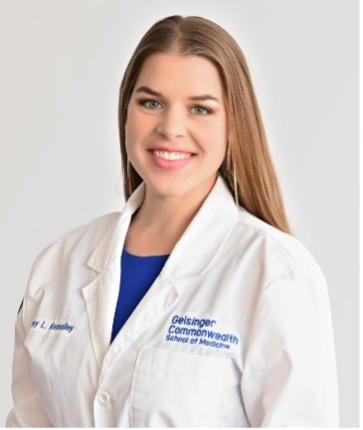
 Amy Kennalley[/caption]
Amy Kennalley, MBS
First Year Medical Student
Department of Medical Education
Geisinger Commonwealth School of Medicine
MedicalResearch.com: What is the background for this study?
Response: Opioid use disorder (OUD) is a major public health crisis in the United States. Despite the availability of effective treatments, including the medication-assisted treatment (MAT) with methadone, many individuals with OUD do not receive the care they need. Over the COVID-19 pandemic, there were several policy changes related to take-home doses of methadone, which may have impacted access to this lifesaving medication.
The Drug Enforcement Administration's (DEA)'s Automated Reports and Consolidated Ordering System (ARCOS) is a database that tracks the distribution of controlled substances, including methadone distributed to opioid treatment programs (OTPs). This data can be used to assess trends in methadone distribution over time. Additionally, the Medicaid State Drug Utilization Data (SDUD) database provides comprehensive information on methadone prescribing to Medicaid patients.
By analyzing data from both ARCOS and SDUD, we aimed to provide a comprehensive picture of methadone distribution for OUD treatment in the United States. These findings1 are important because drug overdose deaths, primarily involving opioids, increased substantially (49%) from 2019 (70,980) to 2021 (~106,000).2
Amy Kennalley[/caption]
Amy Kennalley, MBS
First Year Medical Student
Department of Medical Education
Geisinger Commonwealth School of Medicine
MedicalResearch.com: What is the background for this study?
Response: Opioid use disorder (OUD) is a major public health crisis in the United States. Despite the availability of effective treatments, including the medication-assisted treatment (MAT) with methadone, many individuals with OUD do not receive the care they need. Over the COVID-19 pandemic, there were several policy changes related to take-home doses of methadone, which may have impacted access to this lifesaving medication.
The Drug Enforcement Administration's (DEA)'s Automated Reports and Consolidated Ordering System (ARCOS) is a database that tracks the distribution of controlled substances, including methadone distributed to opioid treatment programs (OTPs). This data can be used to assess trends in methadone distribution over time. Additionally, the Medicaid State Drug Utilization Data (SDUD) database provides comprehensive information on methadone prescribing to Medicaid patients.
By analyzing data from both ARCOS and SDUD, we aimed to provide a comprehensive picture of methadone distribution for OUD treatment in the United States. These findings1 are important because drug overdose deaths, primarily involving opioids, increased substantially (49%) from 2019 (70,980) to 2021 (~106,000).2