MedicalResearch.com Editors' note: Please consult your health care provider before initiating any vitamin supplementation, including Vitamin D as potentially serious side effects are possible.
MedicalResearch.com Interview with:
Prof. Ilkka T Harvima
Department of Dermatology
University of Eastern Finland and Kuopio University Hospital
Kuopio, Finland
MedicalResearch.com: What is the background for this study?
Response: The North Savo Skin Cancer Program in Eastern Finland was launched in 2017, and it aims at reducing the incidence, morbidity and mortality caused by skin cancers, such as basal cell carcinoma, squamous cell carcinoma and melanoma. A part of this program constituted a follow-up project of patients with an assessed risk of skin cancer. There are also several other parts, such as analysis of skin cancer material reposited in the Biobank of Eastern Finland (see the enclosed BMC Cancer 2021 reference), public information, education of general physicians and medical students etc.
In 2021, we published the article in BMC Cancer (enclosed), where we attempted to clarify the reasons for the relatively high melanoma mortality in relation to its incidence in this region (North Savo) of the country. By using the biobank material we also published an article in 2022 showing that melanoma and melanoma in situ associate with keratinocytic premalignant lesions and keratinocyte skin carcinomas (Suhonen V, Siiskonen H, Suni M, Rummukainen J, Mannermaa A, Harvima IT. Malignant and in situ subtypes of melanoma are associated with basal and squamous cell carcinoma and its precancerous lesions. Eur J Dermatol 2022 Apr 1;32(2):187-194. doi: 10.1684/ejd.2022.4221.).
The follow-up study of about 500 subjects is ongoing (COVID-19 caused pretty much trouble for the recruitment). This is focused on finding risk factors and biomarkers for skin cancers and carcinogenesis.
The first study on these follow-up patients was published in 2021 (Komulainen J, Siiskonen H, Harvima IT. Association of elevated serum tryptase with cutaneous photodamage and skin cancers. Int Arch Allergy Immunol 2021;182(11):1135-1142. doi: 10.1159/000517287.).
The article on vitamin D just recently published in Melanoma Research on Dec 28, 2022, is the second one.
The third work in pipeline deals with the association of atopic disorders with skin cancers, and the manuscript is under revision.
So, these provide with some background for the article in Melanoma Research. Actually, we thought that vitamin D use might associate with skin photoaging, actinic keratoses and carcinogenesis, but the only, though very important, finding was its association with melanoma. We have not focused our research just on vitamin D only, but it looks like we need to go further.



 Dr. Caraballo-Cordovez[/caption]
César Caraballo-Cordovez, MD
Dr. Caraballo-Cordovez[/caption]
César Caraballo-Cordovez, MD


 Casey Hribar[/caption]
Casey Hribar
Fourth-year medical student
University of North Carolina
MedicalResearch.com: What is the background for this study?
Response: Several great pieces of literature already exist about patient perception of doctors wearing white coats, formal attire, business attire, and the like. But recently, scrubs are garnering favor, especially as a result of the COVID-19 pandemic.
While there has been some interest in what is worn over scrubs (jackets, vests, name tags, etc.), to our knowledge, there has not been any investigation into scrub color. Scrubs are a highly variable article of clothing, from fit, to pockets, pattern, and color, and it makes sense that these variations could have their own associated perceptions. Our study served as a way to open up the conversation around scrubs and the potential impact of their color on patients.
Casey Hribar[/caption]
Casey Hribar
Fourth-year medical student
University of North Carolina
MedicalResearch.com: What is the background for this study?
Response: Several great pieces of literature already exist about patient perception of doctors wearing white coats, formal attire, business attire, and the like. But recently, scrubs are garnering favor, especially as a result of the COVID-19 pandemic.
While there has been some interest in what is worn over scrubs (jackets, vests, name tags, etc.), to our knowledge, there has not been any investigation into scrub color. Scrubs are a highly variable article of clothing, from fit, to pockets, pattern, and color, and it makes sense that these variations could have their own associated perceptions. Our study served as a way to open up the conversation around scrubs and the potential impact of their color on patients.





 Alden Mileto, BA
Department of Medical Education
Geisinger Commonwealth School of Medicine
Scranton, PA
MedicalResearch.com: What is the background for this study?
Response: The drug buprenorphine is a partial opioid agonist, originally developed in the 1960s as an alternative to the stronger full opioid mu receptor agonists like morphine. Today, the drug is sometimes used for pain, but is more often used as a treatment for Opioid Use Disorder (OUD). Since the 2002 federal approval for buprenorphine use in treatment of OUD, there has been an increase in buprenorphine prescription across all states.
However recent studies have showed a disproportionate increase in buprenorphine prescriptions to rural/ less populated areas in comparison to urban/densely populated areas. The objective of this study [1] was to analyze the trends in buprenorphine distribution, overall and by three-digit zip codes, in Pennsylvania from 2010-2020.
Alden Mileto, BA
Department of Medical Education
Geisinger Commonwealth School of Medicine
Scranton, PA
MedicalResearch.com: What is the background for this study?
Response: The drug buprenorphine is a partial opioid agonist, originally developed in the 1960s as an alternative to the stronger full opioid mu receptor agonists like morphine. Today, the drug is sometimes used for pain, but is more often used as a treatment for Opioid Use Disorder (OUD). Since the 2002 federal approval for buprenorphine use in treatment of OUD, there has been an increase in buprenorphine prescription across all states.
However recent studies have showed a disproportionate increase in buprenorphine prescriptions to rural/ less populated areas in comparison to urban/densely populated areas. The objective of this study [1] was to analyze the trends in buprenorphine distribution, overall and by three-digit zip codes, in Pennsylvania from 2010-2020.









 Dr. Goldman[/caption]
Anna L. Goldman, M.D., M.P.A., M.P.H
Assistant Professor of Medicine
General Internal Medicine
Dr. Goldman[/caption]
Anna L. Goldman, M.D., M.P.A., M.P.H
Assistant Professor of Medicine
General Internal Medicine




 Dr. Harris[/caption]
MedicalResearch.com Interview with:
Rebecca Arden Harris, MD, MSc
Assistant Professor of Family Medicine and Community Health at the Hospital of the University of Pennsylvania
Senior Fellow, Leonard Davis Institute of Health Economics
Perelman School of Medicine, University of Pennsylvania
MedicalResearch.com: What is the background for this study?
Response: The impact of the nationwide overdose epidemic on Black women has received little attention from policy-makers, researchers, or the press.
MedicalResearch.com: What are the main findings?
Response: Over the 7-year study period, preventable overdose deaths among Black women resulted in nearly 0.75 million years of life lost (YLL). Women aged 25-34 have suffered a rising proportion of this burden.
Dr. Harris[/caption]
MedicalResearch.com Interview with:
Rebecca Arden Harris, MD, MSc
Assistant Professor of Family Medicine and Community Health at the Hospital of the University of Pennsylvania
Senior Fellow, Leonard Davis Institute of Health Economics
Perelman School of Medicine, University of Pennsylvania
MedicalResearch.com: What is the background for this study?
Response: The impact of the nationwide overdose epidemic on Black women has received little attention from policy-makers, researchers, or the press.
MedicalResearch.com: What are the main findings?
Response: Over the 7-year study period, preventable overdose deaths among Black women resulted in nearly 0.75 million years of life lost (YLL). Women aged 25-34 have suffered a rising proportion of this burden.

 Dr. Guttman-Yassky[/caption]
Dr. Emma Guttman-Yassky, MD, PhD
Waldman Professor and System Chair
The Kimberly and Eric J. Waldman Department of Dermatology
Director, Center of Excellence in Eczema
Director, Laboratory of Inflammatory Skin Diseases
Icahn School of Medicine at Mount Sinai
MedicalResearch.com: What is the background for this study? What are the main findings?
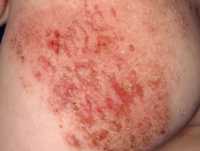
Response: The background for this study are studies that show that OX40 is a pathway that is upregulated in patients with atopic dermatitis (or eczema). OX40 is involved in activation of immune molecules associated with allergy and atopy, and also with formation of memory immune cells that are required for disease recurrence. The hypothesis to the study was that giving an OX40 antagonist will not only ameliorate the disease but perhaps have a remittive effect in that the disease will not come back.
Indeed all drug doses were significantly effective at week 16, the primary endpoint compared to placebo and continued to improve towards week 36, the secondary endpoint. In addition, the responders to treatment maintained their responses for an additional 20 weeks, which is unusual, suggesting a potential for disease modification.
Dr. Guttman-Yassky[/caption]
Dr. Emma Guttman-Yassky, MD, PhD
Waldman Professor and System Chair
The Kimberly and Eric J. Waldman Department of Dermatology
Director, Center of Excellence in Eczema
Director, Laboratory of Inflammatory Skin Diseases
Icahn School of Medicine at Mount Sinai
MedicalResearch.com: What is the background for this study? What are the main findings?
Response: The background for this study are studies that show that OX40 is a pathway that is upregulated in patients with atopic dermatitis (or eczema). OX40 is involved in activation of immune molecules associated with allergy and atopy, and also with formation of memory immune cells that are required for disease recurrence. The hypothesis to the study was that giving an OX40 antagonist will not only ameliorate the disease but perhaps have a remittive effect in that the disease will not come back.
Indeed all drug doses were significantly effective at week 16, the primary endpoint compared to placebo and continued to improve towards week 36, the secondary endpoint. In addition, the responders to treatment maintained their responses for an additional 20 weeks, which is unusual, suggesting a potential for disease modification.






 Dr. Simin Liu[/caption]
Simin Liu MD MPH ScD
Professor of Epidemiology at the School of Public Health,
Professor of Medicine (Endocrinology) and
Professor of Surgery at the Alpert School of Medicine
Brown University
MedicalResearch.com: What is the background for this study?
Response: Our research team has been researching the roles of environmental and genetic determinants of chronic diseases for nearly three decades, with special emphasis on evaluating micronutrients, minerals, and trace elements in relation to cardiometabolic outcomes, and findings of which have contributed to the design of several large, randomized trials of dietary supplements in the US (Liu JAMA 1999; 2011; Diabetes Care 2005a,b; Diabetes 2006). Several large intervention trials have consistently shown beneficial effects on clinical cardiometabolic outcomes of a diet pattern rich in micronutrients, although research on micronutrient supplementation has mainly focused on the health effects of a single or a few vitamins and minerals.
We decided to take a comprehensive and systematic approach to evaluate all the publicly available/accessible studies reporting all micronutrients including phytochemicals and antioxidant supplements and their effects on cardiovascular risk factors as well as multiple CVDs.
Dr. Simin Liu[/caption]
Simin Liu MD MPH ScD
Professor of Epidemiology at the School of Public Health,
Professor of Medicine (Endocrinology) and
Professor of Surgery at the Alpert School of Medicine
Brown University
MedicalResearch.com: What is the background for this study?
Response: Our research team has been researching the roles of environmental and genetic determinants of chronic diseases for nearly three decades, with special emphasis on evaluating micronutrients, minerals, and trace elements in relation to cardiometabolic outcomes, and findings of which have contributed to the design of several large, randomized trials of dietary supplements in the US (Liu JAMA 1999; 2011; Diabetes Care 2005a,b; Diabetes 2006). Several large intervention trials have consistently shown beneficial effects on clinical cardiometabolic outcomes of a diet pattern rich in micronutrients, although research on micronutrient supplementation has mainly focused on the health effects of a single or a few vitamins and minerals.
We decided to take a comprehensive and systematic approach to evaluate all the publicly available/accessible studies reporting all micronutrients including phytochemicals and antioxidant supplements and their effects on cardiovascular risk factors as well as multiple CVDs.