MedicalResearch.com Interview with:
[caption id="attachment_60883" align="alignleft" width="200"]

Dr. Payne-Sturges[/caption]
Dr. Devon Payne-Sturges, DrPH, MPH, MEngr
Associate Professor
Maryland Institute for Applied Environmental Health
School of Public Health
University of Maryland, College Park
MedicalResearch.com: What is the background for this study?
Response: My co-authors and I conducted this study to fill a knowledge gap and to inform the work of Project TENDR. No systematic or scoping review had examined both exposure disparities and the joint effects of combined exposures of environmental neurotoxicants and social disadvantage as they relate to disparities in neurodevelopmental outcomes specifically among children living in the U.S.
Our study is the first to summarize the evidence on 7 neurotoxicants that children in the U.S. are routinely exposed to and we examined both disparities in these exposures and disparities in the effects of those exposures on children’s brain development, cognition, and behavior by race, ethnicity, and economic status.
We reviewed over 200 independent studies spanning five decades from 1974 to 2022 on social disparities in exposure to 7 exemplar neurotoxic chemicals and pollutants, including chemical mixtures, and their relationship with disparities with neurodevelopmental outcomes among children in the U.S.


 Dr. Gaba[/caption]
Prakriti Gaba, MD
Cardiovascular Medicine Fellow
Brigham and Women's Hospital
[caption id="attachment_31114" align="alignleft" width="120"]
Dr. Gaba[/caption]
Prakriti Gaba, MD
Cardiovascular Medicine Fellow
Brigham and Women's Hospital
[caption id="attachment_31114" align="alignleft" width="120"] Dr. Deepak Bhatt[/caption]
Deepak L. Bhatt MD MPH
Director of Mount Sinai Fuster Heart Hospital
Dr. Valentin Fuster Professor of Cardiovascular Medicine
Icahn School of Medicine at Mount Sinai
MedicalResearch.com: What is the background for this study?
Response: Accurate classification of acute myocardial infarction is instrumental for the appropriate diagnosis and effective management of patients suffering from this widely prevalent cardiovascular condition.
In the past, there have been a variety of clinical scores published to advise clinicians on the best classifications schemes for patients with acute MI. These have included the Thrombolysis in Myocardial Infarction (TIMI) risk score, the HEART score, and the Killip classification. The strength of these traditional scores includes their practicality, as they can be implemented at the bedside to rapidly assist with prognostication. Nonetheless, as technologic advancements have made imaging and tissue identification more accessible, national and international committees are looking to revise traditional classification schemes of acute MI with novel ones leveraging multimodal approaches.
Dr. Deepak Bhatt[/caption]
Deepak L. Bhatt MD MPH
Director of Mount Sinai Fuster Heart Hospital
Dr. Valentin Fuster Professor of Cardiovascular Medicine
Icahn School of Medicine at Mount Sinai
MedicalResearch.com: What is the background for this study?
Response: Accurate classification of acute myocardial infarction is instrumental for the appropriate diagnosis and effective management of patients suffering from this widely prevalent cardiovascular condition.
In the past, there have been a variety of clinical scores published to advise clinicians on the best classifications schemes for patients with acute MI. These have included the Thrombolysis in Myocardial Infarction (TIMI) risk score, the HEART score, and the Killip classification. The strength of these traditional scores includes their practicality, as they can be implemented at the bedside to rapidly assist with prognostication. Nonetheless, as technologic advancements have made imaging and tissue identification more accessible, national and international committees are looking to revise traditional classification schemes of acute MI with novel ones leveraging multimodal approaches.


 Dr. Mallbris[/caption]
Lotus Mallbris, M.D., Ph.D.,
Senior Vice President of Immunology Development
Dr. Mallbris[/caption]
Lotus Mallbris, M.D., Ph.D.,
Senior Vice President of Immunology Development
 Dr. Dubinsky[/caption]
Marla C. Dubinsky, MD
Professor of Pediatrics and Medicine
Icahn School of Medicine at Mount Sinai
Co- director, Susan and Leonard Feinstein IBD Clinical Center
Mount Sinai Health System
MedicalResearch.com: What is the background for this study? Would you briefly describe the condition of UC?
Response: Lucent 1 and Lucent 2 were the induction and maintenance registration trials studying the efficacy and safety of mirikizumab in patients 18 years and older with moderate to severely active ulcerative colitis. Mirikizumab is a monoclonal antibody targeting the p19 subunit of IL23. Lucent-3 is the open label extension arm for those meeting inclusion criteria after completing Lucent 2. This study evaluated the long term efficacy and safety of mirikizumab in patients with ulcerative colitis who completed a total of 104 weeks of active mirikizumab treatment.
Ulcerative colitis is a chronic incurable inflammatory condition of colon. Common symptoms include diarrhea, blood in the stool, abdominal cramping and bowel urgency. Bowel urgency is one of the most burdensome symptoms that a patient with you could experience.
Dr. Dubinsky[/caption]
Marla C. Dubinsky, MD
Professor of Pediatrics and Medicine
Icahn School of Medicine at Mount Sinai
Co- director, Susan and Leonard Feinstein IBD Clinical Center
Mount Sinai Health System
MedicalResearch.com: What is the background for this study? Would you briefly describe the condition of UC?
Response: Lucent 1 and Lucent 2 were the induction and maintenance registration trials studying the efficacy and safety of mirikizumab in patients 18 years and older with moderate to severely active ulcerative colitis. Mirikizumab is a monoclonal antibody targeting the p19 subunit of IL23. Lucent-3 is the open label extension arm for those meeting inclusion criteria after completing Lucent 2. This study evaluated the long term efficacy and safety of mirikizumab in patients with ulcerative colitis who completed a total of 104 weeks of active mirikizumab treatment.
Ulcerative colitis is a chronic incurable inflammatory condition of colon. Common symptoms include diarrhea, blood in the stool, abdominal cramping and bowel urgency. Bowel urgency is one of the most burdensome symptoms that a patient with you could experience.



 Prof. Takeshi[/caption]
Prof. Takeshi Asai
Faculty of Health and Sports Sciences, University of Tsukuba,
Tsukuba Japan
Faculty of Physical Education, International Pacific University
Okayama, Japan
MedicalResearch.com: What is the background for this study?
Response: In the early stages of the COVID-19 pandemic, contact and droplet transmission were considered the main routes of infection. However, it was later demonstrated that airborne transmission is an important route. Therefore, accumulating real-world data on airborne transmission was deemed crucial.
Prof. Takeshi[/caption]
Prof. Takeshi Asai
Faculty of Health and Sports Sciences, University of Tsukuba,
Tsukuba Japan
Faculty of Physical Education, International Pacific University
Okayama, Japan
MedicalResearch.com: What is the background for this study?
Response: In the early stages of the COVID-19 pandemic, contact and droplet transmission were considered the main routes of infection. However, it was later demonstrated that airborne transmission is an important route. Therefore, accumulating real-world data on airborne transmission was deemed crucial.

 Dr. Harmer[/caption]
Peter A. Harmer, PhD, MPH, AT-Ret, FACSM
Senior Associate Research Scientist
Oregon Research Institute
MedicalResearch.com: What is the background for this study?
Response: Decline in various aspects of cognitive function, such as memory, executive function, and multitasking ability is common as we age. The rate and extent of decline varies among older adults but approximately 20% of those aged 65+ will experience clinically relevant mild cognitive impairment, which places them at increased risk of progressing to Alzheimer’s disease or related dementias. It is also associated with decreased mobility, increased risk of falls and impaired capacity for complex activities of daily living.
Dr. Harmer[/caption]
Peter A. Harmer, PhD, MPH, AT-Ret, FACSM
Senior Associate Research Scientist
Oregon Research Institute
MedicalResearch.com: What is the background for this study?
Response: Decline in various aspects of cognitive function, such as memory, executive function, and multitasking ability is common as we age. The rate and extent of decline varies among older adults but approximately 20% of those aged 65+ will experience clinically relevant mild cognitive impairment, which places them at increased risk of progressing to Alzheimer’s disease or related dementias. It is also associated with decreased mobility, increased risk of falls and impaired capacity for complex activities of daily living.

 Dr. Han[/caption]
Summer S Han, PhD
Associate Professor
Dr. Han[/caption]
Summer S Han, PhD
Associate Professor
 Dr. Choi[/caption]
Dr. Eunji Choi PhD
Instructor, Neurosurgery
Department: Adult Neurosurgery
Stanford University School of Medicine
MedicalResearch.com: What is the background for this study?
Dr. Choi[/caption]
Dr. Eunji Choi PhD
Instructor, Neurosurgery
Department: Adult Neurosurgery
Stanford University School of Medicine
MedicalResearch.com: What is the background for this study?




 Dr. Sood[/caption]
Neeraj Sood, PhD
Verna and Peter Dauterive Hall
University Park Campus
University of Southern California
Los Angeles, CA
MedicalResearch.com: What is the background for this study? What are the main findings?
Response: We conducted this study to inform school COVID-19 policies.
The main findings are that the median duration of infectivity after a positive COVID-19 test in children is 3 days. The median duration of infectivity does not vary with vaccination.
Dr. Sood[/caption]
Neeraj Sood, PhD
Verna and Peter Dauterive Hall
University Park Campus
University of Southern California
Los Angeles, CA
MedicalResearch.com: What is the background for this study? What are the main findings?
Response: We conducted this study to inform school COVID-19 policies.
The main findings are that the median duration of infectivity after a positive COVID-19 test in children is 3 days. The median duration of infectivity does not vary with vaccination. 



 Dr. Jernigan[/caption]
Dr. John Jernigan, MD MS
Clinical Associate Professor of Medicine
Division of Infectious Diseases
Emory University School of Medicine
Branch Chief
Epidemiology, Research and Innovations Branch
CDC Center for Disease Control
MedicalResearch.com: What is the background for this study?
Response: Staphylococcus aureus commonly causes infections in ICUs. One approach to preventing these infections is using nasal mupirocin plus chlorhexidine gluconate (CHG) bathing for ICU patients. This practice is known to prevent methicillin-resistant Staphylococcus aureus (MRSA) infections and all-cause. bloodstream infections. This practice has been broadly adopted in ICUs in the US, but adoption of mupirocin as a universal topical antibiotic has been slowed by concerns for engendering mupirocin resistance.
This cluster-randomized trial in adult ICUs was conducted to assess whether universal nasal antiseptic povidone-iodine (iodophor), to which minimal S. aureus resistance is expected, was an acceptable alternative to universal nasal mupirocin for reducing S. aureus and MRSA clinical cultures in the setting of daily CHG bathing. Those who received chlorhexidine (CHG) bathing with mupirocin had an 18% reduction in risk of Staphylococcus aureus clinical cultures and a 15% reduction in risk of methicillin-resistant
Dr. Jernigan[/caption]
Dr. John Jernigan, MD MS
Clinical Associate Professor of Medicine
Division of Infectious Diseases
Emory University School of Medicine
Branch Chief
Epidemiology, Research and Innovations Branch
CDC Center for Disease Control
MedicalResearch.com: What is the background for this study?
Response: Staphylococcus aureus commonly causes infections in ICUs. One approach to preventing these infections is using nasal mupirocin plus chlorhexidine gluconate (CHG) bathing for ICU patients. This practice is known to prevent methicillin-resistant Staphylococcus aureus (MRSA) infections and all-cause. bloodstream infections. This practice has been broadly adopted in ICUs in the US, but adoption of mupirocin as a universal topical antibiotic has been slowed by concerns for engendering mupirocin resistance.
This cluster-randomized trial in adult ICUs was conducted to assess whether universal nasal antiseptic povidone-iodine (iodophor), to which minimal S. aureus resistance is expected, was an acceptable alternative to universal nasal mupirocin for reducing S. aureus and MRSA clinical cultures in the setting of daily CHG bathing. Those who received chlorhexidine (CHG) bathing with mupirocin had an 18% reduction in risk of Staphylococcus aureus clinical cultures and a 15% reduction in risk of methicillin-resistant 
 Leana Pande[/caption]
MedicalResearch.com Interview with:
Leana Pande
Touro College of Osteopathic Medicine
MedicalResearch.com: What is the background for this study?
Response: Buprenorphine is not a new drug. It was developed in the 1960s with the intent of providing the benefits of opioids, without the addictive side effects. Unlike many prescription opioids,1 use of this Schedule III drug is increasing.2 It is often characterized as a partial agonist at the mu-opioid receptor (Figure-Right). Buprenorphine is available in many routes of administration and also with (brand name Suboxone) or without naloxone. Buprenorphine is a first-line pharmacotherapy for pregnant women with OUD.3 This review was completed in order for the benefits, and risks, of buprenorphine to be more fully appreciated and inform utilization for both opioid use disorder (OUD) and the treatment of pain.
Leana Pande[/caption]
MedicalResearch.com Interview with:
Leana Pande
Touro College of Osteopathic Medicine
MedicalResearch.com: What is the background for this study?
Response: Buprenorphine is not a new drug. It was developed in the 1960s with the intent of providing the benefits of opioids, without the addictive side effects. Unlike many prescription opioids,1 use of this Schedule III drug is increasing.2 It is often characterized as a partial agonist at the mu-opioid receptor (Figure-Right). Buprenorphine is available in many routes of administration and also with (brand name Suboxone) or without naloxone. Buprenorphine is a first-line pharmacotherapy for pregnant women with OUD.3 This review was completed in order for the benefits, and risks, of buprenorphine to be more fully appreciated and inform utilization for both opioid use disorder (OUD) and the treatment of pain.

 Dr. Stark[/caption]
Dr Mitchell Stark
Dr. Stark[/caption]
Dr Mitchell Stark
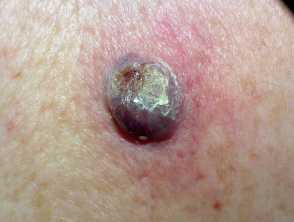
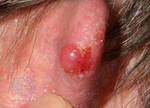 One example of a nodular melanoma without pigment.



 Prof. Guohua Li[/caption]
MedicalResearch.com Interview with:
Guohua Li, MD, DrPH
Finster Professor of Epidemiology and Anesthesiology
Columbia University Irving Medical Center
MedicalResearch.com: What is the background for this study? How was the ADHD diagnosis determined?
Response: The reported prevalence of ADHD in children and young adults in the United States has more than doubled since the 1990s because of improved diagnosis. Currently, ADHD affects about 13 percent of children under 18 years of age and eight percent of adults under 45 years of age. Little is known about the prevalence of ADHD in older adults although it is estimated that ADHD symptoms may persist throughout the lifespan in about one-third of children diagnosed with the disorder. Diagnostic criteria for adulthood ADHD include having five or more relevant symptoms, adverse impact on social, academic, and occupational activities, and onset of symptoms before age 12.
In this study, ADHD status is determined based on an affirmative response to the question of whether the participant had ever had ADHD or had ever been told by a doctor or other health professional that he or she had ADHD.
Prof. Guohua Li[/caption]
MedicalResearch.com Interview with:
Guohua Li, MD, DrPH
Finster Professor of Epidemiology and Anesthesiology
Columbia University Irving Medical Center
MedicalResearch.com: What is the background for this study? How was the ADHD diagnosis determined?
Response: The reported prevalence of ADHD in children and young adults in the United States has more than doubled since the 1990s because of improved diagnosis. Currently, ADHD affects about 13 percent of children under 18 years of age and eight percent of adults under 45 years of age. Little is known about the prevalence of ADHD in older adults although it is estimated that ADHD symptoms may persist throughout the lifespan in about one-third of children diagnosed with the disorder. Diagnostic criteria for adulthood ADHD include having five or more relevant symptoms, adverse impact on social, academic, and occupational activities, and onset of symptoms before age 12.
In this study, ADHD status is determined based on an affirmative response to the question of whether the participant had ever had ADHD or had ever been told by a doctor or other health professional that he or she had ADHD.



 Esa M. Davis, M.D., M.P.H , F.A.A.F.P
Professor of Medicine and Family and Community Medicine
Associate Vice President of Community Health and
Senior Associate Dean of pPopulation Health and Community Medicine
University of Maryland School of Medicine
Dr. Davis joined the U.S. Preventive Services Task Force in January 2021
MedicalResearch.com: What is the background for this study?
Response: Hypertensive disorders of pregnancy, including gestational hypertension, preeclampsia, and eclampsia, are among the leading causes of serious complications and death for pregnant people in the United States.
Pregnant women and pregnant people of all genders should have their blood pressure measured at each prenatal visit to help find and prevent serious health issues related to hypertensive disorders of pregnancy.
Esa M. Davis, M.D., M.P.H , F.A.A.F.P
Professor of Medicine and Family and Community Medicine
Associate Vice President of Community Health and
Senior Associate Dean of pPopulation Health and Community Medicine
University of Maryland School of Medicine
Dr. Davis joined the U.S. Preventive Services Task Force in January 2021
MedicalResearch.com: What is the background for this study?
Response: Hypertensive disorders of pregnancy, including gestational hypertension, preeclampsia, and eclampsia, are among the leading causes of serious complications and death for pregnant people in the United States.
Pregnant women and pregnant people of all genders should have their blood pressure measured at each prenatal visit to help find and prevent serious health issues related to hypertensive disorders of pregnancy. 

 One of the most startling aspects of the connection between schizophrenia and substance abuse is the high prevalence of substance use disorders among those with schizophrenia. Studies consistently show that individuals diagnosed with schizophrenia are more likely to engage in substance abuse compared to the general population. This connection can be best demonstrated using the self-medication hypothesis. According to this hypothesis, individuals with schizophrenia may turn to substances as a way to self-medicate or alleviate their distressing symptoms. Imagine dealing with hallucinations or disorganized thoughts—some may use alcohol or drugs to temporarily escape from this internal turmoil.