MedicalResearch.com Interview with:
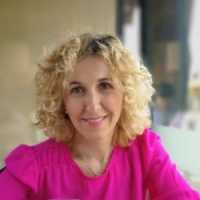
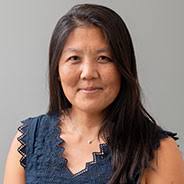
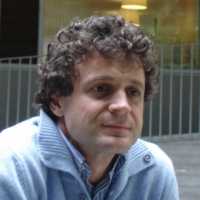
[caption id="attachment_52858" align="alignleft" width="140"]

Dr. Engzell[/caption]
Per Engzell PhD
Postdoctoral Prize Research Fellow
Nuffield College, University of Oxford
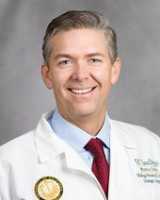
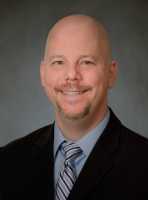
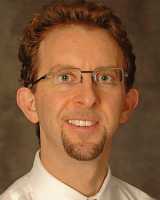
[caption id="attachment_52886" align="alignleft" width="137"]

Dr. Tropf[/caption]
Felix C. Tropf, PhD
Assistant Professor in Social Science Genetics,
CREST-ENSAE, Paris
MedicalResearch.com: What is the background for this study?
Response: We know that parents and offspring often resemble each other in their socio-economic outcomes: higher-educated parents tend to have children who reach a similar level of education while children of disadvantaged families struggle in school. To the extent that this compromises equality of opportunity – that is, some children end up better educated only because of their social background – social policies aim to compensate for it and promote social mobility.
At the same time, not all similarity between parents and offspring can be seen as equally troubling. A society that blocked entry to university for any child born to academics would achieve high mobility, but few of us would see it as a model of equal opportunity. So some channels of transmission then, it seems, are more fair than others. Although we may disagree where to draw the line, things like parents’ ability to pay for good neighborhoods, schools, or access to college appear clearly more troubling than the inheritance of traits that make for educational success.
In this study, we ask whether societies that have achieved a high degree of intergenerational mobility have done so by limiting the reach of "nature" (inherited traits), "nurture" (other family advantages), or both. We do so by combining the rich literatures of social mobility research and behavior genetics, comparing variation across several cohorts of men and women in 10 countries.


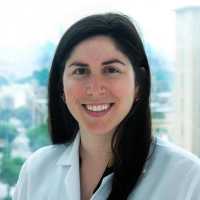

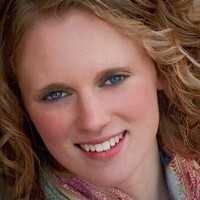
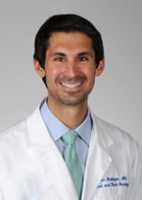





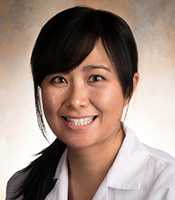
 Dr. Diaz[/caption]
Lucia Diaz, M.D., is chief of pediatric dermatology, dermatology residency associate program director and assistant professor of medicine and pediatrics at Dell Medical School. She is also co-director of the dermatology-rheumatology combined clinic at Dell Children’s Medical Center.
[caption id="attachment_52796" align="alignleft" width="150"]
Dr. Diaz[/caption]
Lucia Diaz, M.D., is chief of pediatric dermatology, dermatology residency associate program director and assistant professor of medicine and pediatrics at Dell Medical School. She is also co-director of the dermatology-rheumatology combined clinic at Dell Children’s Medical Center.
[caption id="attachment_52796" align="alignleft" width="150"] Dr. Jaquez[/caption]
Sasha Jaquez, Ph.D. is a pediatric psychologist at Dell Children's Medical School/Dell Children's Medical Center and specializes in seeing children with chronic medical illness, including skin disorders.
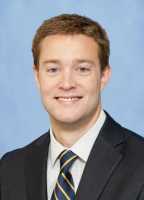
[caption id="attachment_52791" align="alignleft" width="294"]
Dr. Jaquez[/caption]
Sasha Jaquez, Ph.D. is a pediatric psychologist at Dell Children's Medical School/Dell Children's Medical Center and specializes in seeing children with chronic medical illness, including skin disorders.
[caption id="attachment_52791" align="alignleft" width="294"]