
20 Feb Has Medicaid Expansion Affected Access to Timely Cancer Care?
Posted at 13:36h
in Author Interviews, Cancer Research, Cost of Health Care, JAMA, University of Pennsylvania
MedicalResearch.com Interview with:
[caption id="attachment_53218" align="alignleft" width="180"] Dr. Takvorian[/caption]
Samuel Takvorian, MD, MS
Instructor in the Division of Hematology and Oncology
LDI Associate Professor
University of Pennsylvania Perelman School of Medicine
MedicalResearch.com: What is the background for this study?
Response: The Affordable Care Act’s Medicaid expansions have been associated with improved access to care, affordability, and for certain surgical and medical conditions, health outcomes. However, studies have also suggested unintended consequences such as lengthened wait times, and there is continued debate about the overall impact of the expansions.


















 Dr. Wiener and Christopher Waters, Research Labs Director, WVU School of Dentistry[/caption]
R. Constance Wiener, DMD, PhD
Associate Professor
West Virginia University School of Dentistry
MedicalResearch.com: What is the background for this study?
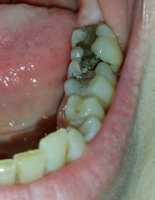
Response: Perfluoroalkyl and polyfluoroalkyl substances (PFAS) are chemical groups that have had a wide variety of uses due to their ability to their ability to repel water and stains. They might be found in food packaging, water-repellant clothing and carpeting, paints, fire-fighting foam, and water, for example. Although many are no longer manufactured in the United States, PFAS persist in the environment as they do not readily break down. Adverse health effects have been speculated especially for low birthweight babies, immunological effects, certain cancers and thyroid hormone disruption.1 With these considerations, we hypothesized that there may be an association of PFAS with tooth development and subsequent dental caries (cavities).
Dr. Wiener and Christopher Waters, Research Labs Director, WVU School of Dentistry[/caption]
R. Constance Wiener, DMD, PhD
Associate Professor
West Virginia University School of Dentistry
MedicalResearch.com: What is the background for this study?
Response: Perfluoroalkyl and polyfluoroalkyl substances (PFAS) are chemical groups that have had a wide variety of uses due to their ability to their ability to repel water and stains. They might be found in food packaging, water-repellant clothing and carpeting, paints, fire-fighting foam, and water, for example. Although many are no longer manufactured in the United States, PFAS persist in the environment as they do not readily break down. Adverse health effects have been speculated especially for low birthweight babies, immunological effects, certain cancers and thyroid hormone disruption.1 With these considerations, we hypothesized that there may be an association of PFAS with tooth development and subsequent dental caries (cavities).