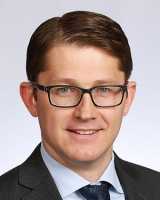
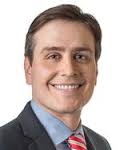
MedicalResearch.com Interview with:
Dr. Orit Harari-Steinberg
Dr. Dorit Omer
Dr. Oren Pleniceanu
Prof. Benjamin Dekel
The Pediatric Stem Cell Research Institute
Sheba Medical Center
Tel Hashomer, Israel
MedicalResearch.com: What is the background for this study?
Response: The motivation behind this study is the rising epidemic of chronic kidney disease (CKD). With a prevalence in some reports of up to 17.3% and very expensive treatments, especially in its advanced stages, CKD is more common than most people think, and it keeps growing at a very fast rate, due to the increasing number of patients suffering from diabetes and hypertension. At the same time, medicine doesn’t offer good solutions to these patients, with dialysis creating high morbidity and mortality.
From the fact that 70,000 cells are shed in the urine each hour, we deduce that the kidney has the ability to form new cells to make up for this loss. In a previous work, we used a mouse model to show that cell clones form and proliferate in the adult kidney, so we know that cells of the adult kidney, or at least a portion thereof, have the ability to multiply in-vivo. It has been possible for quite a while to isolate proliferating cells from human kidneys and grow them in a dish.
The problem, however, is that in order to achieve a large enough number of cells capable of regenerating the kidneys, massive expansion is needed ex-vivo, and that's the real obstacle. The reason is that following several passages, the cells lose their phenotype and become senescent, and therefore useless for regenerative purposes.
In this study, we developed a unique 3D culturing method, growing the kidney cells in structures which we termed 'nephrospheres'. This culturing method rejuvenated the cells and allowed massive expansion for long periods of time. The positive effect on the cells was evident when we analyzed their transcriptome and found activation of molecular pathways associated with renal epithelial identity and renal tissue-forming capacity.
What's even more striking, is that the same effect was seen when we used cells from the kidneys of CKD patients. We were then interested in determining whether these cells might also have a therapeutic effect. Indeed, when we injected these cells into mice with CKD (which was generated by resecting 5/6 of their kidneys), we saw a functional improvement in GFR. When we analyzed the treated kidneys, we found that the injected cell both formed renal tubule-like structures and integrated into existing host tubules, which resulted in a therapeutic effect. So, altogether, this study showed that our culturing method can serve as an effective means of establishing large numbers of autologous cells with regenerative capacity.

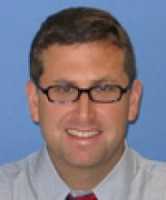
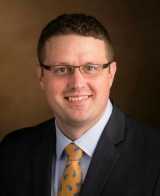
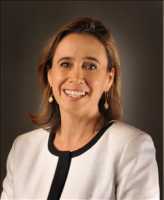

 Deborah M Eaton
Doctorate Student / Research Assistant
Temple University
MedicalResearch.com: What is the background for this study?
Response: Heart failure (HF) with preserved ejection fraction (HFpEF) accounts for approximately 50% of cases of HF and to date clinical trials with HFpEF patients have failed to produce positive outcomes. Part of this is likely due to the lack of HFpEF animal models for preclinical testing. Our lab addressed this gap in knowledge by developing an animal model that mimics critical features of the human HFpEF phenotype. We performed an in-depth cardiopulmonary characterization highlighting that the model has characteristics of human disease. We then tested the effects of a pan-HDAC inhibitor, vorinostat/SAHA, in collaboration with Dr. Timothy McKinsey, who is an expert in HDAC inhibitors and recently published work1 that laid the foundation for this study.
Deborah M Eaton
Doctorate Student / Research Assistant
Temple University
MedicalResearch.com: What is the background for this study?
Response: Heart failure (HF) with preserved ejection fraction (HFpEF) accounts for approximately 50% of cases of HF and to date clinical trials with HFpEF patients have failed to produce positive outcomes. Part of this is likely due to the lack of HFpEF animal models for preclinical testing. Our lab addressed this gap in knowledge by developing an animal model that mimics critical features of the human HFpEF phenotype. We performed an in-depth cardiopulmonary characterization highlighting that the model has characteristics of human disease. We then tested the effects of a pan-HDAC inhibitor, vorinostat/SAHA, in collaboration with Dr. Timothy McKinsey, who is an expert in HDAC inhibitors and recently published work1 that laid the foundation for this study. 






 Dr. Hongying (Daisy) Dai[/caption]
Hongying (Daisy) Dai, PhD
Associate Professor
Department of Biostatistics | College of Public Health
University of Nebraska Medical Center
Omaha, NE
MedicalResearch.com: What is the background for this study?
Response: E-cigarette use increased dramatically from 11.7% to 27.5% for high school students and from 3.3% to 10.5% for middle school students during the periods of 2017 - 2019. In September 2018, the Food and Drug Administration (FDA) warned that youth e-cigarette use is reaching an epidemic proportion.
Exposure to secondhand aerosol (SHA) from e-cigarettes is not harmless as e-cigarettes aerosol contains nicotine and potentially harmful substances, including carbonyl compounds, TSNAs, heavy metals, and glycols. This study analyzed the 2015-2018 National Youth Tobacco Survey (NYTS) and the main findings are:
Dr. Hongying (Daisy) Dai[/caption]
Hongying (Daisy) Dai, PhD
Associate Professor
Department of Biostatistics | College of Public Health
University of Nebraska Medical Center
Omaha, NE
MedicalResearch.com: What is the background for this study?
Response: E-cigarette use increased dramatically from 11.7% to 27.5% for high school students and from 3.3% to 10.5% for middle school students during the periods of 2017 - 2019. In September 2018, the Food and Drug Administration (FDA) warned that youth e-cigarette use is reaching an epidemic proportion.
Exposure to secondhand aerosol (SHA) from e-cigarettes is not harmless as e-cigarettes aerosol contains nicotine and potentially harmful substances, including carbonyl compounds, TSNAs, heavy metals, and glycols. This study analyzed the 2015-2018 National Youth Tobacco Survey (NYTS) and the main findings are:


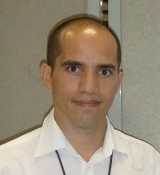



 Prof. Woloshin[/caption]
Steven Woloshin, MD, MS
Professor of Medicine and Community and Family Medicine
Professor, The Dartmouth Institute for Health Policy and Clinical Practice
MedicalResearch.com: What is the background for this study?
Response: Industry spends more on detailing visits and free samples than any other form of prescription drug marketing. There is good evidence that these activities can lead to more use of expensive new drugs over equally effective cheaper options. Given these concerns there have been efforts by some hospitalls and practices to restrict these forms of marketing.
We asked physicians in group practices delivering primary care about how often pharmaceutical reps visit their practice and whether they have a free sample closet.
Prof. Woloshin[/caption]
Steven Woloshin, MD, MS
Professor of Medicine and Community and Family Medicine
Professor, The Dartmouth Institute for Health Policy and Clinical Practice
MedicalResearch.com: What is the background for this study?
Response: Industry spends more on detailing visits and free samples than any other form of prescription drug marketing. There is good evidence that these activities can lead to more use of expensive new drugs over equally effective cheaper options. Given these concerns there have been efforts by some hospitalls and practices to restrict these forms of marketing.
We asked physicians in group practices delivering primary care about how often pharmaceutical reps visit their practice and whether they have a free sample closet. 


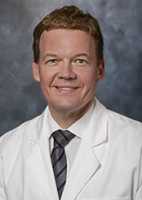


 Dr. Liao[/caption]
Joshua M. Liao, MD, MSc, FACP
Assistant Professor, Department of Medicine
Director, UW Medicine Value and Systems Science Lab
Medical Director of Payment Strategy, UW Medicine
University of Washington
Dr. Liao[/caption]
Joshua M. Liao, MD, MSc, FACP
Assistant Professor, Department of Medicine
Director, UW Medicine Value and Systems Science Lab
Medical Director of Payment Strategy, UW Medicine
University of Washington

 MedicalResearch.com: What is the background for this study?
Response: A prior pilot
MedicalResearch.com: What is the background for this study?
Response: A prior pilot