MedicalResearch.com Interview with:
[caption id="attachment_54051" align="alignleft" width="200"]

Dr. Law[/caption]
Dr. Matthew H. Law, PhD
Senior Research Officer, Statistical Genetics
QIMR Berghofer
MedicalResearch.com: What is the background for this study?
Response: A large genetic study of melanoma involving a global collaboration of scientists, co-led by QIMR Berghofer, the University of Leeds in the UK, and the National Cancer Institute in the US which is part of the National Institutes of Health, has been published in the prestigious journal
Nature Genetics.
Melanoma is a sometimes-deadly skin cancer, with an estimated 350,000 cases worldwide in 2015, resulting in nearly 60,000 deaths. Melanoma begins in melanocytes, cells in the skin responsible for making the pigment melanin that gives colour to the skin. Melanin is able to block some of the harmful effects of UV radiation, which is why people with pale skin are at a higher risk of skin cancer, but the protection is not complete. Moles also develop from melanocytes, and having a high number of moles is a risk factor for melanoma.
UK based co-lead author, Dr Mark Iles from the University of Leeds’s Institute for Data Analytics, said the researchers examined DNA from 37,000 people who had been diagnosed with melanoma and compared their genetic information to that of nearly 400,000 people with no history of the disease.”
Joint study leader and QIMR Berghofer statistical geneticist Associate Professor Matthew Law said the researchers identified 33 new regions of the genome and confirmed another 21 previously reported regions that are linked to a person’s risk of developing melanoma of the skin. Two of the new regions we’ve discovered that are linked to melanoma have previously been linked to autoimmune disorders. This provides further evidence that the immune system plays an important role in a person developing melanoma. We also found an association between melanoma and common genetic variants in the gene TP53, which is a gene critical in controlling DNA repair when cells divide, and in suppressing cancer.”
Co-lead author on the study and senior investigator at the National Cancer Institute, Dr Maria Teresa Landi, said the research also uncovered other important clues to the genetic causes of melanoma. We used the relationship between moles, pigmentation, and melanoma to identify 31 additional gene regions that potentially influence melanoma risk. For example, one of the regions we identified is involved in melanocyte growth,” Dr Landi said. “Moreover, we also included people from Mediterranean populations involved in the MelaNostrum Consortium. Most studies of melanoma use people with northern or western European ancestry (e.g. British) and by expanding our analysis to include Mediterranean populations, we will gain a greater understanding of the genetics of melanoma in this highly sun exposed group.”


 Dr. Mishra[/caption]
Santosh K. Mishra M.Tech., PhD
Assistant Professor of Neuroscience
Department of Molecular Biomedical Sciences
NC State Veterinary Medicine
Raleigh, NC 2760
MedicalResearch.com: What is the background for this study? Would you briefly explain what is meant by atopic dermatitis?
Response: Chronic allergic itch is a worldwide problem that leads to substantial health expenses,but what causes this universal urge to scratch remains elusive in chronic allergic itch. Atopic dermatitis is a common allergic skin disease that often associated with extremely itchy and inflamed skin.
In our study, we showed, for the first time, a molecular pathway that is involved in chronic allergic itch as we identified an endogenous mediator (periostin) and a new role for its sensory neuron receptor, the integrin αVβ3, which drives the excitability and transmission of itch signal to the spinal cord.
Dr. Mishra[/caption]
Santosh K. Mishra M.Tech., PhD
Assistant Professor of Neuroscience
Department of Molecular Biomedical Sciences
NC State Veterinary Medicine
Raleigh, NC 2760
MedicalResearch.com: What is the background for this study? Would you briefly explain what is meant by atopic dermatitis?
Response: Chronic allergic itch is a worldwide problem that leads to substantial health expenses,but what causes this universal urge to scratch remains elusive in chronic allergic itch. Atopic dermatitis is a common allergic skin disease that often associated with extremely itchy and inflamed skin.
In our study, we showed, for the first time, a molecular pathway that is involved in chronic allergic itch as we identified an endogenous mediator (periostin) and a new role for its sensory neuron receptor, the integrin αVβ3, which drives the excitability and transmission of itch signal to the spinal cord. 






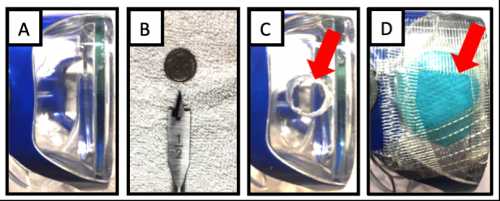 The building of the filtered eye mask prototype.[/caption]




 Dr. Hollingsworth[/caption]
Alex Hollingsworth PhD
Assistant Professor
O'Neill School of Public and Environmental Affairs
Indiana University
MedicalResearch.com: What is the background for this study? What are the main findings?
Response: I've been working with Coady Wing and Ashley Bradford on a few different studies of the effects of recreational marijuana laws on drug and alcohol use.
Soon after EVALI became a major issue, the prevailing theory from the CDC and others was that EVALI was caused by the use of vitamin E acetate in illegal THC vaping products.
Our group read about this and we thought about some of the things that often happen in black markets for illegal drugs. For instance, during the alcohol prohibition era, bootleg alcohol producers often made and sold alcohol products that were not that safe to drink. In more recent years, there are cases where black market sellers of illegal drugs like heroin try to increase profit margins by adding other substances, which can be harmful.
We thought that maybe something like that could be happening in EVALI. Perhaps people in states where recreational marijuana is legal tended to purchase marijuana products from the legal market and the legal market was not selling any marijuana vaping products that included vitamin E acetate.
Dr. Hollingsworth[/caption]
Alex Hollingsworth PhD
Assistant Professor
O'Neill School of Public and Environmental Affairs
Indiana University
MedicalResearch.com: What is the background for this study? What are the main findings?
Response: I've been working with Coady Wing and Ashley Bradford on a few different studies of the effects of recreational marijuana laws on drug and alcohol use.
Soon after EVALI became a major issue, the prevailing theory from the CDC and others was that EVALI was caused by the use of vitamin E acetate in illegal THC vaping products.
Our group read about this and we thought about some of the things that often happen in black markets for illegal drugs. For instance, during the alcohol prohibition era, bootleg alcohol producers often made and sold alcohol products that were not that safe to drink. In more recent years, there are cases where black market sellers of illegal drugs like heroin try to increase profit margins by adding other substances, which can be harmful.
We thought that maybe something like that could be happening in EVALI. Perhaps people in states where recreational marijuana is legal tended to purchase marijuana products from the legal market and the legal market was not selling any marijuana vaping products that included vitamin E acetate. 



 Barbara Chaiyachati, MD PhD
SafePlace: The Center for Child Protection and Health
Division of General Pediatrics
The Children’s Hospital of Philadelphia,
Center for Pediatric Clinical Effectiveness
University of Pennsylvania
Philadelphia, Pennsylvania
MedicalResearch.com: What is the background for this study? What are the main findings?
Response: Children in foster care have high rates of medical problems including chronic diseases. There is less known about the differences in mortality for children in foster care.
Looking at national data from 2003 to 2016, this study finds that children (ages 1 to 18) in foster care have higher mortality compared to children in the general population and that the difference in mortality has increased over time.
Barbara Chaiyachati, MD PhD
SafePlace: The Center for Child Protection and Health
Division of General Pediatrics
The Children’s Hospital of Philadelphia,
Center for Pediatric Clinical Effectiveness
University of Pennsylvania
Philadelphia, Pennsylvania
MedicalResearch.com: What is the background for this study? What are the main findings?
Response: Children in foster care have high rates of medical problems including chronic diseases. There is less known about the differences in mortality for children in foster care.
Looking at national data from 2003 to 2016, this study finds that children (ages 1 to 18) in foster care have higher mortality compared to children in the general population and that the difference in mortality has increased over time. 

 Vasily Giannakeas[/caption]
Vasily Giannakeas, MPH
Epidemiologist/ Dedicated ICES Analyst
Women's College Hospital
Toronto, Ontario, Canada
MedicalResearch.com: What is the background for this study?
Response: As some health care systems approach collapse, a pressing need exists for tools modeling the capacity of acute and critical care systems during the COVID-19 pandemic.
We developed an online tool to estimate the maximum number of COVID-19 cases that could be managed per day within the catchment area served by a health care system, given acute and critical care resource availability.
The COVID-19 Acute and Intensive Care Resource Tool (CAIC-RT) is open access and available at
Vasily Giannakeas[/caption]
Vasily Giannakeas, MPH
Epidemiologist/ Dedicated ICES Analyst
Women's College Hospital
Toronto, Ontario, Canada
MedicalResearch.com: What is the background for this study?
Response: As some health care systems approach collapse, a pressing need exists for tools modeling the capacity of acute and critical care systems during the COVID-19 pandemic.
We developed an online tool to estimate the maximum number of COVID-19 cases that could be managed per day within the catchment area served by a health care system, given acute and critical care resource availability.
The COVID-19 Acute and Intensive Care Resource Tool (CAIC-RT) is open access and available at