MedicalResearch.com Interview with:
[caption id="attachment_54909" align="alignleft" width="200"]

Prof. Manchanda[/caption]
Prof Ranjit Manchanda MD, MRCOG, PhD
Professor of Gynaecological Oncology & Consultant Gynaecological Oncologist
NHS Innovation Accelerator (NIA) Fellow
Integrated Academic Training Programme Director
London Specialty School of Obstetrics & Gynaecology, Health Education England
Specialty Research Lead for Gynaecological Cancer, NIHR, North Thames Clinical Research Network
Cancer Research UK, Barts Centre | Queen Mary University of London
Centre for Cancer Prevention, Wolfson Institute of Preventive Medicine | Charterhouse Square | London
Department of Gynaecological Oncology | Barts Health NHS Trust, Royal London Hospital
MedicalResearch.com: What is the background for this study?
Response: Around 10–20% of ovarian cancers and 6% breast cancers overall are caused by inheritable BRCA1/BRCA2 mutations. Women carrying BRCA1/BRCA2 mutations have a 17–44% risk of ovarian cancer and 69–72% risk of breast cancer until age 80 years. Most of these cancers can be prevented in unaffected BRCA1/BRCA2 women carriers. Women can opt for a range of options including screening, preventive, and reproductive choices to minimise their risk.
The current approach uses established clinical-criteria/family-history (FH) based a priori BRCA probability thresholds to identify high-risk individuals eligible for BRCA testing. However, this requires individuals and health practitioners to recognise and act on a significant FH. BRCA carriers, who are unaware of their FH, unappreciative of its risk/significance, not proactive in seeking advice, or lack a strong FH (small families/paternal inheritance/chance) get excluded. Over 50% BRCA carriers do not fulfil clinical criteria and are missed.
Despite >25 years of BRCA testing and effective mechanisms for prevention, current guidelines and access to testing pathways remain complex and associated with a massive under-utilisation of genetic testing. Only 20% of eligible women have accessed/undergone genetic testing and our earlier analysis showed that 97% of BRCA carriers in the population remain unidentified. Current detection rates are inadequate to identify all BRCA carriers and even doubling detection rates will not work.
Why should we wait for decades for people to develop cancer before identifying BRCA carriers and unaffected at-risk family members to offer prevention?. This highlights substantial missed opportunities for early detection and prevention. A new population testing approach can change this. Jewish population studies show this is feasible, acceptable, has high satisfaction (91–95%), significantly reduces anxiety, doesn’t harm psychological well-being or quality of life, and is extremely cost-effective. However, this has not been evaluated in the general population and in particular across different countries or health systems. The potential applicability and scope for this approach transcends continents and countries. Additionally, for interventions to be sustainable, they need to be cost-effective and affordable.
We have undertaken a cost-effectiveness analysis of population based BRCA testing compared with current standard clinical testing of women designated as high risk, across high income countries (UK/USA/Netherlands), upper-middle income countries (China/Brazil), and low-middle income country (India).



 Dr. Weisskopf[/caption]
Marc Weisskopf, PhD, ScD
Cecil K. and Philip Drinker Professor of Environmental Epidemiology and Physiology
Departments of Environmental Health and Epidemiology
Harvard T.H. Chan School of Public Health
Boston, MA 02115
MedicalResearch.com: What is the background for this study?
Response: There is a long history of health disparities by race. We were interested to see whether these also show up in professional football players, with the thought that perhaps the advantages that come with being an elite athlete in a sport (e.g. related to income, potential access to carte, prestige) might minimize health disparities.
Dr. Weisskopf[/caption]
Marc Weisskopf, PhD, ScD
Cecil K. and Philip Drinker Professor of Environmental Epidemiology and Physiology
Departments of Environmental Health and Epidemiology
Harvard T.H. Chan School of Public Health
Boston, MA 02115
MedicalResearch.com: What is the background for this study?
Response: There is a long history of health disparities by race. We were interested to see whether these also show up in professional football players, with the thought that perhaps the advantages that come with being an elite athlete in a sport (e.g. related to income, potential access to carte, prestige) might minimize health disparities. 











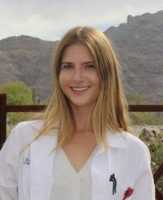 Alyssa M. Thompson[/caption]
Alyssa M. Thompson is currently a 2nd year medical student at the UA-COM Tucson. She graduated from the University of Arizona, Summa Cum Laude in 2018 as the athletic department's Valedictorian with a degree in Physiology and an Entrepreneurship certificate. Her passion for research and dermatology stems from her innovative and integrative mindset with specific interest in inflammatory skin disease.
MedicalResearch.com: What is the background for this study?
Response: Eczema is very common in children. Prescription medications are important for managing eczema flares, but a lot of the work in treating eczema is preventative, done by consistently moisturizing the skin at home with drug store products. Allergic contact dermatitis occurs more commonly in people with eczema. A previous study was done in characterizing the allergenic potential of drug-store moisturizers and found that 88% of moisturizers contain at least one common allergen. Many moisturizers are marketed specifically to eczema, but the allergen content of these products are unknown.
Alyssa M. Thompson[/caption]
Alyssa M. Thompson is currently a 2nd year medical student at the UA-COM Tucson. She graduated from the University of Arizona, Summa Cum Laude in 2018 as the athletic department's Valedictorian with a degree in Physiology and an Entrepreneurship certificate. Her passion for research and dermatology stems from her innovative and integrative mindset with specific interest in inflammatory skin disease.
MedicalResearch.com: What is the background for this study?
Response: Eczema is very common in children. Prescription medications are important for managing eczema flares, but a lot of the work in treating eczema is preventative, done by consistently moisturizing the skin at home with drug store products. Allergic contact dermatitis occurs more commonly in people with eczema. A previous study was done in characterizing the allergenic potential of drug-store moisturizers and found that 88% of moisturizers contain at least one common allergen. Many moisturizers are marketed specifically to eczema, but the allergen content of these products are unknown.

 Dr. Schoch[/caption]
Jennifer Schoch, MD
Dr. Schoch is a pediatric dermatologist and
Associate Professor of Dermatology at the University of Florida.
Her research focuses on the infantile skin microbiome and its role in pediatric skin disease.
She is a member of the Society for Pediatric Dermatology.
[caption id="attachment_54942" align="alignleft" width="144"]
Dr. Schoch[/caption]
Jennifer Schoch, MD
Dr. Schoch is a pediatric dermatologist and
Associate Professor of Dermatology at the University of Florida.
Her research focuses on the infantile skin microbiome and its role in pediatric skin disease.
She is a member of the Society for Pediatric Dermatology.
[caption id="attachment_54942" align="alignleft" width="144"]
 Dr. Shoichet[/caption]
Brian Shoichet, Professor
UCSF
http://www.bkslab.org/contact.php
MedicalResearch.com: What is the background for this study?
Response: Excipients are ubiquitous in drug formulations. What most people consider "drugs" are formulations of active and "inactive" ingredients--the excipients. These "inactive" ingredients, which you can find on the label of all of the drugs you use, play crucial roles in drug stability, as antioxidants, as colorants to help patients distinguish among them, as anti-microbials to keep them from getting infected with bacteria, helping to make the soluble in the patient, among other functions.
They are considered "inactive" because they do not have observable toxicity in animal and sometimes histological studies, but few of them have been evaluated in a modern way. This would involve testing the excipients for activity on individual receptors and enzymes that are involved in biological responses, which is what happens for drugs. Doing this was the focus of this study
Dr. Shoichet[/caption]
Brian Shoichet, Professor
UCSF
http://www.bkslab.org/contact.php
MedicalResearch.com: What is the background for this study?
Response: Excipients are ubiquitous in drug formulations. What most people consider "drugs" are formulations of active and "inactive" ingredients--the excipients. These "inactive" ingredients, which you can find on the label of all of the drugs you use, play crucial roles in drug stability, as antioxidants, as colorants to help patients distinguish among them, as anti-microbials to keep them from getting infected with bacteria, helping to make the soluble in the patient, among other functions.
They are considered "inactive" because they do not have observable toxicity in animal and sometimes histological studies, but few of them have been evaluated in a modern way. This would involve testing the excipients for activity on individual receptors and enzymes that are involved in biological responses, which is what happens for drugs. Doing this was the focus of this study

 Dr. Perrett[/caption]
Kirsten P Perrett MD PhD
Group Leader/Clinician Scientist Fellow
Population Allergy Research Group and
Melbourne Children's Trial Centre
Murdoch Children's Research Institute
Rachel L Peters PhD
Murdoch Children’s Research Institute
Department of Paediatrics
The University of Melbourne
Parkville, Australia
MedicalResearch.com: What is the background for this study?
Dr. Perrett[/caption]
Kirsten P Perrett MD PhD
Group Leader/Clinician Scientist Fellow
Population Allergy Research Group and
Melbourne Children's Trial Centre
Murdoch Children's Research Institute
Rachel L Peters PhD
Murdoch Children’s Research Institute
Department of Paediatrics
The University of Melbourne
Parkville, Australia
MedicalResearch.com: What is the background for this study?




 Prof. Garnier[/caption]
Gil Garnier PhD
Director and Professor
Bioresource Processing Research Institute of Australia (BioPRIA)
PALS ARC Industry Transformation Research Hub
Department of Chemical Engineering
Monash University
MedicalResearch.com: What is the background for this study?
Response: We wanted to develop a test that would be:
1) Reliable and fast to perform,
2) Easy and fast to manufacture,
3) Easy and fast to distribute and be adopted by the Health care community.
We also wanted to capitalize on our vast expertise and experience from developing novel blood typing tests. Our strategy was to develop a serology COVID test using the current Gel card technology available in most hospital and blood laboratories throughout the world. Equipment and expertise are already available from point of care setting to high throughput/automated systems measuring 100-200 test/ h. Also, these cards are currently produced by many companies all over and these can be shipped all international.
Prof. Garnier[/caption]
Gil Garnier PhD
Director and Professor
Bioresource Processing Research Institute of Australia (BioPRIA)
PALS ARC Industry Transformation Research Hub
Department of Chemical Engineering
Monash University
MedicalResearch.com: What is the background for this study?
Response: We wanted to develop a test that would be:
1) Reliable and fast to perform,
2) Easy and fast to manufacture,
3) Easy and fast to distribute and be adopted by the Health care community.
We also wanted to capitalize on our vast expertise and experience from developing novel blood typing tests. Our strategy was to develop a serology COVID test using the current Gel card technology available in most hospital and blood laboratories throughout the world. Equipment and expertise are already available from point of care setting to high throughput/automated systems measuring 100-200 test/ h. Also, these cards are currently produced by many companies all over and these can be shipped all international.


 Dr. Green[/caption]
Dr. Todd Green
Vice President of Clinical Development and Medical Affairs
Dr. Green[/caption]
Dr. Todd Green
Vice President of Clinical Development and Medical Affairs
 MedicalResearch.com: What is the background for this study?
Response: The PEOPLE study is an open-label extension of the Phase III PEPITES trial designed to evaluate the long-term safety, tolerability and efficacy of Viaskin Peanut 250 μg (DBV712). Participants who completed the 12-month study period of PEPITES were eligible to enroll in PEOPLE, which evaluates the eliciting dose (ED) after three years (Month 36) of active treatment using a double-blind, placebo-controlled food challenge (DBPCFC).
MedicalResearch.com: What is the background for this study?
Response: The PEOPLE study is an open-label extension of the Phase III PEPITES trial designed to evaluate the long-term safety, tolerability and efficacy of Viaskin Peanut 250 μg (DBV712). Participants who completed the 12-month study period of PEPITES were eligible to enroll in PEOPLE, which evaluates the eliciting dose (ED) after three years (Month 36) of active treatment using a double-blind, placebo-controlled food challenge (DBPCFC). 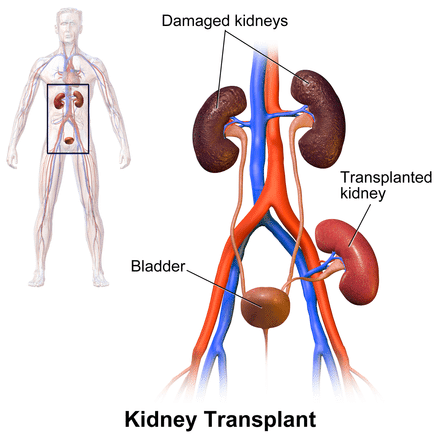
 Dr. Pasini[/caption]
Giacomo Pasini, PhD
Professor of Econometrics - Professore ordinario
Economics PhD program Director - Coordinatore dottorato in Economia
Rector's delegate for Cooperation and Development - Delegato alla Cooperzione per lo sviluppo
Economics Department - Dipartimento di Economia
Universita' Ca' Foscari - Venezia
MedicalResearch.com: What is the background for this study?
Response: Kidney transplantation carries several advantages over dialysis treatment for patients with end-stage renal dis-ease (ESRD). Nevertheless, the disparity between the large number of transplant candidates and the scarcity of organs available continues to increase.
In order to close this gap selection criteria for donor appropriateness have been widened significantly in recent years to include older persons and those with co-morbidities that could potentially increase the risk of infectious disease transmission (the so-called Expanded Criteria Donors, ECD). The result of kidney transplantation from marginal donors is one of the most topical issues in the transplant literature.
Dr. Pasini[/caption]
Giacomo Pasini, PhD
Professor of Econometrics - Professore ordinario
Economics PhD program Director - Coordinatore dottorato in Economia
Rector's delegate for Cooperation and Development - Delegato alla Cooperzione per lo sviluppo
Economics Department - Dipartimento di Economia
Universita' Ca' Foscari - Venezia
MedicalResearch.com: What is the background for this study?
Response: Kidney transplantation carries several advantages over dialysis treatment for patients with end-stage renal dis-ease (ESRD). Nevertheless, the disparity between the large number of transplant candidates and the scarcity of organs available continues to increase.
In order to close this gap selection criteria for donor appropriateness have been widened significantly in recent years to include older persons and those with co-morbidities that could potentially increase the risk of infectious disease transmission (the so-called Expanded Criteria Donors, ECD). The result of kidney transplantation from marginal donors is one of the most topical issues in the transplant literature.
 Dr. Ghaffari[/caption]
Abdi Ghaffari, Ph.D.
Associate Professor (adjunct)
Dept. of Pathology and Molecular Medicine
Queen’s University
MedicalResearch.com: What is the background for this study?
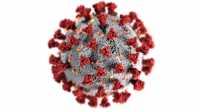
Response: SARS-CoV-2 virus has infected millions and changed our way of life by placing nearly 3 billion people under lockdown or some form of physical isolation. In the absence of a vaccine or reliable treatment, diagnostic testing must be a pillar of public health policy to control further spread of the virus and to guide gradual removal of lockdown measures.
COVID-19 antibody diagnostic tests are being increasingly used to assess the protective immunity status in the population. There are over 100 different COVID-19 antibody tests developed by companies worldwide in an effort to address this need. However, companies’ reported performance data are not always in line with the actual performance of these diagnostic tests in the real-world. In this work, we conducted a systemic review of independent studies (sponsored by academic or government institutions) that aimed to validate the performance of currently available COVID-19 antibody tests on the market.
Dr. Ghaffari[/caption]
Abdi Ghaffari, Ph.D.
Associate Professor (adjunct)
Dept. of Pathology and Molecular Medicine
Queen’s University
MedicalResearch.com: What is the background for this study?
Response: SARS-CoV-2 virus has infected millions and changed our way of life by placing nearly 3 billion people under lockdown or some form of physical isolation. In the absence of a vaccine or reliable treatment, diagnostic testing must be a pillar of public health policy to control further spread of the virus and to guide gradual removal of lockdown measures.
COVID-19 antibody diagnostic tests are being increasingly used to assess the protective immunity status in the population. There are over 100 different COVID-19 antibody tests developed by companies worldwide in an effort to address this need. However, companies’ reported performance data are not always in line with the actual performance of these diagnostic tests in the real-world. In this work, we conducted a systemic review of independent studies (sponsored by academic or government institutions) that aimed to validate the performance of currently available COVID-19 antibody tests on the market.