MedicalResearch.com Interview with:
[caption id="attachment_44250" align="alignleft" width="173"]

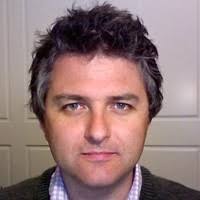
Dr. Golomb[/caption]
Beatrice Golomb, MD, PhD
Director of the Golomb Research Group
Professor of Medicine
University of California, San Diego
Response:
MedicalResearch.com: What is the background for this study? How was the radiation emitted?
Response: Possibilities include surveillance devices (or things to jam them), electronic weapons, or, less likely, “innocent” communications devices.
MedicalResearch.com: What are the main findings?
Response: That all key features of diplomats’ experiences comport with pulsed radiofrequency/ microwave (RF/MW) radiation.
- The nature of the “sounds” heard – chirping, clicking, ringing, grinding/buzzing – are known “sounds” produced via the “microwave auditory effect” aka Frey effect. Different sounds are heard by different people, because the character of the sound heard depends on head dimensions (as well as pulse characteristics). Sounds were primarily heard at night: consistent with the microwave auditory effect, which requires low ambient noise. Some diplomats reported that sounds were spatially localized with “laserlike” specificity – said to defy known physics. This defies the physics of sound, but not radiation. The “sound” was reported to follow a diplomat as he walked, within the territory in which it was heard. Sound from a fixed source does not seem to follow people – but the microwave auditory affect does, often perceived as being located just behind (or in some cases just above, or inside) the head of the person, irrespective of the person’s orientation relative to the radiation source.
- The symptoms reported following these experiences also fit. Rates of reported symptoms in diplomats – headache, cognitive and sleep problems dominating, then dizziness, tinnitus, anxiety, nausea at lesser but still high rates – match closely with rates of the same symptoms reported in a 2012 Japanese study of people who report health effects from radiation, typically including pulsed RF/MW. Hearing loss is a relatively distinctive and prominent symptom in both diplomats, and RF/MW affected civilians. In both groups, some reportedly experience speech problems, balance problems, nosebleed, and strange sensations of vibration and pressure.
Reports of symptoms with RF/MW exposures date at least to the 1920s, affecting radio amateurs and shipboard radio operators as well as others working with radar or microwaves in occupational settings. By 1971/72, a Naval report with over 2300 citations (many from Russia and Eastern Europe), assessing effects of low intensity RF radiation, had whole sections devoted to each of a number of the symptoms diplomats report.
- Hundreds (if not thousands) of studies have illuminated mechanisms by which these effects may arise, centered on oxidative stress (the kind of injury that antioxidants help to defend against) – and many downstream effects of oxidative stress (membrane damage, blood brain barrier impairment with potential for brain swelling, inflammation, voltage gated calcium (and other) channel effects (which can also lead to oxidative stress), mitochondrial impairment, autoimmune activation, etc.)
Affected persons are a minority (in both settings), and in the nondiplomat setting, vulnerability has been tied to genetic variants less adept at defending against oxidative stress; and low concentrations of a critical antioxidant. In both groups, brain imaging studies resemble traumatic brain injury; and in both, at least some of those affected had prior head injury. Head injury may be a predisposing factor, as well as possible consequence.
Reprising findings also shown for research on other lucrative products with potential to cause harm in some, there is a powerful tie between study results and financial conflict of interest (e.g. source of study funding or conflicts by authors).
- There is precedent for use of microwaves in the diplomat setting. It is known that the US embassy in Moscow was microwaved for several decades beginning in the early 1950s (with some embassy staff citing – disputed - health problems). A 1976 NY Times story (“Moscow rays linked to U.S. bugging”) referenced speculation these were for surveillance; the Soviets claimed their purpose was to thwart U.S. listening devices on the roof of the embassy.

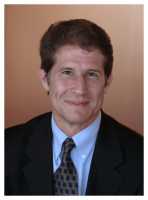
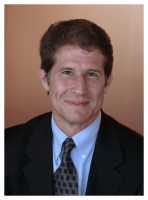 Dr. Jonas[/caption]
Wayne B. Jonas, MD
Clinical Professor of Family Medicine
Uniformed Services University and at
Georgetown University School of Medicine
MedicalResearch.com: What is the background for this study?
Response: The search for non-drug approaches to chronic pain is a major recommendation in many recent guidelines for both pain management and reduction in the use of opioids. Surgical and invasive procedures are non-drug approaches often used for pain conditions like back pain and arthritis, so good evidence is needed to determine the safety and efficacy of these procedures. Properly done randomized, placebo controlled trials are the best way (the gold standard) to get that evidence, so we did a thorough evaluation of such research, using standard systematic review and meta-analysis methods.
Dr. Jonas[/caption]
Wayne B. Jonas, MD
Clinical Professor of Family Medicine
Uniformed Services University and at
Georgetown University School of Medicine
MedicalResearch.com: What is the background for this study?
Response: The search for non-drug approaches to chronic pain is a major recommendation in many recent guidelines for both pain management and reduction in the use of opioids. Surgical and invasive procedures are non-drug approaches often used for pain conditions like back pain and arthritis, so good evidence is needed to determine the safety and efficacy of these procedures. Properly done randomized, placebo controlled trials are the best way (the gold standard) to get that evidence, so we did a thorough evaluation of such research, using standard systematic review and meta-analysis methods.