
29 May COVID-19: Venous Thrombosis Among Critically Ill Patients
Posted at 20:40h
in Author Interviews, Blood Clots, Clots - Coagulation, COVID -19 Coronavirus, JAMA
MedicalResearch.com Interview with:
[caption id="attachment_54374" align="alignleft" width="200"] Dr. Morichau-Beauchant[/caption]
Dr Tristan Morichau-Beauchant, MD.
Intensive Care Unit
Centre Cardiologique du Nord
Saint-Denis, France
MedicalResearch.com: What is the background for this study?
Response: During the spread of the COVID-19 epidemic in France, early reports on severe patients stated a highly increased inflammatory response associated with procoagulant changes in coagulation pathways and high D-Dimer levels. Preliminary reports from the intensive care community signaled frequent events of deep vein thrombosis (DVT) among this population. We decided to perform prospectively a venous ultrasonogram of the inferior limbs for all patients with severe COVID-19 pneumonia at admission in our ICU. All patients had acute respiratory distress syndrome according to the Berlin definition an required mechanical ventilation. Considering the high prevalence of venous thrombosis at admission we repeated a venous ultrasonography after 48 hours if the first exam was normal. All patients received standard anticoagulant prophylaxis since hospital admission.













 Dr. Brooks[/caption]
Dr. Kelly Brooks PhD
Research Officer
QIMR Berghofer Medical Research Institute
MedicalResearch.com: What is the background for this study?
[caption id="attachment_54258" align="alignleft" width="200"]
Dr. Brooks[/caption]
Dr. Kelly Brooks PhD
Research Officer
QIMR Berghofer Medical Research Institute
MedicalResearch.com: What is the background for this study?
[caption id="attachment_54258" align="alignleft" width="200"]






 Dr. Cavanaugh[/caption]
Alyson Cavanaugh, PT, PhD
Joint Doctoral Program in Epidemiology
University of California, San Diego/ San Diego State University
MedicalResearch.com: What is the background for this study?
Response: More than 700,000 total knee replacements are performed annually in the United States, but there is a racial disparity in outcomes after the surgery. If the knee replacement procedure is considered a highly effective treatment, why don't black women present with the same outcomes as whites?
Physical function when going into surgery has a large impact on the potential functional outcomes after surgery. Our hypothesis was that black women were presenting to surgery with poorer physical function, which was contributing to poorer functional outcomes after surgery.
Dr. Cavanaugh[/caption]
Alyson Cavanaugh, PT, PhD
Joint Doctoral Program in Epidemiology
University of California, San Diego/ San Diego State University
MedicalResearch.com: What is the background for this study?
Response: More than 700,000 total knee replacements are performed annually in the United States, but there is a racial disparity in outcomes after the surgery. If the knee replacement procedure is considered a highly effective treatment, why don't black women present with the same outcomes as whites?
Physical function when going into surgery has a large impact on the potential functional outcomes after surgery. Our hypothesis was that black women were presenting to surgery with poorer physical function, which was contributing to poorer functional outcomes after surgery.
 Dr. Van der Pol[/caption]
Barbara Van Der Pol, PhD, MPH
President, American STD Association
President-Elect, International Society fo STD Research
Professor of Medicine & Public Health
Director, STD Diagnostics Lab
Director, UAB STD Clinical Research Organization
University of Alabama at Birmingham
Birmingham, AL 35294
MedicalResearch.com: What is the background for this study?
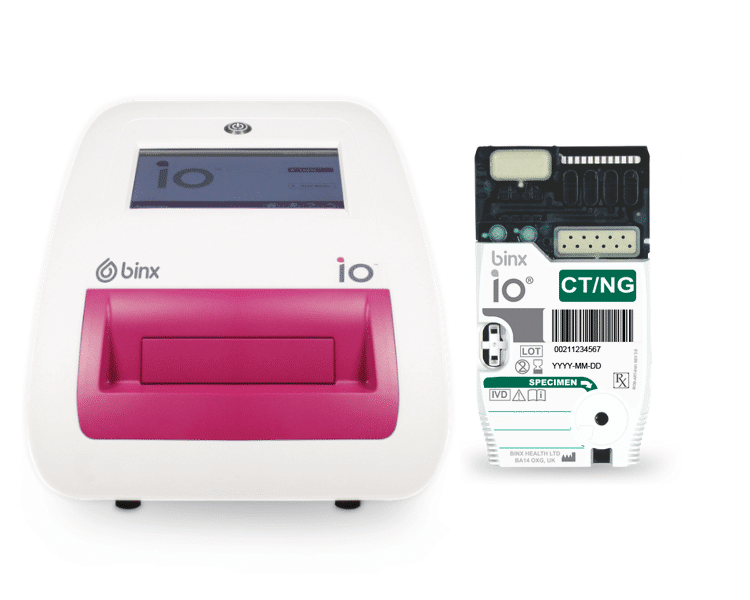
Response: For many decades, public health programs focused on control and prevention of sexually transmitted infections (STI) have relied on lab based tests that required a 1-day to 1-week wait for test results. Efforts to shorten the duration of infection lead to treating at the time of the clinic visit based on the association between certain clinical signs or symptoms and the likelihood of infection.
Unfortunately, more than ½ of infected persons do not have signs or symptoms so they receive no treatment until test results are available. Thus, a test that could be performed at the clinical site with a limited wait time would improve the accuracy of treatment and shorten the duration of infection. Such a strategy will hopefully reduce the number of return clinic visits, the possibility of transmission, and the potential for consequences of untreated infection such as infertility.
Dr. Van der Pol[/caption]
Barbara Van Der Pol, PhD, MPH
President, American STD Association
President-Elect, International Society fo STD Research
Professor of Medicine & Public Health
Director, STD Diagnostics Lab
Director, UAB STD Clinical Research Organization
University of Alabama at Birmingham
Birmingham, AL 35294
MedicalResearch.com: What is the background for this study?
Response: For many decades, public health programs focused on control and prevention of sexually transmitted infections (STI) have relied on lab based tests that required a 1-day to 1-week wait for test results. Efforts to shorten the duration of infection lead to treating at the time of the clinic visit based on the association between certain clinical signs or symptoms and the likelihood of infection.
Unfortunately, more than ½ of infected persons do not have signs or symptoms so they receive no treatment until test results are available. Thus, a test that could be performed at the clinical site with a limited wait time would improve the accuracy of treatment and shorten the duration of infection. Such a strategy will hopefully reduce the number of return clinic visits, the possibility of transmission, and the potential for consequences of untreated infection such as infertility. 

 Dr. Tandon[/caption]
Pooja S. Tandon, MD, MPH
Center for Child Health, Behavior and Development
Seattle Children's Research Institute
MedicalResearch.com: What is the background for this study?
Response: Cell phone use is common among middle and high school students, yet we do not have an understanding of school cell phone policies and practices in the U.S. We conducted a survey of public schools serving grades 6-12. The survey sent to over 1,100 school principals, representing a national sample of schools across the U.S., asked questions about the presence of a cell phone policy for students and staff and restrictions on phone use. Additional questions addressed consequences of policy violation, the use of cell phones for curricular activities and principals’ attitudes toward cell phone policies.
Dr. Tandon[/caption]
Pooja S. Tandon, MD, MPH
Center for Child Health, Behavior and Development
Seattle Children's Research Institute
MedicalResearch.com: What is the background for this study?
Response: Cell phone use is common among middle and high school students, yet we do not have an understanding of school cell phone policies and practices in the U.S. We conducted a survey of public schools serving grades 6-12. The survey sent to over 1,100 school principals, representing a national sample of schools across the U.S., asked questions about the presence of a cell phone policy for students and staff and restrictions on phone use. Additional questions addressed consequences of policy violation, the use of cell phones for curricular activities and principals’ attitudes toward cell phone policies. 





 Dr. Kaufman[/caption]
Gregory Kaufman, M.D.
Senior Vice President
Global Clinical and Medical Affairs
Specialty at Lupin
MedicalResearch.com: What is the background for this study? Would you briefly explain what is meant by trichomoniasis? How common is this infection?
Response: The Phase 3 trial evaluated the effectiveness and safety of a single oral dose of Solosec® (secnidazole) 2g oral granules for the treatment of trichomoniasis in adult women. Top-line results were positive and showed that Solosec was generally well-tolerated.
Trichomoniasis is the most common non-viral sexually transmitted infection (STI) in the U.S., and is caused by a protozoan parasite called Trichomonas vaginalis.
Dr. Kaufman[/caption]
Gregory Kaufman, M.D.
Senior Vice President
Global Clinical and Medical Affairs
Specialty at Lupin
MedicalResearch.com: What is the background for this study? Would you briefly explain what is meant by trichomoniasis? How common is this infection?
Response: The Phase 3 trial evaluated the effectiveness and safety of a single oral dose of Solosec® (secnidazole) 2g oral granules for the treatment of trichomoniasis in adult women. Top-line results were positive and showed that Solosec was generally well-tolerated.
Trichomoniasis is the most common non-viral sexually transmitted infection (STI) in the U.S., and is caused by a protozoan parasite called Trichomonas vaginalis.