Dr. Shah[/caption]
Dr. Riddhi Shah, PhD
AHA SFRN Postdoctoral Research Fellow
Division of Cardiology
Columbia University Medical Center
New York, New York
MedicalResearch.com: What is the background for this study?
Response: The Mediterranean Diet, characterized by higher intakes of plant foods including plant proteins, monounsaturated fat, fish, and lower consumption of animal products and saturated fat, has long been associated with reduced cardiovascular risk and greater longevity, but the molecular mechanisms underlying these associations have not been fully elucidated.
We evaluated associations of an Alternate Mediterranean Diet Score, reflective of adherence to this diet pattern and adapted for US populations, and its components with markers of endothelial inflammation directly measured in endothelial cells harvested from women, including oxidative stress, nuclear factor kappa B (NFκB), and endothelial nitric oxide synthase (eNOS) gene expression.
Dr. Kooraki[/caption]
Soheil Kooraki MSR MS, MD
on behalf of Dr. Ali Gholamrezanezhad MD and co-authors
Department of Radiological Sciences,
David Geffen School of Medicine, University of California at Los Angeles
Los Angeles, California
MedicalResearch.com: What is the background for this study? What are the main findings?
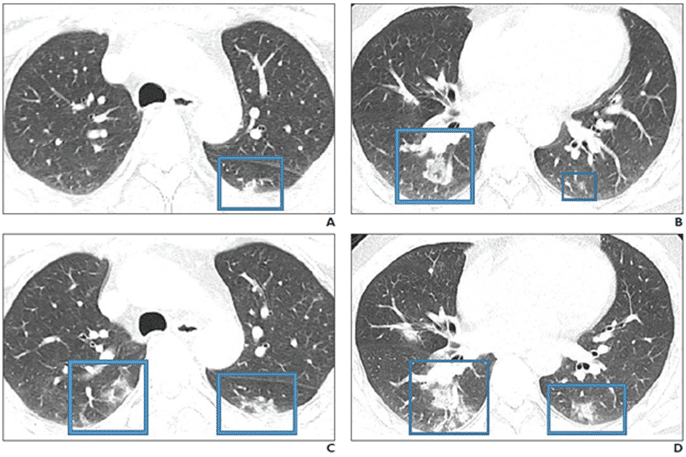
Response: COVID19 is a novel strain of the coronavirus family causing pneumonia. Two similar strains were discovered in 2003 and 2012 to cause the so-called SARS and MERS outbreaks, respectively. Radiologists need to be prepared for the escalating incidence of COVID-19. We reviewed the literature to extract the epidemiologic and imaging features of SARS and MERS in comparison with known imaging features of COVID-19 pneumonia to have a better understanding of the imaging features of the COVID19 pneumonia in acute and post-recovery stages.

Dr. BIsanzio[/caption]
Donal Bisanzio PhD DVM
Senior Epidemiologist
RTI International
MedicalResearch.com: What is the background for this study?
Response: The number of reported cases of Lyme disease has steadily increased since the year 2000. The Centers for Disease Control Prevention (CDC) estimates that nearly 30,000 cases are reported each year with close to 270,000 unreported cases. The high fraction of unreported cases is linked with the absence of specific disease symptoms, which can deter physicians from an initial diagnosis. Another critical factor causing underreporting is the low accuracy of methods used to test Lyme disease. These factors show us that some counties that are currently considered Lyme disease-free may only have this status due to underreporting.
RTI International, in collaboration with Columbia University, built a model to show factors affecting the diffusion of case reporting in the north-eastern U.S. from 2000 to 2017 and identify which counties may be experiencing underreporting. The model used publicly available data published each year by the CDC on cases reported at the county-level merged with information on vector distribution and data obtained by satellite surveys. The model included 855 counties located in 31 states in the West North Central, East North Central, New England, Mid-Atlantic, and Southern regions of the U.S. The final product was a map showing the probability of counties of the north-eastern U.S. to report Lyme disease cases.
Dr. Barry[/caption]
Dr. Michael Barry MD
Director of the Informed Medical Decisions Program
Health Decision Sciences Center at Massachusetts General Hospital
Physician at Massachusetts General Hospital
Professor of Medicine,Harvard Medical School
MedicalResearch.com: What is the background for this study? What are the main findings?
Response: Hepatitis C affects more people today than ever before, many of whom are younger. If left untreated, it can cause serious, lifelong health problems due to liver damage. The good news is that hepatitis C infection is both preventable and treatable, with recent evidence showing that new treatments for adults are highly effective. Knowing this, we’ve broadened our guidelines to recommend screening for hepatitis C in all adults between the ages of 18 and 79.
Dr. Becerra[/caption]
Dr. Adan Z. Becerra PhD
Senior Epidemiologist for the NIH
Social and Scientific Systems
Washington, District Of Columbia
MedicalResearch.com: What is the background for this study?
Response: Previous studies have shown that disparities in insurance coverage by immigration status exist in the United States such that immigrants compared to nonimmigrants are less likely to have insurance. However, most studies have been cross sectional with few studies investigating long term trajectories of insurance coverage over time. We addressed this gap in the literature by following a cohort of adults for 24 years from before until after reaching Medicare age-eligibility.
Dr. Wadhera[/caption]
Rishi K. Wadhera, MD
Harvard Medical Faculty Physicians
Cardiovasular Diseases
Beth Israel Deaconess Medical Center
MedicalResearch.com: What is the background for this study?
Response: In the U.S., income inequality has steadily increased over the last several decades. Given widening inequities, there has been significant concern about the health outcomes of older Americans who experience poverty, particularly because prior studies have shown a strong link between socioeconomic status and health.
In this study, we evaluated how health outcomes for low-income older adults who are dually enrolled in both Medicare and Medicaid have changed since the early 2000’s, and whether disparities have narrowed or widened over time compared with more affluent older adults who are solely enrolled in Medicare (non-dually enrolled).
Dr. Kurian[/caption]
Allison W. Kurian, M.D., M.Sc.
Associate Professor of Medicine (Oncology) and of Epidemiology and Population Health
Director, Women’s Clinical Cancer Genetics Program
Stanford University School of Medicine
Stanford, CA 94305-5405
MedicalResearch.com: What is the background for this study?
Response: Genetic testing is increasingly relevant for the care of cancer patients. However, little was known about the prevalence of inherited mutations in cancer susceptibility genes among the most common group of women with breast cancer: those diagnosed after menopause and without a strong family history of cancer.
Dr. Spotnitz[/caption]
Matthew E. Spotnitz, MD, MPH
Departments of Biomedical Informatics and Obstetrics and Gynecology
Columbia University Medical Center
Observational Health Data Sciences and Informatics, and Medical Informatics Services
New York-Presbyterian Hospital, New York, New York
MedicalResearch.com: What is the background for this study?
Response: Our take home message is that copper and hormonal IUDs may have different physiological effects on the female genitourinary system.
Dr. Aquino[/caption]
Marcella Aquino, M.D.
Hasbro Children's Hospital
Department of Pediatrics
Division of Allergy & Immunology
Associate Professor of Pediatrics
[caption id="attachment_53397" align="alignleft" width="107"]
Dr. Koinis-Mitchell[/caption]
Daphne Koinis-Mitchell PhD
Professor (Research) in the Departments of Psychiatry and
Human Behavior and Pediatrics
Warren Alpert Medical School of Brown University
Providence, Rhode Island 02903
MedicalResearch.com: What is the background for this study?
Response: Urban minority children with asthma are at increased risk for sleep loss and poorer sleep quality secondary to socio-contextual stressors (poverty, stressors of urban living) and the underlying challenges related to following possibly complex asthma treatment regimens. Atopic dermatitis (AD) is very frequently seen in children with asthma and increases the risk for poor quality sleep, for example difficulty falling asleep, awakenings during the night, difficulty awakening in the morning, and/or daytime sleepiness.
Prof. Keller[/caption]
Professor Dr. Andreas Keller
Stanford University School of Medicine Office
Department of Neurology and Neurological Sciences
Chair for Clinical Bioinformatics
Saarbrücken, Germany
MedicalResearch.com: What is the background for this study?
Response: Lung cancer is among the three most common cancers and the leading cause of cancer-related deaths worldwide. The overall low survival rate of patients with lung cancer calls for improved detection tools to enable better treatment options and improved patients’ outcomes. To detect lung tumors, liquid biopsy-based strategies are increasingly explored, that are biomarkers, which are identifiable in body fluids such as human blood. The clinical application of biomarkers is, however, largely hampered by the relatively small numbers of cases that have been analyzed in the majority of the preclinical studies including the studies on lung cancer.
Dr. Peltz[/caption]
Alon Peltz, MD MBA MHS
Department of Population Medicine
Harvard Pilgrim Health Care Institute
MedicalResearch.com: What is the background for this study?
Response: Thank you for taking an interest in our study. This study represented a collaboration between investigators from Harvard Medical School and Boston University School of Medicine.
SNAP is an important U.S. federal aid program that serves nearly 40 million persons annually with well-established health, nutrition, and financial benefits. Families can be eligible for the SNAP program under “federal” rules or “categorical eligibility” rules that extend SNAP support to otherwise ineligible families who receive benefits under certain social assistance programs, such as Temporary Assistance for Needy Families.
In July 2019, the U.S. Department of Agriculture proposed new SNAP policies that would limit qualifications via the categorical eligibility route. Although these new policies have not been finalized, it is estimated that 1 in 10 U.S. families currently participating in SNAP may lose their benefits.
We wanted to investigate the potential ramifications of these changes to help inform policymakers of the vulnerabilities of the families who receive SNAP benefits and may be at risk for disenrollment if the proposed policies are implemented.
Dr. Miller[/caption]
Dr. Steve Miller MD MBA
Chief Clinical Officer
Cigna
MedicalResearch.com: What is the background for this study?
Response: With diagnoses of coronavirus increasing, Cigna is committed to helping contain the virus, removing barriers to testing and treatment, and giving peace of mind to its clients and customers.
Arni S.R. Srinivasa Rao, PhD
Professor, Division of Health Economics and Modeling, DPHS
Director - Laboratory for Theory and Mathematical Modeling
Department of Medicine - Division of Infectious Diseases
Medical College of Georgia
Department of Mathematics, Augusta University
MedicalResearch.com: What is the background for this study? What are the main findings?
Response: This is a methodological study with a flowchart, algorithm, and theory to enable quicker identification of individuals at risk of coronavirus based on CDC's guidelines on COVID-19.
Dr. Langan[/caption]
Dr. Sinead Langan. FRCP MSc PhD
Professor of Clinical Epidemiology
Wellcome Senior Clinical Fellow
Faculty of Epidemiology and Population Health,
London School of Hygiene and Tropical Medicine
London, U.K.
MedicalResearch.com: What is the background for this study?
Response: Psychological stress is commonly cited as a risk factor for melanoma, but clinical evidence is limited. We wanted to test the hypothesis that acute severe stress increases the risk of melanoma and melanoma progression.
Robert F. Heary, M.D.
Dr. Fanaroll[/caption]
Alexander C. Fanaroff, MD, MHS
Assistant Professor of Medicine, Division of Cardiovascular Medicine
University of Pennsylvania
MedicalResearch.com: What is the background for this study?
Response: This is a secondary analysis of the ARTEMIS, a cluster randomized trial of copayment assistance for P2Y12 inhibitors in patients that had myocardial infarction. One of the primary endpoints of ARTEMIS was persistence with P2Y12 inhibitors: Did the patient continue to take a P2Y12 inhibitor over the entire 1 year following MI? In ARTEMIS, we captured persistence data in two ways, patient report and pharmacy fill records. What we did in this study was to look at the agreement between persistence as measured by these two methods.
Dr. Doubeni[/caption]
Chyke A. Doubeni, M.D., M.P.H.
Director, the Mayo Clinic Center Health Equity and Community Engagement Research
Department of Family Medicine
Mayo Clinic in Rochester, MN
MedicalResearch.com: What is the background for this study?
Response: Cognitive impairment is a serious public health problem that affects millions of Americans as they age; it can lead to frustrating challenges that impact their everyday lives, such as trouble remembering, learning new things, or organizing their thoughts.
Dr. Wouters[/caption]
Olivier Wouters, Ph.D.
Assistant Professor of Health Policy
Department of Health Policy (COW 2.06)
London School of Economics and Political Science
MedicalResearch.com: What is the background for this study? What are the main findings?
Response: Drug companies often point to high research and development costs as justification for the rising prices of new medicines.
Yet most prior analyses of research and development costs have been based on confidential data voluntarily supplied by drug companies to researchers with financial ties to the industry. Independent teams have not been able to verify those findings.
Dr. Hernandez[/caption]
Inmaculada Hernandez, PharmD, PhD
Assistant Professor of Pharmacy and Therapeutics
University of Pittsburgh School of Pharmacy
MedicalResearch.com: What is the background for this study?
Response: Prior research found that list prices of drugs more than doubled in the last decade. However, because prior research was based on list prices, it did not account for manufacturer discounts, which have also increased in the past few years.
We leveraged net pricing data from the investment firm SSR health to estimate increases in drug prices after accounting for discounts.
Dr. Spruance[/caption]
Lori Spruance PhD
Assistant Professor, Public Health
College of Life Sciences
Brigham Young University
MedicalResearch.com: What is the background for this study?
Response: I was interested in studying this phenomenon after I attended a research conference presentation where the presenter was describing results from a study where they found that children between ages 6-11 who were physically active drank more sugar-sweetened beverages than children in that age group who were not physically active. The presenter suggested that they believed this was due to youth sports and Gatorade consumption.
I was really intrigued by the fact that kids were getting physical activity, but had really high sugar-sweetened beverage intake. Prior to the study, I did some qualitative interviews with parents of children involved in youth sports. During these interviews, parents discussed the “snack culture” and the shame they sometimes feel being the “healthy parent”. I really wanted to investigate further what was happening.
Dr. Hooper[/caption]
Lee Hooper PhD, RD
Reader in Research Synthesis, Nutrition & Hydration
Norwich Medical School
Norwich, UK
MedicalResearch.com: What is the background for this study?
Response: Polyunsaturated fats are common healthy eating choices, and fish oil (long-chain omega-3 including EPA and DHA) and flaxseed (containing alpha-linolenic acid, ALA, a plant-based omega-3) supplements are commonly consumed. Worldwide cardiovascular disease was responsible for 37% of premature deaths due to non-communicable disease in 2012, and cancers were responsible for 27%. Small effects of omega-3 and polyunsaturated fats on cardiovascular diseases and cancers could have big effects on worldwide health.
Dr. Alcover[/caption]
Karl Alcover, PhD
Postdoctoral Research Associate
Behavioral Health Innovations
Washington State University
MedicalResearch.com: What is the background for this study?
Response: It has been a public health focus to prevent early exposure to drugs. Our paper shows that the average age of initiation of drug use among adolescents and young adults has been increasing from 2004 to 2017. We found that 12 of 18 drugs (including alcohol and tobacco products) had statistically increasing average ages of initiation. To our knowledge, no studies have documented these findings.
We think this is great news because delaying initiation of drugs prevents early exposure, which we know is associated with various long-term negative health outcomes. Also, these promising trends may serve as initial evidence that prevention strategies, especially those that focus on adolescents and young adults, are working.
Dr. Zasłona and Dr. ONeill[/caption]
Zbigniew Zasłona PhD
Luke A. J. O’Neill PhD
Professor (Chair of Biochemistry)
School of Biochemistry and Immunology
Trinity Biomedical Sciences Institute
Trinity College Dublin, Dublin, Ireland
MedicalResearch.com: What is the background for this study?
Response: Asthma is the most common disease in childhood and the most common respiratory condition in Ireland. It is a disease of environmental and genetic components. It is important to point out that although Ireland has very good air quality, asthma prevalence is very high (the second highest in Europe), and although asthma is not a single gene disease (such as cystic fibrosis) it is very important to study genetic variations in Irish population.
Therefore in this study we put emphasis on the genetic component of asthma, rather than environmental factors, especially given that asthma heritability has been estimated as high as 60%. Prevention of asthma by reducing exposure to common risk factors, such as air pollution, will not stop the asthma epidemic in Ireland, as inferior air quality is not an issue.
I think a take away message is that only about 28% of cars actually yielded....