MedicalResearch.com Interview with:
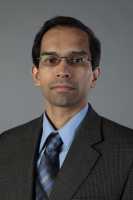
[caption id="attachment_51185" align="alignleft" width="200"]

Dr. Xygalatas[/caption]
Dimitris Xygalatas, PhD
Assistant Professor, Anthropology (Affiliate)
Institute for Collaboration on Health, Intervention, and Policy (InCHIP)
UCONN
MedicalResearch.com: What is the background for this study?
Response: Ever since I was a graduate student, I have been intrigued by the performance of ritual practices that involve pain, bodily harm, and other forms of suffering. These rituals carry obvious risks, including health risks, but despite these risks they are performed voluntarily by millions of people around the world. And even more intriguing is the fact that in various contexts such rituals are often culturally prescribed remedies for a variety of maladies. When I was doing my doctoral fieldwork, I studied the fire-walking rituals of the Anastenaria in Northern Greece, and I heard several people describing their experience of participation as one that involved both suffering and healing. And of course I am not the first anthropologist to document this link. But these observations seemed puzzling to me. Some years later, I met one of the co-authors of this paper, Sammyh Khan, who was asking very similar questions.
We got a grant to design this study, and put together a team of researchers that spent two months in the field collecting data for this project. We studied the Hindu kavadi ritual, which involves piercing the body with numerous needles, hooks, and skewers, and various other forms of suffering. Our study took place in the island of Mauritius, where I have been conducting research over the last decade, but this ceremony is performed by millions of Hindus around the world. We used portable health monitors as well as interviews and survey instruments to document the effects of this ritual of psycho-physiological health and wellbeing.




 Dr. Hongying (Daisy) Dai[/caption]
Hongying (Daisy) Dai, PhD
Associate Professor
Department of Biostatistics | College of Public Health
University of Nebraska Medical Center
MedicalResearch.com: What is the background for this study?
Response: Although marijuana is still classified as a Schedule I drug at the Federal level, as of June 2019, 33 states and the District of Columbia have legalized one or more forms of marijuana; 11 states and the District of Columbia have approved both medical and recreational uses. Public opinion on marijuana has changed dramatically over the last two decades and support for legalization has doubled since 2010. However, very little is known about the prevalence and patterns of marijuana use among adults with medical conditions.
This study analyzed the 2016 and 2017 Behavioral Risk Factor Surveillance System data to report the prevalence and patterns of marijuana use among adults with self-reported medical conditions.
Dr. Hongying (Daisy) Dai[/caption]
Hongying (Daisy) Dai, PhD
Associate Professor
Department of Biostatistics | College of Public Health
University of Nebraska Medical Center
MedicalResearch.com: What is the background for this study?
Response: Although marijuana is still classified as a Schedule I drug at the Federal level, as of June 2019, 33 states and the District of Columbia have legalized one or more forms of marijuana; 11 states and the District of Columbia have approved both medical and recreational uses. Public opinion on marijuana has changed dramatically over the last two decades and support for legalization has doubled since 2010. However, very little is known about the prevalence and patterns of marijuana use among adults with medical conditions.
This study analyzed the 2016 and 2017 Behavioral Risk Factor Surveillance System data to report the prevalence and patterns of marijuana use among adults with self-reported medical conditions.