MedicalResearch.com Interview with:
[caption id="attachment_54205" align="alignleft" width="149"]

Dr. Kamitaki[/caption]
Nolan Kamitaki PhD
Harvard Medical School
MedicalResearch.com: What is the background for this study?
Response: Previous work from our lab found that the strongest common genetic association to schizophrenia is driven in part by copy number variation of the
C4 genes. Given that lupus and Sjogren's syndrome, two autoimmune disorders, have association patterns that span the same region of the human genome, we wondered if part of the signal for these diseases may also arise from variation of
C4 given that both have hypocomplementemia as a characterizing trait.
The other main finding is that these associations appear to be sex-biased, where the protection from each additional copy of the
C4 gene was greater in men than in women. When we went back to the data used in the previous study from our lab association
C4 variation to schizophrenia, we found that the effect was stronger in men there as well. Although the expression of
C4 at the RNA level does not appear to differ between men and women, we saw that men had more C4 protein in both cerebrospinal fluid and blood plasma, suggesting that this may explain the greater genetic association in men.


 Dr. Cavanaugh[/caption]
Alyson Cavanaugh, PT, PhD
Joint Doctoral Program in Epidemiology
University of California, San Diego/ San Diego State University
MedicalResearch.com: What is the background for this study?
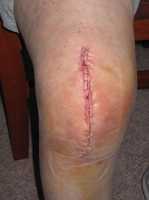
Response: More than 700,000 total knee replacements are performed annually in the United States, but there is a racial disparity in outcomes after the surgery. If the knee replacement procedure is considered a highly effective treatment, why don't black women present with the same outcomes as whites?
Physical function when going into surgery has a large impact on the potential functional outcomes after surgery. Our hypothesis was that black women were presenting to surgery with poorer physical function, which was contributing to poorer functional outcomes after surgery.
Dr. Cavanaugh[/caption]
Alyson Cavanaugh, PT, PhD
Joint Doctoral Program in Epidemiology
University of California, San Diego/ San Diego State University
MedicalResearch.com: What is the background for this study?
Response: More than 700,000 total knee replacements are performed annually in the United States, but there is a racial disparity in outcomes after the surgery. If the knee replacement procedure is considered a highly effective treatment, why don't black women present with the same outcomes as whites?
Physical function when going into surgery has a large impact on the potential functional outcomes after surgery. Our hypothesis was that black women were presenting to surgery with poorer physical function, which was contributing to poorer functional outcomes after surgery.
 Dr. Van der Pol[/caption]
Barbara Van Der Pol, PhD, MPH
President, American STD Association
President-Elect, International Society fo STD Research
Professor of Medicine & Public Health
Director, STD Diagnostics Lab
Director, UAB STD Clinical Research Organization
University of Alabama at Birmingham
Birmingham, AL 35294
MedicalResearch.com: What is the background for this study?
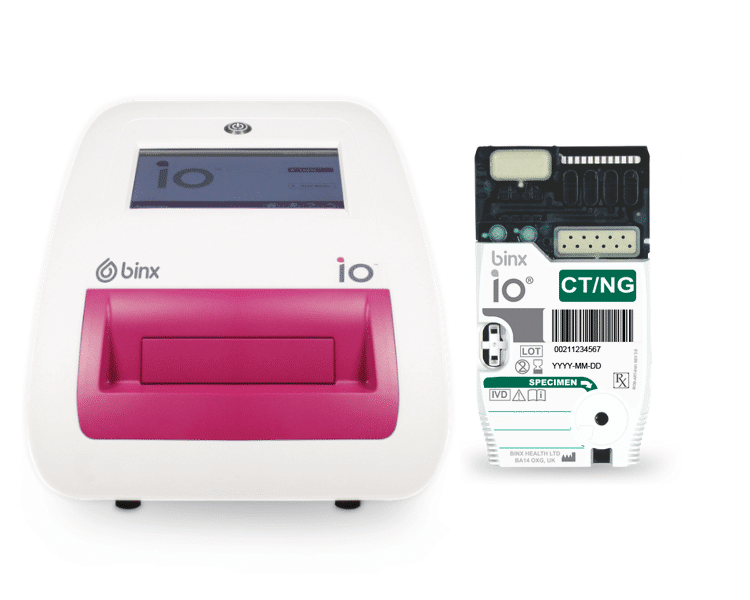
Response: For many decades, public health programs focused on control and prevention of sexually transmitted infections (STI) have relied on lab based tests that required a 1-day to 1-week wait for test results. Efforts to shorten the duration of infection lead to treating at the time of the clinic visit based on the association between certain clinical signs or symptoms and the likelihood of infection.
Unfortunately, more than ½ of infected persons do not have signs or symptoms so they receive no treatment until test results are available. Thus, a test that could be performed at the clinical site with a limited wait time would improve the accuracy of treatment and shorten the duration of infection. Such a strategy will hopefully reduce the number of return clinic visits, the possibility of transmission, and the potential for consequences of untreated infection such as infertility.
Dr. Van der Pol[/caption]
Barbara Van Der Pol, PhD, MPH
President, American STD Association
President-Elect, International Society fo STD Research
Professor of Medicine & Public Health
Director, STD Diagnostics Lab
Director, UAB STD Clinical Research Organization
University of Alabama at Birmingham
Birmingham, AL 35294
MedicalResearch.com: What is the background for this study?
Response: For many decades, public health programs focused on control and prevention of sexually transmitted infections (STI) have relied on lab based tests that required a 1-day to 1-week wait for test results. Efforts to shorten the duration of infection lead to treating at the time of the clinic visit based on the association between certain clinical signs or symptoms and the likelihood of infection.
Unfortunately, more than ½ of infected persons do not have signs or symptoms so they receive no treatment until test results are available. Thus, a test that could be performed at the clinical site with a limited wait time would improve the accuracy of treatment and shorten the duration of infection. Such a strategy will hopefully reduce the number of return clinic visits, the possibility of transmission, and the potential for consequences of untreated infection such as infertility. 


 Dr. Tandon[/caption]
Pooja S. Tandon, MD, MPH
Center for Child Health, Behavior and Development
Seattle Children's Research Institute
MedicalResearch.com: What is the background for this study?
Response: Cell phone use is common among middle and high school students, yet we do not have an understanding of school cell phone policies and practices in the U.S. We conducted a survey of public schools serving grades 6-12. The survey sent to over 1,100 school principals, representing a national sample of schools across the U.S., asked questions about the presence of a cell phone policy for students and staff and restrictions on phone use. Additional questions addressed consequences of policy violation, the use of cell phones for curricular activities and principals’ attitudes toward cell phone policies.
Dr. Tandon[/caption]
Pooja S. Tandon, MD, MPH
Center for Child Health, Behavior and Development
Seattle Children's Research Institute
MedicalResearch.com: What is the background for this study?
Response: Cell phone use is common among middle and high school students, yet we do not have an understanding of school cell phone policies and practices in the U.S. We conducted a survey of public schools serving grades 6-12. The survey sent to over 1,100 school principals, representing a national sample of schools across the U.S., asked questions about the presence of a cell phone policy for students and staff and restrictions on phone use. Additional questions addressed consequences of policy violation, the use of cell phones for curricular activities and principals’ attitudes toward cell phone policies. 






 Prof. Dagna[/caption]
Prof. Lorenzo Dagna MD FACP
Ospedale San Raffaele and
Vita-Salute San Raffaele University
Milan, Italy
MedicalResearch.com: What is the background for this study?
Response: Upon encountering pathogens, our immune system produces pro-inflammatory mediators, called cytokines. Cytokines activate cells from the immune system. In most people, production of cytokines is an appropriate and protective response to infection. However, some individuals develop excessive and detrimental inflammatory responses, which are even more harmful than the pathogen itself to the host organism.
We hypothesized that some patients with COVID-19 might develop excessive and detrimental inflammation, and that treatment with anti-inflammatory agents might be beneficial in this population.
Anakinra is an inhibitor of the pro-inflammatory molecule interleukin 1 (IL-1). It was originally marketed for the treatment of rheumatoid arthritis, but is now mostly used to treat a variety of pediatric inflammatory diseases.
Prof. Dagna[/caption]
Prof. Lorenzo Dagna MD FACP
Ospedale San Raffaele and
Vita-Salute San Raffaele University
Milan, Italy
MedicalResearch.com: What is the background for this study?
Response: Upon encountering pathogens, our immune system produces pro-inflammatory mediators, called cytokines. Cytokines activate cells from the immune system. In most people, production of cytokines is an appropriate and protective response to infection. However, some individuals develop excessive and detrimental inflammatory responses, which are even more harmful than the pathogen itself to the host organism.
We hypothesized that some patients with COVID-19 might develop excessive and detrimental inflammation, and that treatment with anti-inflammatory agents might be beneficial in this population.
Anakinra is an inhibitor of the pro-inflammatory molecule interleukin 1 (IL-1). It was originally marketed for the treatment of rheumatoid arthritis, but is now mostly used to treat a variety of pediatric inflammatory diseases. 








 Dr. Hollingsworth[/caption]
Alex Hollingsworth PhD
Assistant Professor
O'Neill School of Public and Environmental Affairs
Indiana University
MedicalResearch.com: What is the background for this study? What are the main findings?
Response: I've been working with Coady Wing and Ashley Bradford on a few different studies of the effects of recreational marijuana laws on drug and alcohol use.
Soon after EVALI became a major issue, the prevailing theory from the CDC and others was that EVALI was caused by the use of vitamin E acetate in illegal THC vaping products.
Our group read about this and we thought about some of the things that often happen in black markets for illegal drugs. For instance, during the alcohol prohibition era, bootleg alcohol producers often made and sold alcohol products that were not that safe to drink. In more recent years, there are cases where black market sellers of illegal drugs like heroin try to increase profit margins by adding other substances, which can be harmful.
We thought that maybe something like that could be happening in EVALI. Perhaps people in states where recreational marijuana is legal tended to purchase marijuana products from the legal market and the legal market was not selling any marijuana vaping products that included vitamin E acetate.
Dr. Hollingsworth[/caption]
Alex Hollingsworth PhD
Assistant Professor
O'Neill School of Public and Environmental Affairs
Indiana University
MedicalResearch.com: What is the background for this study? What are the main findings?
Response: I've been working with Coady Wing and Ashley Bradford on a few different studies of the effects of recreational marijuana laws on drug and alcohol use.
Soon after EVALI became a major issue, the prevailing theory from the CDC and others was that EVALI was caused by the use of vitamin E acetate in illegal THC vaping products.
Our group read about this and we thought about some of the things that often happen in black markets for illegal drugs. For instance, during the alcohol prohibition era, bootleg alcohol producers often made and sold alcohol products that were not that safe to drink. In more recent years, there are cases where black market sellers of illegal drugs like heroin try to increase profit margins by adding other substances, which can be harmful.
We thought that maybe something like that could be happening in EVALI. Perhaps people in states where recreational marijuana is legal tended to purchase marijuana products from the legal market and the legal market was not selling any marijuana vaping products that included vitamin E acetate. 
 Barbara Chaiyachati, MD PhD
SafePlace: The Center for Child Protection and Health
Division of General Pediatrics
The Children’s Hospital of Philadelphia,
Center for Pediatric Clinical Effectiveness
University of Pennsylvania
Philadelphia, Pennsylvania
MedicalResearch.com: What is the background for this study? What are the main findings?
Response: Children in foster care have high rates of medical problems including chronic diseases. There is less known about the differences in mortality for children in foster care.
Looking at national data from 2003 to 2016, this study finds that children (ages 1 to 18) in foster care have higher mortality compared to children in the general population and that the difference in mortality has increased over time.
Barbara Chaiyachati, MD PhD
SafePlace: The Center for Child Protection and Health
Division of General Pediatrics
The Children’s Hospital of Philadelphia,
Center for Pediatric Clinical Effectiveness
University of Pennsylvania
Philadelphia, Pennsylvania
MedicalResearch.com: What is the background for this study? What are the main findings?
Response: Children in foster care have high rates of medical problems including chronic diseases. There is less known about the differences in mortality for children in foster care.
Looking at national data from 2003 to 2016, this study finds that children (ages 1 to 18) in foster care have higher mortality compared to children in the general population and that the difference in mortality has increased over time. 

 Vasily Giannakeas[/caption]
Vasily Giannakeas, MPH
Epidemiologist/ Dedicated ICES Analyst
Women's College Hospital
Toronto, Ontario, Canada
MedicalResearch.com: What is the background for this study?
Response: As some health care systems approach collapse, a pressing need exists for tools modeling the capacity of acute and critical care systems during the COVID-19 pandemic.
We developed an online tool to estimate the maximum number of COVID-19 cases that could be managed per day within the catchment area served by a health care system, given acute and critical care resource availability.
The COVID-19 Acute and Intensive Care Resource Tool (CAIC-RT) is open access and available at
Vasily Giannakeas[/caption]
Vasily Giannakeas, MPH
Epidemiologist/ Dedicated ICES Analyst
Women's College Hospital
Toronto, Ontario, Canada
MedicalResearch.com: What is the background for this study?
Response: As some health care systems approach collapse, a pressing need exists for tools modeling the capacity of acute and critical care systems during the COVID-19 pandemic.
We developed an online tool to estimate the maximum number of COVID-19 cases that could be managed per day within the catchment area served by a health care system, given acute and critical care resource availability.
The COVID-19 Acute and Intensive Care Resource Tool (CAIC-RT) is open access and available at