MedicalResearch.com Interview with:
[caption id="attachment_55467" align="alignleft" width="176"]

Melanie Leung[/caption]
Melanie Leung, M.D.,C.M. candidate 2021
4
th-year medical student at McGill University
Division of Allergy and Clinical Immunology
Department of Pediatrics, Montreal Children’s Hospital
McGill University Health Centre, Montreal, QC, Canada
Dr. Moshe Ben-Shoshan, MD, MSc
Pediatric allergist and immunologist at the MCH (Montreal Children’s Hospital) and
Scientist at the Research Institute of the MUHC (McGill University Health Center)
MedicalResearch.com: What is the background for this study?
Response: In Canada, up to 9% of children have at least 1 food allergy. Anaphylaxis is the most severe and potential life-threatening manifestation of food allergy. Peanuts and tree nuts are the main culprits in food-induced anaphylaxis and account for most fatal cases in North America.
Public awareness about peanut and nut anaphylaxis can help to prevent and to act promptly, in the case of anaphylactic reaction. However, the best timing for public awareness campaigns remained unknown, as no previous study looked at the potential association between specific times of the year, such as public holidays, and the incidence of peanut and tree nut anaphylaxis. Our aim was to evaluate the risk of peanut and tree nut-induced anaphylaxis on Halloween, Christmas, Easter, Diwali, Chinese New Year, and Eid al-Adha.
Data was collected from 1390 pediatric cases of peanut or nut-induced anaphylaxis across Canada (Newfoundland & Labrador, Quebec, Ontario, and British Columbia), from 2011 to 2020. 62% of children were boys and the median age was 5.4 years. We compared the average daily number of cases during each holiday and compared it to the rest of the year (i.e.: non-holiday period).


 Dr. Bragg[/caption]
Marie Bragg, PhD
Assistant Professor, Department of Population Health on Health Choice
NYU College of Global Public Health
MedicalResearch.com: What is the background for this study?
Response: We know from previous research that children who see food advertisements eat significantly more calories than children who see non-food advertisements. Those studies led the World Health Organization and National Academy of Medicine to issue reports declaring that exposure to food advertising is a major driver of childhood obesity.
What we don’t know is how frequently unhealthy food and beverage brands are appearing in YouTube videos posted by Kid Influencers. Kid influences are children whose parents film videos of the child playing with toys, unwrapping presents, eating food, or engaging in other family-friendly activities. The parents then post the videos to YouTube for other children and parents to view for entertainment.
Dr. Bragg[/caption]
Marie Bragg, PhD
Assistant Professor, Department of Population Health on Health Choice
NYU College of Global Public Health
MedicalResearch.com: What is the background for this study?
Response: We know from previous research that children who see food advertisements eat significantly more calories than children who see non-food advertisements. Those studies led the World Health Organization and National Academy of Medicine to issue reports declaring that exposure to food advertising is a major driver of childhood obesity.
What we don’t know is how frequently unhealthy food and beverage brands are appearing in YouTube videos posted by Kid Influencers. Kid influences are children whose parents film videos of the child playing with toys, unwrapping presents, eating food, or engaging in other family-friendly activities. The parents then post the videos to YouTube for other children and parents to view for entertainment.



 Christos V. Chalitsios[/caption]
Christos Chalitsios B.Sc, M.Sc PhD student
Funded by British Medical Association (BMA)
School of Medicine
Division of Respiratory Medicine
University of Nottingham
City Hospital,Nottingham
MedicalResearch.com: What is the background for this study?
Response: Inhaled (ICS) and oral (OCS) corticosteroids play a crucial role in the control of airway inflammation in asthma. Given that the use of ICS in asthma is likely to increase with the recent change in GINA guidance recommending combined long-acting-β2-agonists with ICS at step 1 and the upward trend in prescribing of OCS, we sought to clarify the link between steroids, osteoporosis and FF in patients with asthma, stratifying the risk by dose, number of courses and type of steroids. The prevalence of patients receiving at least one bisphosphonate was also calculated.
Christos V. Chalitsios[/caption]
Christos Chalitsios B.Sc, M.Sc PhD student
Funded by British Medical Association (BMA)
School of Medicine
Division of Respiratory Medicine
University of Nottingham
City Hospital,Nottingham
MedicalResearch.com: What is the background for this study?
Response: Inhaled (ICS) and oral (OCS) corticosteroids play a crucial role in the control of airway inflammation in asthma. Given that the use of ICS in asthma is likely to increase with the recent change in GINA guidance recommending combined long-acting-β2-agonists with ICS at step 1 and the upward trend in prescribing of OCS, we sought to clarify the link between steroids, osteoporosis and FF in patients with asthma, stratifying the risk by dose, number of courses and type of steroids. The prevalence of patients receiving at least one bisphosphonate was also calculated.

 Dr. Etkin[/caption]
Amit Etkin, MD, PhD
Department of Psychiatry and Behavioral Sciences
Wu Tsai Neurosciences Institute, Stanford Universitu
Stanford, CA
MedicalResearch.com: What is the mission of Cohen Veterans Bioscience - CVB?
Dr. Etkin[/caption]
Amit Etkin, MD, PhD
Department of Psychiatry and Behavioral Sciences
Wu Tsai Neurosciences Institute, Stanford Universitu
Stanford, CA
MedicalResearch.com: What is the mission of Cohen Veterans Bioscience - CVB?
 Response: Cohen Veterans Bioscience (CVB) is a non-profit 501(c)(3) research biotech dedicated to fast-tracking the development of diagnostic tests and personalized therapeutics for the millions of Veterans and civilians who suffer the devastating effects of trauma-related and other brain disorders.
MedicalResearch.com: How can patients with PTSD or MDD benefit from this information?
Response: With the discovery of this new brain imaging biomarker, patients who suffer from PTSD or MDD may be guided towards the most effective treatment without waiting months and months to find a treatment that may work for them.
MedicalResearch.com: What is the background for this study?
Response: This study, which was supported with a grant from Cohen Veterans Bioscience, grants from the National Institute of Mental Health (NIMH and other supporters, derives from our work over the past few years which has pointed to the critical importance of understanding how patients with a variety of psychiatric disorders differ biologically. The shortcomings of our current diagnostic system have become very clear over the past 1-2 decades, but the availability of tools for transcending these limitations on the back of objective biological tests has not kept pace with the need for those tools.
In prior work, we have used a variety of methods, including different types of brain imaging, to identify brain signals that underpin key biological differences within and across traditional psychiatric diagnoses. We have also developed specialized AI tools for decoding complex patterns of brain activity in order to understand and quantify biological heterogeneity in individual patients. These developments have then, in turn, converged with the completion of a number of large brain imaging-coupled clinical trials, which have provided a scale of these types of data not previously available in the field.
Response: Cohen Veterans Bioscience (CVB) is a non-profit 501(c)(3) research biotech dedicated to fast-tracking the development of diagnostic tests and personalized therapeutics for the millions of Veterans and civilians who suffer the devastating effects of trauma-related and other brain disorders.
MedicalResearch.com: How can patients with PTSD or MDD benefit from this information?
Response: With the discovery of this new brain imaging biomarker, patients who suffer from PTSD or MDD may be guided towards the most effective treatment without waiting months and months to find a treatment that may work for them.
MedicalResearch.com: What is the background for this study?
Response: This study, which was supported with a grant from Cohen Veterans Bioscience, grants from the National Institute of Mental Health (NIMH and other supporters, derives from our work over the past few years which has pointed to the critical importance of understanding how patients with a variety of psychiatric disorders differ biologically. The shortcomings of our current diagnostic system have become very clear over the past 1-2 decades, but the availability of tools for transcending these limitations on the back of objective biological tests has not kept pace with the need for those tools.
In prior work, we have used a variety of methods, including different types of brain imaging, to identify brain signals that underpin key biological differences within and across traditional psychiatric diagnoses. We have also developed specialized AI tools for decoding complex patterns of brain activity in order to understand and quantify biological heterogeneity in individual patients. These developments have then, in turn, converged with the completion of a number of large brain imaging-coupled clinical trials, which have provided a scale of these types of data not previously available in the field.
 Dr. Leaf[/caption]
David E. Leaf, MD, MMSc, FASN
Assistant Professor of Medicine, Harvard Medical School
Director of Clinical and Translational Research in Acute Kidney Injury
Division of Renal Medicine, Brigham and Women's Hospital
MedicalResearch.com: What is the background for this study?
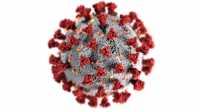
Response: The data for this study were derived from a multicenter cohort study of over 4,000 critically ill patients with COVID-19 admitted to ICUs at 68 sites across the US, as part of the Study of the Treatment and Outcomes in Critically Ill Patients with COVID-19 (STOP-COVID). STOP-COVID was initiated by David E. Leaf, MD, MMSc and Shruti Gupta, MD, MPH, from the Division of Renal Medicine at Brigham and Women’s Hospital and Harvard Medical School. It was initiated in March, 2020 as an unfunded, grassroots network, and now includes over 400 collaborators from 68 sites across the US.
Using this data, we used a ‘target trial emulation’ approach to examine whether early administration of the monoclonal antibody, tocilizumab, reduces mortality in critically ill patients with COVID-19. Target trial emulation, a novel method of analyzing observational data, is the idea of simulating a randomized control trial to reduce bias.
Dr. Leaf[/caption]
David E. Leaf, MD, MMSc, FASN
Assistant Professor of Medicine, Harvard Medical School
Director of Clinical and Translational Research in Acute Kidney Injury
Division of Renal Medicine, Brigham and Women's Hospital
MedicalResearch.com: What is the background for this study?
Response: The data for this study were derived from a multicenter cohort study of over 4,000 critically ill patients with COVID-19 admitted to ICUs at 68 sites across the US, as part of the Study of the Treatment and Outcomes in Critically Ill Patients with COVID-19 (STOP-COVID). STOP-COVID was initiated by David E. Leaf, MD, MMSc and Shruti Gupta, MD, MPH, from the Division of Renal Medicine at Brigham and Women’s Hospital and Harvard Medical School. It was initiated in March, 2020 as an unfunded, grassroots network, and now includes over 400 collaborators from 68 sites across the US.
Using this data, we used a ‘target trial emulation’ approach to examine whether early administration of the monoclonal antibody, tocilizumab, reduces mortality in critically ill patients with COVID-19. Target trial emulation, a novel method of analyzing observational data, is the idea of simulating a randomized control trial to reduce bias. 



 Dr. KantersA[/caption]
Response: A watershed moment for the fight against HIV was the antiretroviral treatment (ART) scale-up that made HIV treatments available around the world. While HIV activism led to its initiation, two key ingredients to the ART scale-up were the advent of a once-daily single-pill HIV treatment and the creation of the World Health Organization (WHO) clinical guidelines for treatment and prevention of HIV. The HIV treatment in question combines three drugs in a single pill and centers around a drug called efavirenz.
The WHO guidelines use a public health framework, which is to say that it uses a treatment algorithm that is both equitable and simple enough to allow some task-shifting to less specialized workers. As such, the guidelines suggest a single preferred treatment for people initiating HIV treatment. While resource rich countries can use a personalized medicine approach, many settings where HIV is endemic cannot.
In 2015, our review found strong evidence that a newer HIV drug, called dolutegravir, was better than efavirenz in respect to efficacy, tolerability and safety; however, there was not enough evidence to support its use in key populations, such as people with HIV-tuberculosis co-infections and pregnant women. For this and other reasons, the WHO could not recommend its use as the preferred treatment at initiation.
Since then, we have continued to dynamically assess the evidence to determine the best treatment to have as the preferred ART for first-time HIV treatment. This is the culmination of 6 years of work and its findings have helped the WHO change its recommended preferred first-line therapy from an efavirenz-based ART to a dolutegravir-based ART.
Dr. KantersA[/caption]
Response: A watershed moment for the fight against HIV was the antiretroviral treatment (ART) scale-up that made HIV treatments available around the world. While HIV activism led to its initiation, two key ingredients to the ART scale-up were the advent of a once-daily single-pill HIV treatment and the creation of the World Health Organization (WHO) clinical guidelines for treatment and prevention of HIV. The HIV treatment in question combines three drugs in a single pill and centers around a drug called efavirenz.
The WHO guidelines use a public health framework, which is to say that it uses a treatment algorithm that is both equitable and simple enough to allow some task-shifting to less specialized workers. As such, the guidelines suggest a single preferred treatment for people initiating HIV treatment. While resource rich countries can use a personalized medicine approach, many settings where HIV is endemic cannot.
In 2015, our review found strong evidence that a newer HIV drug, called dolutegravir, was better than efavirenz in respect to efficacy, tolerability and safety; however, there was not enough evidence to support its use in key populations, such as people with HIV-tuberculosis co-infections and pregnant women. For this and other reasons, the WHO could not recommend its use as the preferred treatment at initiation.
Since then, we have continued to dynamically assess the evidence to determine the best treatment to have as the preferred ART for first-time HIV treatment. This is the culmination of 6 years of work and its findings have helped the WHO change its recommended preferred first-line therapy from an efavirenz-based ART to a dolutegravir-based ART.  Dr. Profeta[/caption]
Paola Profeta, PhD
Professor of Public Economics, Department of Social and Political Sciences
Bocconi University
Director, Msc Politics and Policy Analysis, Bocconi University
Coordinator, Dondena Gender Initiative, Dondena Research Center
President, European Public Choice Society
MedicalResearch.com: What is the background for this study? What are the main findings?
Response: We interview more than 20000 men and women in 8 OECD countries in two periods during the lockdown.
Using two waves from 8 OECD countries, we find that women are more likely to perceive the pandemic as a very serious health problem, to agree with restraining measures and to comply with public health rules, such as using facemasks. This gender differences are less strong for married individuals and for individuals who have been directly exposed to COVID, for instance by knowing someone who was infected.
Dr. Profeta[/caption]
Paola Profeta, PhD
Professor of Public Economics, Department of Social and Political Sciences
Bocconi University
Director, Msc Politics and Policy Analysis, Bocconi University
Coordinator, Dondena Gender Initiative, Dondena Research Center
President, European Public Choice Society
MedicalResearch.com: What is the background for this study? What are the main findings?
Response: We interview more than 20000 men and women in 8 OECD countries in two periods during the lockdown.
Using two waves from 8 OECD countries, we find that women are more likely to perceive the pandemic as a very serious health problem, to agree with restraining measures and to comply with public health rules, such as using facemasks. This gender differences are less strong for married individuals and for individuals who have been directly exposed to COVID, for instance by knowing someone who was infected.




 Response: The background for this study involves the associations of household rules and parental awareness with youth tobacco use using data from the Population Assessment Tobacco and Health Study. Health concerns regarding non-cigarette tobacco products, specifically e-cigarettes, have been on the rise. We wanted to explore whether parents are up to date with the trends of popular tobacco products today and what role they may play in youth tobacco cessation and prevention.
The main findings of the study revealed that parents less often suspected their children’s tobacco use if their children reported using only e-cigarettes, and other non-cigarette tobacco products, when compared with cigarettes. Additionally, we found that youth who agreed with their parents that their home has strict rules for tobacco use were less likely to initiate of tobacco use compared to youth who had different understanding of the rules from their parents or youth from households with more permissive household rules.
Response: The background for this study involves the associations of household rules and parental awareness with youth tobacco use using data from the Population Assessment Tobacco and Health Study. Health concerns regarding non-cigarette tobacco products, specifically e-cigarettes, have been on the rise. We wanted to explore whether parents are up to date with the trends of popular tobacco products today and what role they may play in youth tobacco cessation and prevention.
The main findings of the study revealed that parents less often suspected their children’s tobacco use if their children reported using only e-cigarettes, and other non-cigarette tobacco products, when compared with cigarettes. Additionally, we found that youth who agreed with their parents that their home has strict rules for tobacco use were less likely to initiate of tobacco use compared to youth who had different understanding of the rules from their parents or youth from households with more permissive household rules. 
 Dr. Lanza[/caption]
Isabella Lanza, PhD
Associate Professor of Human Development
California State University, Long Beach
MedicalResearch.com: What is the background for this study? What are the main findings? Response: This is the first study to examine both nicotine vaping and cannabis vaping trajectories across adolescence and young adulthood, which allowed us to assess whether poly-substance vaping is common among adolescents and young adults. Poly-substance vaping (nicotine and cannabis vaping) was reported among a significant proportion of participants in the study (25% were identified as poly-substance vapers). For those that either escalated to frequent nicotine vaping use in adolescence or initiated frequent nicotine vaping use in young adulthood, the probability of engaging in cannabis vaping was very high (85%+).
Dr. Lanza[/caption]
Isabella Lanza, PhD
Associate Professor of Human Development
California State University, Long Beach
MedicalResearch.com: What is the background for this study? What are the main findings? Response: This is the first study to examine both nicotine vaping and cannabis vaping trajectories across adolescence and young adulthood, which allowed us to assess whether poly-substance vaping is common among adolescents and young adults. Poly-substance vaping (nicotine and cannabis vaping) was reported among a significant proportion of participants in the study (25% were identified as poly-substance vapers). For those that either escalated to frequent nicotine vaping use in adolescence or initiated frequent nicotine vaping use in young adulthood, the probability of engaging in cannabis vaping was very high (85%+).


 Dr. Garg[/caption]
Dr. Madhur Garg, MD MBA
Clinical director, Radiation Oncology
Montefiore Health System and Professor
Departments of Otorhinolaryngology - Head & Neck Surgery - and Urology
Albert Einstein College of Medicine
MedicalResearch.com: What is the background for this study?
Response: The Bronx was hit particularly hard with Covid-19 - making up one of the highest per capita cases and deaths in the country. Montefiore Health System and Albert Einstein College of Medicine, care for a large population of ethnic minorities (non-Hispanic Black and Hispanic individuals make up 65% of our patient population).
Dr. Garg[/caption]
Dr. Madhur Garg, MD MBA
Clinical director, Radiation Oncology
Montefiore Health System and Professor
Departments of Otorhinolaryngology - Head & Neck Surgery - and Urology
Albert Einstein College of Medicine
MedicalResearch.com: What is the background for this study?
Response: The Bronx was hit particularly hard with Covid-19 - making up one of the highest per capita cases and deaths in the country. Montefiore Health System and Albert Einstein College of Medicine, care for a large population of ethnic minorities (non-Hispanic Black and Hispanic individuals make up 65% of our patient population).


 Dr. Pollard[/caption]
Michael S. Pollard, Ph.D.
Professor, Pardee RAND Graduate School
Senior Sociologist
RAND Corporation
Santa Monica, CA 90407-2138
MedicalResearch.com: What is the background for this study? What are the main findings?
Response: There are ample anecdotal jokes and stories about increased alcohol use during COVID-19 and stay-at-home orders. Our study provides robust longitudinal evidence that people drank more frequently, and for women in particular, more heavily, and with more negative consequences, during the initial stages of COVID-19 compared to their own behaviors from a year earlier (May/June 2020 compared to May/June 2019). Women’s alcohol consumption was most significantly changed, with a 17% increase in number of days drinking, and a 41% increase in days of binge drinking (when they had four or more drinks in a couple of hours). This means that, nationally, one in five women drank heavily one more day a month than the same time in 2019, on average. Women also reported a 39% increase in alcohol-related problems, such as “I took foolish risks” or “I failed to do what was expected of me” because of drinking alcohol.
Dr. Pollard[/caption]
Michael S. Pollard, Ph.D.
Professor, Pardee RAND Graduate School
Senior Sociologist
RAND Corporation
Santa Monica, CA 90407-2138
MedicalResearch.com: What is the background for this study? What are the main findings?
Response: There are ample anecdotal jokes and stories about increased alcohol use during COVID-19 and stay-at-home orders. Our study provides robust longitudinal evidence that people drank more frequently, and for women in particular, more heavily, and with more negative consequences, during the initial stages of COVID-19 compared to their own behaviors from a year earlier (May/June 2020 compared to May/June 2019). Women’s alcohol consumption was most significantly changed, with a 17% increase in number of days drinking, and a 41% increase in days of binge drinking (when they had four or more drinks in a couple of hours). This means that, nationally, one in five women drank heavily one more day a month than the same time in 2019, on average. Women also reported a 39% increase in alcohol-related problems, such as “I took foolish risks” or “I failed to do what was expected of me” because of drinking alcohol.