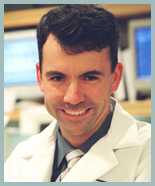
24 Jun How is Patient Safety Affected When Residents Stop Working 24-Hour Shifts?
Posted at 21:59h
in Author Interviews, Brigham & Women's - Harvard, Critical Care - Intensive Care - ICUs, NEJM, Pediatrics
MedicalResearch.com Interview with:
[caption id="attachment_54694" align="alignleft" width="155"] Dr. Landrigan[/caption]
Christopher P. Landrigan, MD, MPH
Chief, Division of General Pediatrics, Boston Children’s Hospital
Director, Sleep and Patient Safety Program, Brigham and Women's Hospital
William Berenberg Professor of Pediatrics, Harvard Medical School
Boston Children's Hospital
Boston, MA 02115
MedicalResearch.com: What is the background for this study?
Response: An enormous body of literature demonstrates that sleep deprivation adversely affects the safety and performance of resident physicians, as well as individuals across other occupations. Resident physicians are at greatly increased risk of suffering motor vehicle crashes and needlestick injuries, and are at substantially increased risk of making medical errors, when working on traditional schedules that include 24-hour shifts.
We previously conducted a randomized controlled trial in two intensive care units that found resident physicians made 36% fewer medical errors when a scheduling intervention was introduced that eliminated 24-hour shifts but held resident workload constant.
The current study, ROSTERS, was a 6-center study that again introduced a scheduling intervention to eliminate 24-hour shifts in intensive care units. Due to varying resources and unit organization across sites, each hospital developed its own staffing plan to accommodate the intervention.




 Response: It is well known that marijuana usage impairs driving ability, yet the early studies of the effects of recreational marijuana legalization on traffic fatalities were inconclusive.
MedicalResearch.com: What are the main findings?
Response: By analyzing data over a longer time period, we found that the legalization of recreational marijuana increased traffic deaths in the first four states to legalize. Traffic fatalities increased about 20% in those states. If we apply these numbers to the nation as a whole, nationwide legalization would be associated with about 7,000 excess traffic fatalities each year.
Response: It is well known that marijuana usage impairs driving ability, yet the early studies of the effects of recreational marijuana legalization on traffic fatalities were inconclusive.
MedicalResearch.com: What are the main findings?
Response: By analyzing data over a longer time period, we found that the legalization of recreational marijuana increased traffic deaths in the first four states to legalize. Traffic fatalities increased about 20% in those states. If we apply these numbers to the nation as a whole, nationwide legalization would be associated with about 7,000 excess traffic fatalities each year.

 Dr. Desai[/caption]
Nimesh D. Desai, MD, PhD
Director, Thoracic Aortic Surgery Research Program
Associate Professor of Surgery
Hospital of the University of Pennsylvania
MedicalResearch.com: What is the background for this study?
Dr. Chase Brown: Opioid use in the United States is a public health emergency. We know that opioids prescribed after general surgery operations to patients who never received them within the year prior to their surgery are at increased risk for continuing to take opioids months later. However, this has not been studied in patients undergoing cardiac surgery, who often times have more severe post-operative pain.
Our goal in this study was to determine how many patients after cardiac surgery and are opioid naive are continuing to take opioids within 90-180 days after their surgery.
Dr. Desai[/caption]
Nimesh D. Desai, MD, PhD
Director, Thoracic Aortic Surgery Research Program
Associate Professor of Surgery
Hospital of the University of Pennsylvania
MedicalResearch.com: What is the background for this study?
Dr. Chase Brown: Opioid use in the United States is a public health emergency. We know that opioids prescribed after general surgery operations to patients who never received them within the year prior to their surgery are at increased risk for continuing to take opioids months later. However, this has not been studied in patients undergoing cardiac surgery, who often times have more severe post-operative pain.
Our goal in this study was to determine how many patients after cardiac surgery and are opioid naive are continuing to take opioids within 90-180 days after their surgery. 



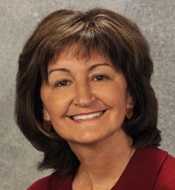 Dr. Kempe[/caption]
Allison Kempe, MD, MPH
Ergen Family Endowed Chair in Pediatric Outcomes Research
Professor of Pediatrics, University of Colorado School of Medicine
Director of ACCORDS (Adult and Child Consortium for Health Outcomes Research and Delivery Science)
University of Colorado School of Medicine | Children’s Hospital Colorado
MedicalResearch.com: What is the background for this study?
Response: In 2019 the WHO designated vaccine hesitancy as one of the ten leading threats to global health. Although studies have assessed parental vaccine hesitancy in different localities and estimated vaccine refusals nationally, there is little recent US national data on the prevalence of hesitancy about routine childhood vaccines and national hesitancy rates for influenza vaccine have never been assessed. We used a hesitancy scale developed by the WHO to estimate levels of parental hesitancy for both routine childhood and childhood influenza vaccination
Dr. Kempe[/caption]
Allison Kempe, MD, MPH
Ergen Family Endowed Chair in Pediatric Outcomes Research
Professor of Pediatrics, University of Colorado School of Medicine
Director of ACCORDS (Adult and Child Consortium for Health Outcomes Research and Delivery Science)
University of Colorado School of Medicine | Children’s Hospital Colorado
MedicalResearch.com: What is the background for this study?
Response: In 2019 the WHO designated vaccine hesitancy as one of the ten leading threats to global health. Although studies have assessed parental vaccine hesitancy in different localities and estimated vaccine refusals nationally, there is little recent US national data on the prevalence of hesitancy about routine childhood vaccines and national hesitancy rates for influenza vaccine have never been assessed. We used a hesitancy scale developed by the WHO to estimate levels of parental hesitancy for both routine childhood and childhood influenza vaccination 


 Dr. Travers[/caption]
Colm Travers, M.D., MSPH
Assistant Professor
Department of Pediatrics
University of Alabama at Birmingham
MedicalResearch.com: What is the background for this study?
Response: It is known that black mothers are much more likely to deliver preterm and low birth weight infants. The purpose of this study was to determine whether racial/ethnic disparities in care practices and outcomes were decreasing or increasing among extremely preterm infants.
These are infants born from 22 to 27 weeks of gestation who have a high risk of death and major illnesses.
Dr. Travers[/caption]
Colm Travers, M.D., MSPH
Assistant Professor
Department of Pediatrics
University of Alabama at Birmingham
MedicalResearch.com: What is the background for this study?
Response: It is known that black mothers are much more likely to deliver preterm and low birth weight infants. The purpose of this study was to determine whether racial/ethnic disparities in care practices and outcomes were decreasing or increasing among extremely preterm infants.
These are infants born from 22 to 27 weeks of gestation who have a high risk of death and major illnesses. 


 Ning Ding[/caption]
Ning Ding MPH, PhD candidate
[caption id="attachment_54465" align="alignleft" width="141"]
Ning Ding[/caption]
Ning Ding MPH, PhD candidate
[caption id="attachment_54465" align="alignleft" width="141"]

 Dr. Schünemann[/caption]
Holger Schünemann, MD, PhD, FRCPC
Professor of Clinical Epidemiology and of Medicine
Co-Director, WHO Collaborating Centre for Infectious Diseases,
Research Methods and Recommendations
Director, Cochrane Canada and McMaster GRADE Centre
Department of Health Research Methods, Evidence, and Impact
Canada
MedicalResearch.com: What is the background for this study?
Response: Many countries and regions have issued conflicting advice about physical distancing to reduce transmission of COVID-19, based on limited information. In addition, the questions of whether masks and eye coverings might reduce transmission of COVID-19 in the general population, and what the optimum use of masks in healthcare settings is, have been debated during the pandemic.
Dr. Schünemann[/caption]
Holger Schünemann, MD, PhD, FRCPC
Professor of Clinical Epidemiology and of Medicine
Co-Director, WHO Collaborating Centre for Infectious Diseases,
Research Methods and Recommendations
Director, Cochrane Canada and McMaster GRADE Centre
Department of Health Research Methods, Evidence, and Impact
Canada
MedicalResearch.com: What is the background for this study?
Response: Many countries and regions have issued conflicting advice about physical distancing to reduce transmission of COVID-19, based on limited information. In addition, the questions of whether masks and eye coverings might reduce transmission of COVID-19 in the general population, and what the optimum use of masks in healthcare settings is, have been debated during the pandemic.


 Dr. Kao-Ping Chua[/caption]
Kao-Ping Chua, M.D., Ph.D.
Assistant Professor, Pediatrics, Medical School
Susan B. Meister Child Health Evaluation and Research Center
University of Michigan
MedicalResearch.com: What is the background for this study?
Response: Due to high and rising prices, insulin has become increasingly unaffordable for patients with type 1 diabetes who must pay out-of-pocket for this life-saving medication. Over the past 5 months, many states and insurers have taken steps to cap insulin out-of-pocket spending. For example, Cigna imposed a $25 monthly cap earlier this year. This week, the Centers for Medicare and Medicare Services announced a $35 monthly cap for many Medicare Part D beneficiaries.
Dr. Kao-Ping Chua[/caption]
Kao-Ping Chua, M.D., Ph.D.
Assistant Professor, Pediatrics, Medical School
Susan B. Meister Child Health Evaluation and Research Center
University of Michigan
MedicalResearch.com: What is the background for this study?
Response: Due to high and rising prices, insulin has become increasingly unaffordable for patients with type 1 diabetes who must pay out-of-pocket for this life-saving medication. Over the past 5 months, many states and insurers have taken steps to cap insulin out-of-pocket spending. For example, Cigna imposed a $25 monthly cap earlier this year. This week, the Centers for Medicare and Medicare Services announced a $35 monthly cap for many Medicare Part D beneficiaries.





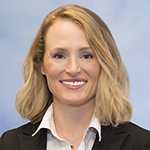
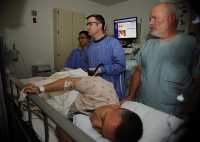



 Dr. Brooks[/caption]
Dr. Kelly Brooks PhD
Research Officer
QIMR Berghofer Medical Research Institute
MedicalResearch.com: What is the background for this study?
[caption id="attachment_54258" align="alignleft" width="200"]
Dr. Brooks[/caption]
Dr. Kelly Brooks PhD
Research Officer
QIMR Berghofer Medical Research Institute
MedicalResearch.com: What is the background for this study?
[caption id="attachment_54258" align="alignleft" width="200"]