MedicalResearch.com Interview with:
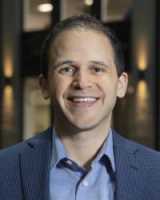
[caption id="attachment_53477" align="alignleft" width="200"]

Dr. Wallach[/caption]
Joshua D. Wallach, MS, PhD
Assistant Professor of Epidemiology (Environmental Health Sciences)
Yale School of Public Health
New Haven, CT
MedicalResearch.com: What is the background for this study?
Response: Over the past few years, there has been growing interest in the potential health benefits of cannabidiol (CBD), a chemical compound in cannabis. Although only one CBD-derived prescription drug has been approved by the US Food and Drug Administration (FDA) for the treatment of epilepsy, I recently started seeing products containing CBD advertised and sold across the US (e.g. CBD in foods, beverages, dietary supplements, and cosmetics). I noticed that many of these products were being marketed with unproven claims to prevent, cure, and treat various conditions, and became interested in learning more about the research supporting the use of CBD, the potential for misleading claims, and impact that the CBD-industry may be having on research that is being generated and disseminated to the public.
Research funding sources and other author conflicts of interests (e.g. consulting fees, honoraria, travel expenses) can influence the way that research is designed, conducted, and reported. Previous studies have consistently demonstrated associations between authors' conflicts of interest and proindustry conclusions in clinical research.
Given the growing number of companies invested in CBD's commercial success, we decided to analyze the disclosed funding sources, conflicts of interest statements, author employment details, and CBD-related conclusions in a large sample of published articles on the characteristics, use, and therapeutic effects of cannabidiol.




![MedicalResearch.com Interview with: Melissa Bondy, PhD Chair, Department of Epidemiology and Population Health Stanford University MedicalResearch.com: What is the background for this study? Response: Faculty researchers in Stanford’s Department of Epidemiology & Population Health and collaborators from Baylor College of Medicine and Stanford’s Department of Dermatology developed an online survey aimed at rapidly assessing public concerns about the COVID-19 crisis. This survey, which was posted on 3 social media platforms (Twitter, Facebook, and Nextdoor) on March 14, 2020, collected invaluable data about COVID-19, including symptoms, concerns, and individual actions taken by respondents. Twitter and Facebook posts were sharable to facilitate snowball sampling. The survey was comprised of 21 (multiple-choice, single-choice, numeric, and open-ended) questions, which were designed to collect data concerning respondent demographics and recent cold and flu-like illnesses (if any), as well as information about participants’ concerns and any lifestyle changes that occurred as a result of the COVID-19 crisis. All questions were optional, so response rates were variable. MedicalResearch.com: What are the main findings? Response: 9009 surveys were completed within a 48 hour period, between March 14 and 16. A majority were very or extremely concerns about COVID-19, though concern varied by age. Most respondents reported making lifestyle changes in response to COVID-19. The most common changes were more hand washing, avoiding social gatherings, and stockpiling food and supplies. About half of respondents were self-isolating most of the time before shelter-in-place orders, and leaving the house only to buy food and essentials. Respondents who were not self-isolating all of the time, before the shelter-in-place order, most commonly listed not being able to afford missing work as the reason. The top concerns reported by survey participants were getting sick because of COVID-19 and not being able to get medical care. The most common difficulties reported were obtaining hand sanitizer, food, and childcare. MedicalResearch.com: What should readers take away from your report? Response: This convenience sample survey distributed in mid-March 2020 across 3 social media platforms reflect respondents’ serious concerns about COVID-19. They were preparing for the crisis by washing hands, isolating at home, and practicing social distancing to the best of their abilities. Levels of concern about COVID-19 varied by age groups. Participants expressed the most common difficulties included getting sanitizer or food, arranging childcare, and lost wages or reduced working hours. MedicalResearch.com: What recommendations do you have for future research as a result of this work? Response: Groups who are generally known to be underrepresented in social media, particularly men and older individuals, were underrepresented among survey participants. Few respondents reported concerns about their employment, but the study did not collect information about participants’ socioeconomic status (and was likely high). Our future work will expand geographic representation among survey respondents, with greater focus on longitudinal trends on the health, financial, and social concerns in the United States regarding the COVID-19 pandemic. No disclosures or conflicts of interest. Citation: Nelson LM, Simard JF, Oluyomi A, et al. US Public Concerns About the COVID-19 Pandemic From Results of a Survey Given via Social Media. JAMA Intern Med. Published online April 07, 2020. doi:10.1001/jamainternmed.2020.1369 https://jamanetwork.com/journals/jamainternalmedicine/fullarticle/2764368?guestAccessKey=cd7f419d-b177-44d2-86b2-c3e0254b3152&utm_source=For_The_Media&utm_medium=referral&utm_campaign=ftm_links&utm_content=tfl&utm_term=040720 [subscribe] Last Modified: [last-modified] The information on MedicalResearch.com is provided for educational purposes only, and is in no way intended to diagnose, cure, or treat any medical or other condition. Always seek the advice of your physician or other qualified health and ask your doctor any questions you may have regarding a medical condition. In addition to all other limitations and disclaimers in this agreement, service provider and its third party providers disclaim any liability or loss in connection with the content provided on this website.](https://medicalresearch.com/wp-content/uploads/2020/04/Melissa-Bondy.jpg)







 Dr. Bin Cao[/caption]
Bin Cao, Yeming Wang, Guohui Fan,
Lianghan Shang, Jiuyang Xu, DingyuZhang, Chen Wang
on behalf of LOTUS-China Study Group
China-Japan Friendship Hospital; Wuhan Jintinyan Hospital;
Institute of Respiratory Medicine, Chinese Academy of Medical Science
MedicalResearch.com: What is the background for this study?
Response: In the past two months, the outbreak of Coronavirus Disease 2019 (COVID-19) has been spreading rapidly across the world. Science and technology is the most powerful weapon for human to fight against diseases, especially in such a pandemic setting. Seeking for effective antiviral medication is the most critical and urgent among the many scientific tasks in the pandemic.
At the most critical moment in the fight against COVID-19, Chinese clinical scientists have stepped forward under extremely difficult research conditions to carry out clinical trials in antiviral treatment including lopinavir–ritonavir and remdesivir, in a swift, decisive and effective manner. These trials have attracted worldwide attention.
Recently, the Lopinavir–ritonavir Trial for suppression of SARS-CoV-2 in China (LOTUS-China) has been completed, which, with great clinical significance, can provide strong evidence for the treatment of COVID-19 both in China and around the world.
Dr. Bin Cao[/caption]
Bin Cao, Yeming Wang, Guohui Fan,
Lianghan Shang, Jiuyang Xu, DingyuZhang, Chen Wang
on behalf of LOTUS-China Study Group
China-Japan Friendship Hospital; Wuhan Jintinyan Hospital;
Institute of Respiratory Medicine, Chinese Academy of Medical Science
MedicalResearch.com: What is the background for this study?
Response: In the past two months, the outbreak of Coronavirus Disease 2019 (COVID-19) has been spreading rapidly across the world. Science and technology is the most powerful weapon for human to fight against diseases, especially in such a pandemic setting. Seeking for effective antiviral medication is the most critical and urgent among the many scientific tasks in the pandemic.
At the most critical moment in the fight against COVID-19, Chinese clinical scientists have stepped forward under extremely difficult research conditions to carry out clinical trials in antiviral treatment including lopinavir–ritonavir and remdesivir, in a swift, decisive and effective manner. These trials have attracted worldwide attention.
Recently, the Lopinavir–ritonavir Trial for suppression of SARS-CoV-2 in China (LOTUS-China) has been completed, which, with great clinical significance, can provide strong evidence for the treatment of COVID-19 both in China and around the world.



 Dr. Jeffrey Smith[/caption]
Jeffrey R. Smith, MD PhD
Department of Medicine, Division of Genetic Medicine
Vanderbilt-Ingram Cancer Center, and Vanderbilt Genetics Institute
Vanderbilt University Medical Center
Medical Research Service
Tennessee Valley Healthcare System, Veterans Administration
Nashville, TN
MedicalResearch.com: What is the background for this study?
Response: Roughly 20% of men with prostate cancer have a family history of the disease, and 5% meet criteria for hereditary prostate cancer. Although prostate cancer has the greatest heritability of all common cancers (twice that of breast cancer), extensive heterogeneity of its inherited causes has presented a considerable obstacle for traditional pedigree-based genetic investigative approaches. Inherited causes across, as well as within families are diverse.
This study introduced a new familial case-control study design that uses extent of family history as a proxy for genetic burden. It compared a large number of men with prostate cancer, each from a separate family with a strong history of the disease, to screened men with no personal or family history. The study comprehensively deconstructs how the 8q24 chromosomal region impacts risk of hereditary prostate cancer, introducing several new analytical approaches. The locus had been known to alter risk of prostate, breast, colon, ovarian, and numerous additional cancers.
Dr. Jeffrey Smith[/caption]
Jeffrey R. Smith, MD PhD
Department of Medicine, Division of Genetic Medicine
Vanderbilt-Ingram Cancer Center, and Vanderbilt Genetics Institute
Vanderbilt University Medical Center
Medical Research Service
Tennessee Valley Healthcare System, Veterans Administration
Nashville, TN
MedicalResearch.com: What is the background for this study?
Response: Roughly 20% of men with prostate cancer have a family history of the disease, and 5% meet criteria for hereditary prostate cancer. Although prostate cancer has the greatest heritability of all common cancers (twice that of breast cancer), extensive heterogeneity of its inherited causes has presented a considerable obstacle for traditional pedigree-based genetic investigative approaches. Inherited causes across, as well as within families are diverse.
This study introduced a new familial case-control study design that uses extent of family history as a proxy for genetic burden. It compared a large number of men with prostate cancer, each from a separate family with a strong history of the disease, to screened men with no personal or family history. The study comprehensively deconstructs how the 8q24 chromosomal region impacts risk of hereditary prostate cancer, introducing several new analytical approaches. The locus had been known to alter risk of prostate, breast, colon, ovarian, and numerous additional cancers.