MedicalResearch.com Interview with:
[caption id="attachment_55070" align="alignleft" width="132"]

Dr. Davidson[/caption]
Karina W. Davidson, PhD, MA
Senior Vice President of Research, Northwell Health
Director, Center for Personalized Health, Feinstein Institutes for Medical Research
Dean of Academic Affairs & Professor, Feinstein Institutes for Medical Research
Donald and Barbara Zucker Professor in Health Outcomes, Department of Medicine, Donald and Barbara Zucker School of Medicine at Hofstra/Northwell
MedicalResearch.com: What is the background for this study? What are the main findings?
Response: New York was epicenter for COVID-19 at the height of the pandemic, and Northwell Health, the largest health system in New York, did everything in its power to care for our sick community members but also care for and protect our frontline health care providers (HCPs) and 72,000 employees. We were fortunate enough to have not run out of PPE – from masks to gowns. Through our employee health team we were able to offer free antibody screenings and through the Northwell Health Research Consortium and the Feinstein Institutes for Medical Research we looked to use the data collected from our consented employees to determine the prevalence of antibodies.
We designed the study to not only identify the presence of antibodies but also key factors like demographics, in what capacity our providers worked on the frontlines and if they suspected infection. Our data helped identify the best practices Northwell Health – from PPE to care procedures - and others nationwide would need to do to keep our frontline workers safe.
Key takeaways from the research show that from April 20 to June 23, of the final consented sample of health care providers (40,329), 13 percent (5,523) tested positive for antibodies. The positive sample pool included 28.4 percent (11,468) nurses and 9.3 percent (3,746) physicians.




 Dr. Walline[/caption]
Jeffrey J. Walline, OD PhD
Associate Dean for Research
The Ohio State University
Columbus, OH 43210-1240
MedicalResearch.com: What is the background for this study?
Response: Greater amounts of nearsightedness are related to higher risks of sight-threatening complications in adulthood, so anything we can do to slow the progression of nearsightedness in childhood can have meaningful benefits in the future.
As the prevalence of nearsightedness increases worldwide and affects approximately 1/3 of the people in the United States, a treatment that provides clear vision AND slows the progression of nearsightedness can have a profound effect.
Dr. Walline[/caption]
Jeffrey J. Walline, OD PhD
Associate Dean for Research
The Ohio State University
Columbus, OH 43210-1240
MedicalResearch.com: What is the background for this study?
Response: Greater amounts of nearsightedness are related to higher risks of sight-threatening complications in adulthood, so anything we can do to slow the progression of nearsightedness in childhood can have meaningful benefits in the future.
As the prevalence of nearsightedness increases worldwide and affects approximately 1/3 of the people in the United States, a treatment that provides clear vision AND slows the progression of nearsightedness can have a profound effect.


 Dr. Amy Kennedy, M.D., M.S
Clinician-Researcher Fellow, General Internal Medicine
University of Pittsburgh
MedicalResearch.com: What is the background for this study?
Response: UPMC uses a nucleic acid polymerase chain reaction (PCR) test for SARS-CoV-2 and specimen collection is done with a nasopharyngeal swab by trained clinicians. The health system developed its COVID-19 test in early March 2020 in anticipation of the tremendous need for diagnostic capabilities.
My colleagues and I worked with the Wolff Center at UPMC — the health system’s quality care and improvement center — to review the results of more than 30,000 COVID-19 tests performed on adult patients who received care through one of UPMC’s 40 academic, community and specialty hospitals, or 700 doctors’ offices and outpatient sites in Pennsylvania, New York and Maryland. The tests were performed between March 3 and May 3, 2020. Of those tests, 485 were repeated at least once.
Dr. Amy Kennedy, M.D., M.S
Clinician-Researcher Fellow, General Internal Medicine
University of Pittsburgh
MedicalResearch.com: What is the background for this study?
Response: UPMC uses a nucleic acid polymerase chain reaction (PCR) test for SARS-CoV-2 and specimen collection is done with a nasopharyngeal swab by trained clinicians. The health system developed its COVID-19 test in early March 2020 in anticipation of the tremendous need for diagnostic capabilities.
My colleagues and I worked with the Wolff Center at UPMC — the health system’s quality care and improvement center — to review the results of more than 30,000 COVID-19 tests performed on adult patients who received care through one of UPMC’s 40 academic, community and specialty hospitals, or 700 doctors’ offices and outpatient sites in Pennsylvania, New York and Maryland. The tests were performed between March 3 and May 3, 2020. Of those tests, 485 were repeated at least once. 
 Dr. Schreiber[/caption]
Darren Schreiber JD PhD
Senior Lecturer
Exeter
MedicalResearch.com: What is the background for this study?
Response: My co-authors and I saw an opportunity to match existing functional brain imaging data with publicly available voter registration data so that we could look for patterns that distinguish brain activity in nonpartisans from partisans. While a number of studies have found differences in both brain structure and function between partisans on the left and right and there is a massive amount of scholarship in political science on partisans and polarization, no brain imaging work had focused on nonpartisans. Around 40% of Americans do not affiliate with a political party and one important campaign strategy has been to persuade these voters to support party candidates. However many political scientists are skeptical about voters claims to be nonpartisans and will instead treat them as if they were merely covert partisans.
Dr. Schreiber[/caption]
Darren Schreiber JD PhD
Senior Lecturer
Exeter
MedicalResearch.com: What is the background for this study?
Response: My co-authors and I saw an opportunity to match existing functional brain imaging data with publicly available voter registration data so that we could look for patterns that distinguish brain activity in nonpartisans from partisans. While a number of studies have found differences in both brain structure and function between partisans on the left and right and there is a massive amount of scholarship in political science on partisans and polarization, no brain imaging work had focused on nonpartisans. Around 40% of Americans do not affiliate with a political party and one important campaign strategy has been to persuade these voters to support party candidates. However many political scientists are skeptical about voters claims to be nonpartisans and will instead treat them as if they were merely covert partisans. 

 Dr. Batres[/caption]
Carlota Batres, PhD
Assistant Professor of Psychology
Franklin & Marshall College
MedicalResearch.com: What is the background for this study? What are the main findings?
Response: Many studies have examined how defendant characteristics influence jury decisions, but none have investigated the effect of makeup. We therefore examined how cosmetics influence jury decisions for young and middle-aged female defendants. We found that participants were more likely to assign guilty verdicts to middle-aged defendants than young defendants and when presented with makeup, male participants gave young defendants longer sentences and middle-aged defendants shorter sentences.
Dr. Batres[/caption]
Carlota Batres, PhD
Assistant Professor of Psychology
Franklin & Marshall College
MedicalResearch.com: What is the background for this study? What are the main findings?
Response: Many studies have examined how defendant characteristics influence jury decisions, but none have investigated the effect of makeup. We therefore examined how cosmetics influence jury decisions for young and middle-aged female defendants. We found that participants were more likely to assign guilty verdicts to middle-aged defendants than young defendants and when presented with makeup, male participants gave young defendants longer sentences and middle-aged defendants shorter sentences. 


 Dr. Gerstung[/caption]
Moritz Gerstung PhD
Group Leader: Computational cancer biology
EMBL-European Bioinformatics Institute
MedicalResearch.com: What is the background for this study?
Response: We have learned a lot in the last ten years about the molecular nature about various cancers thanks to the resources created by TCGA, ICGC and many other initiatives. Similarly, digital pathology has progressed hugely due to new AI algorithms. Yet it hasn’t been explored deeply how a cancer’s genetic makeup and its histopathological appearance are related. Here computers can be very helpful as they can process large amounts of digital microscopy slide images and test whether there are any recurrent histopathological patterns in relation to hundreds or thousands of genetic and other molecular abnormalities.
Dr. Gerstung[/caption]
Moritz Gerstung PhD
Group Leader: Computational cancer biology
EMBL-European Bioinformatics Institute
MedicalResearch.com: What is the background for this study?
Response: We have learned a lot in the last ten years about the molecular nature about various cancers thanks to the resources created by TCGA, ICGC and many other initiatives. Similarly, digital pathology has progressed hugely due to new AI algorithms. Yet it hasn’t been explored deeply how a cancer’s genetic makeup and its histopathological appearance are related. Here computers can be very helpful as they can process large amounts of digital microscopy slide images and test whether there are any recurrent histopathological patterns in relation to hundreds or thousands of genetic and other molecular abnormalities. 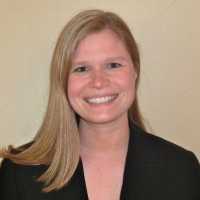 Dr. Heald-Sargent[/caption]
Taylor Heald-Sargent, M.D., Ph.D.
Ann & Robert H. Lurie Children’s Hospital
Chicago
MedicalResearch.com: What is the background for this study?
Response: Given the ongoing debate around the ability of children to transmit SARS-CoV-2, we noticed that our clinical data could address one of the prevalent assumptions. Some people postulated that the reason children have less severe infections with SARS-CoV-2 is because they are not able to replicate virus as much as adults and therefore may not transmit as readily.
Dr. Heald-Sargent[/caption]
Taylor Heald-Sargent, M.D., Ph.D.
Ann & Robert H. Lurie Children’s Hospital
Chicago
MedicalResearch.com: What is the background for this study?
Response: Given the ongoing debate around the ability of children to transmit SARS-CoV-2, we noticed that our clinical data could address one of the prevalent assumptions. Some people postulated that the reason children have less severe infections with SARS-CoV-2 is because they are not able to replicate virus as much as adults and therefore may not transmit as readily. 

 Dr. Sinha[/caption]
Pranay Sinha, MD
Research Fellow
Section of Infectious Diseases
Boston University School of Medicine
MedicalResearch.com: What is the background for this study?
Response: In the early days of the COVID-19 pandemic there were no evidence-based treatments for severely ill patients infected with this virus. We formed an interdisciplinary group of physicians from departments of adult and pediatric infectious diseases, rheumatology, and pulmonary/critical care as well as clinical pharmacy specialists. Given some promising data from China, we instituted treatment with off-label IL-6 receptor inhibitors (tocilizumab and sarilumab). The rationale was to mitigate the exuberant immune response observed in some patients infected with SARS-CoV-2 (also called cytokine storm or cytokine release syndrome).
Quite quickly, we started noticing that giving the drug to our sickest patients wasn’t eliciting dramatic improvement. We reasoned that by the time patients were severely ill and requiring ventilators, the damage to their lungs from the cytokine storm had already taken place. It was like closing the barn door after the horse had already bolted.
Dr. Sinha[/caption]
Pranay Sinha, MD
Research Fellow
Section of Infectious Diseases
Boston University School of Medicine
MedicalResearch.com: What is the background for this study?
Response: In the early days of the COVID-19 pandemic there were no evidence-based treatments for severely ill patients infected with this virus. We formed an interdisciplinary group of physicians from departments of adult and pediatric infectious diseases, rheumatology, and pulmonary/critical care as well as clinical pharmacy specialists. Given some promising data from China, we instituted treatment with off-label IL-6 receptor inhibitors (tocilizumab and sarilumab). The rationale was to mitigate the exuberant immune response observed in some patients infected with SARS-CoV-2 (also called cytokine storm or cytokine release syndrome).
Quite quickly, we started noticing that giving the drug to our sickest patients wasn’t eliciting dramatic improvement. We reasoned that by the time patients were severely ill and requiring ventilators, the damage to their lungs from the cytokine storm had already taken place. It was like closing the barn door after the horse had already bolted. 
 Dr. Hervé Perron[/caption]
Hervé Perron PhD
Chief Scientific Officer at GeNeuro
MedicalResearch.com: What is the background for this study?
Response: Human endogenous retroviruses (HERVs), remnants of ancestral viral genomic insertions, are known to represent 8% of the human genome and are associated with several pathologies. Certain proteins produced by HERVs have previously been found to be involved in pathogenic mechanisms linked to, e.g., multiple sclerosis (MS) or amyotrophic lateral sclerosis. However, despite previous results having shown an abnormal expression of HERV-W in patients with schizophrenia or bipolar disorder, the mechanisms involved in these psychiatric disorders are poorly understood.
Dr. Hervé Perron[/caption]
Hervé Perron PhD
Chief Scientific Officer at GeNeuro
MedicalResearch.com: What is the background for this study?
Response: Human endogenous retroviruses (HERVs), remnants of ancestral viral genomic insertions, are known to represent 8% of the human genome and are associated with several pathologies. Certain proteins produced by HERVs have previously been found to be involved in pathogenic mechanisms linked to, e.g., multiple sclerosis (MS) or amyotrophic lateral sclerosis. However, despite previous results having shown an abnormal expression of HERV-W in patients with schizophrenia or bipolar disorder, the mechanisms involved in these psychiatric disorders are poorly understood.


 Dr. Weisskopf[/caption]
Marc Weisskopf, PhD, ScD
Cecil K. and Philip Drinker Professor of Environmental Epidemiology and Physiology
Departments of Environmental Health and Epidemiology
Harvard T.H. Chan School of Public Health
Boston, MA 02115
MedicalResearch.com: What is the background for this study?
Response: There is a long history of health disparities by race. We were interested to see whether these also show up in professional football players, with the thought that perhaps the advantages that come with being an elite athlete in a sport (e.g. related to income, potential access to carte, prestige) might minimize health disparities.
Dr. Weisskopf[/caption]
Marc Weisskopf, PhD, ScD
Cecil K. and Philip Drinker Professor of Environmental Epidemiology and Physiology
Departments of Environmental Health and Epidemiology
Harvard T.H. Chan School of Public Health
Boston, MA 02115
MedicalResearch.com: What is the background for this study?
Response: There is a long history of health disparities by race. We were interested to see whether these also show up in professional football players, with the thought that perhaps the advantages that come with being an elite athlete in a sport (e.g. related to income, potential access to carte, prestige) might minimize health disparities.